

Preparing the master trees, vines and plant teachers to be used in the shamanic apprenticeship dieta.
Download our FREE PDF Programmes for the:
• “SHAMANIC PLANT DIETA APPRENTICESHIP” retreat (3 Months/91 Days)
• “SHAMANIC DIETA WITH MASTER TREES” (45 Days)
• “SHAMANIC PLANT DIETA WITH TOÈ” (31 Days)
__________________
MASTER TREES & TEACHER Plants of the shamanic Dieta
The one below is a list of the master trees, vines and teacher plants that may be “dieted” with as part of the shamanic apprenticeship with us. The actual plants one may “diet” with during the shamanic dieta may vary, depending on local availability and the specialisation of the shaman you will be training with. This also depends – whenever possible – on your own preferences and predilections (if you have already done the traditional plant diet before), and your level of experience (if applicable).
Last but not least, the choice of what master trees you should include in your dieta may equally depend on the messages that the shaman receives from his banco spirit guides/helpers during the ceremonies, as well as on the messages from the plant spirits world that one doing the dieta may receive during the ceremonies, in vision, or in dreaming. Since what we offer is an authentic shamanic dieta deeply rooted in the Vegetalista tradition of the Peruvian Amazon, the weight that revelations have here is greater than any nicely laid out programme outline (no matter how unique and technically detailed it may be), so be prepared for your schedule to be adapted/adjusted accordingly.

Harvesting Chaliponga (Dyplopteris cabrerana) in the Amazon jungle, in preparation of the Ayahuasca brew.
Whether opting to do the 45 days shamanic dieta, or the 3-6 months dieta for the shamanic apprenticeship with either Don Guido or Don Armando, it will be possible to diet at the same time with thirty-five Master trees and vines, with the addition of Coca leaves, Mapacho (jungle Tobacco) and the bark of the Cacao tree (to offset the yang/fire energy of the master trees with its cooling & soothing effect). All ingredients are cooked together over a traditional wood fire for about 8-10 hours until the original 50 litres of liquid are reduced to about 2 litres; the concentrated master trees brew may be drunk by the apprentice up to seven times in a month, for a maximum of 21 times, in a three months apprenticeship retreat (up to 30 times in a six months retreat). One may also opt to go for the traditional dieta with only one individual Master tree (or Teacher plant, or vine) at any given time, with the freshly harvested bark left to macerate in water, then filtered and drunk as an infusion, in ceremony.
When the Master trees are dieted all together, they are always cooked for long hours until one gets a dense concentrated extract, whilst when they are dieted individually, one at a time, they are only left in water infusion at room temperature for several hours, and the resulting tea is filtered before been drank. So, in terms of alkaloids and essences extracted from the master trees, the concentrated version of the brew offers more than the traditional tea infusion. And that is the reason why some Palero shamans repute dieting with all the Master trees to be a more powerful fast track apprenticeship, in that one learns much more, and much more quickly, compared to the traditional shamanic dieta with only one individual Master tree (or Teacher plant/vine) at a time. Don Armando, however, maintains that both styles of dieta (the traditional one, “dieting” with an individual master tree/plant at a time and the dieta with dozens of different master trees mixed together) are valid and must be respected.
There are, however, further restrictions when “dieting” with individual master trees as – in tune with what Don Armando himself reports – when the tea/brew drank in ceremony is prepared exclusively with the freshly harvested bark of the tree itself, the mother spirit of the plant appears to be *very* “jealous” and does not tolerate other plants to be mixed/ingested/used at the same time. That in turn means that when your dieta is with an individual master tree reputed to be of primary shamanic importance, there cannot usually be Toé, or Camalonga ceremonies, not even smudging with Palo Santo (an essential part of the rituals of spiritual purification),or exposure to smoke (except for Tobacco smoke). The optional San Pedro ceremonies may still be done, but they must be moved to the last month of your training.
We endeavour to offer to all our retreat participants – and especially the ones enrolling for the shamanic plant dieta/apprenticeship with us – the opportunity to experience at least once during their staying Ayahuasca prepared with the extremely rare and ultra-powerful Puma chacruna (Psychotria carthaginensis) plant teacher, which gives a much more potent trance and intoxication than the ordinary Chacruna (Psychotria viridis) and even more powerful than the Chaliponga/Chagropanga/Huambisa chacruna (Dyplopteris cabrerana), typically used as main admixture to the Ayahuasca brew in both Peru and Colombia.

The all-powerful Puma chacruna plant teacher.
The Puma chacruna connects one with everything related to the earthly realm: living animals, plant teachers and master trees. Visions are clearer and may even take one to heavenly places during the trance. It often induces visions of a giant, raging and most powerful Puma (Puma colorado), sometimes appearing in the guise of a giant black Puma, hence the name. Don Armando was initiated to this magical plant when he was only a 22 years old curandero, when invited to diet for 9 months Suni/Soliman ayahuasca (Banisteriopsis martiana) and Puma chacruna in the native Quichua indigenous community of Panayjillo (a tributary of the Napo river).
A UNIQUE SHAMANIC DIETA WITH MORE THAN THIRTY-FIVE MASTER TREES & VINES!
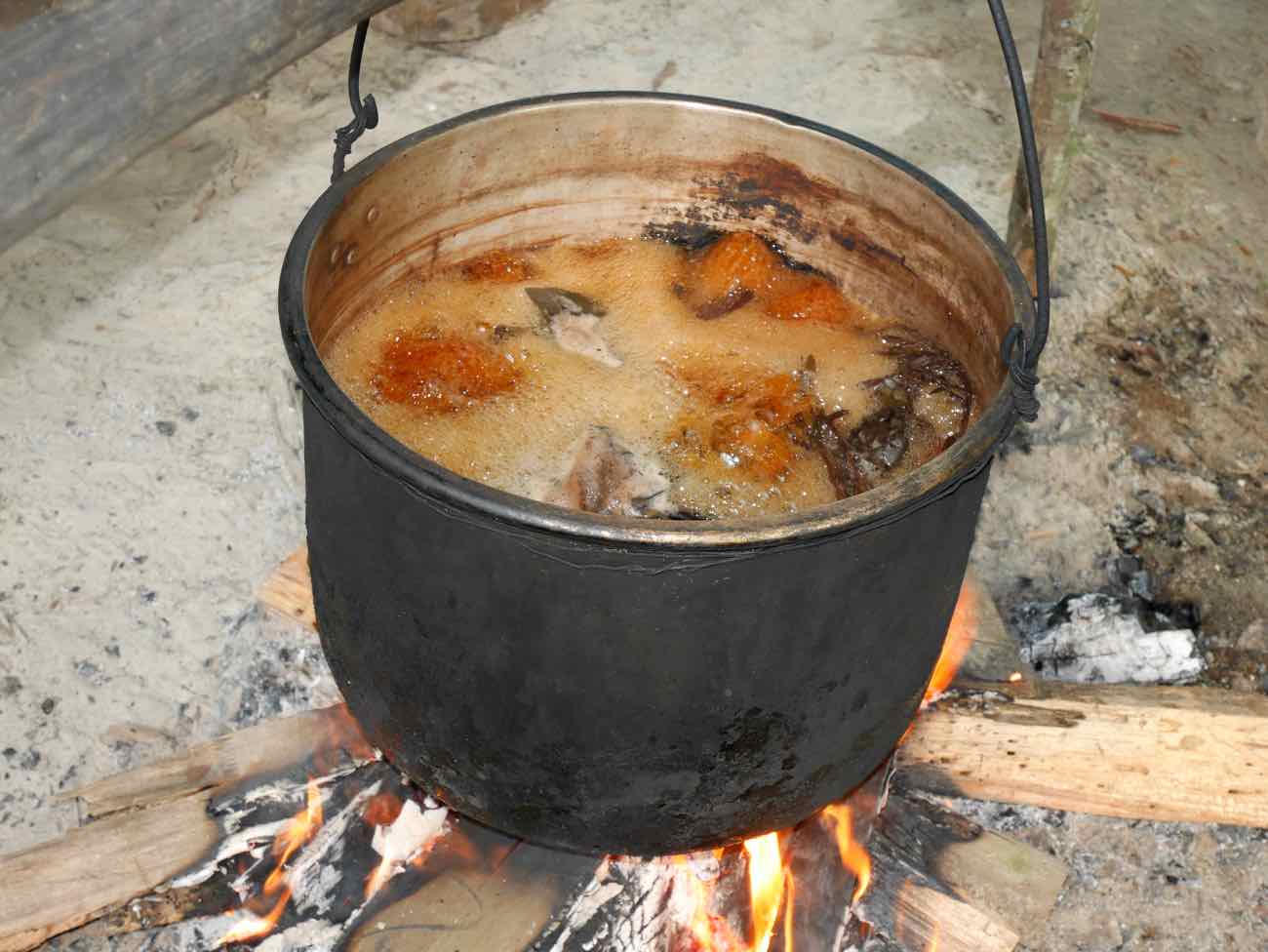
Preparation of the concentrated master trees brew in the jungle.
__
Two Lineage Expressions: Don Armando and Don Guido
Our work at El Mundo Mágico is rooted in deep Amazonian Vegetalismo, expressed through two complementary formulations developed by our master Vegetalistas:
- The Foundational master trees brew (Don Armando’s lineage):
Governed by the sacred distinction between master trees of Primary and Secondary shamanic importance. This classic formulation combines the traditional master tree matrix with Cacao bark, Coca leaves, and Mapacho, strictly adhering to the dietary restrictions (such as the exclusion of Toé, Camalonga, and smudging) revealed to Don Armando. - The Advanced 37 master plants brew (Don Guido’s lineage):
Introduced in May 2026 and available exclusively during retreats presided over by Don Guido. This concentrated brew sets aside Cacao bark and Coca leaves, expanding the plant teacher matrix to 37 distinct species, including the elusive, protective and mysterious canopy trees like the Cuna Lupa caspi (unidentified) held together solely by Mapacho.
While each formulation represents its own distinct botanical alliance, Don Guido’s brew is administered under his own direct guidance and ceremonial protocols.
* Explore Don Guido’s lineage complete 37-master trees, vines and shrubs here →
* Continue to Don Armando’s lineage below →
__________________
Don Armando’s lineage. Diet with the following 33 Master Trees & 3 teacher vines, ALL AT ONCE:
Ana caspi negro (Apuleia leiocarpa; bark)
Ayahuma (Couroupita guianensis, the “Cannon ball tree”; bark)
Azúcar huayo (Hymenaea oblongifolia; bark)
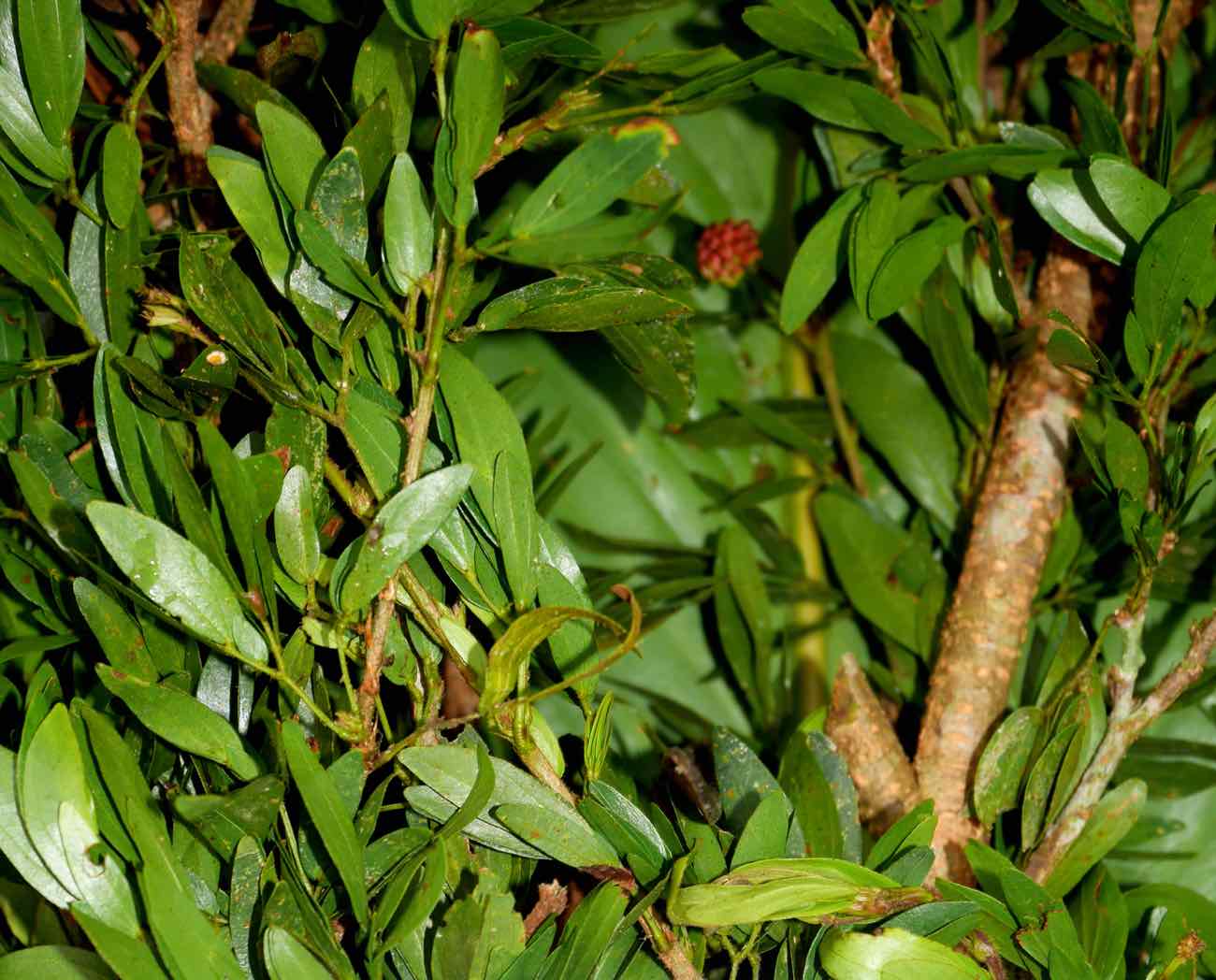
Bobinsana leaves.
Bobinsana (Calliandra angustifolia; branches with green leaves)
Bolaquiro (Schinopsis peruviana; bark)
Caballo sanango (Tabernaemontana angulata; stem)
Capinuri (Maquira coriacea; bark)
Capirona negra / Yana Capirona (Calycophyllum spruceanum; bark)
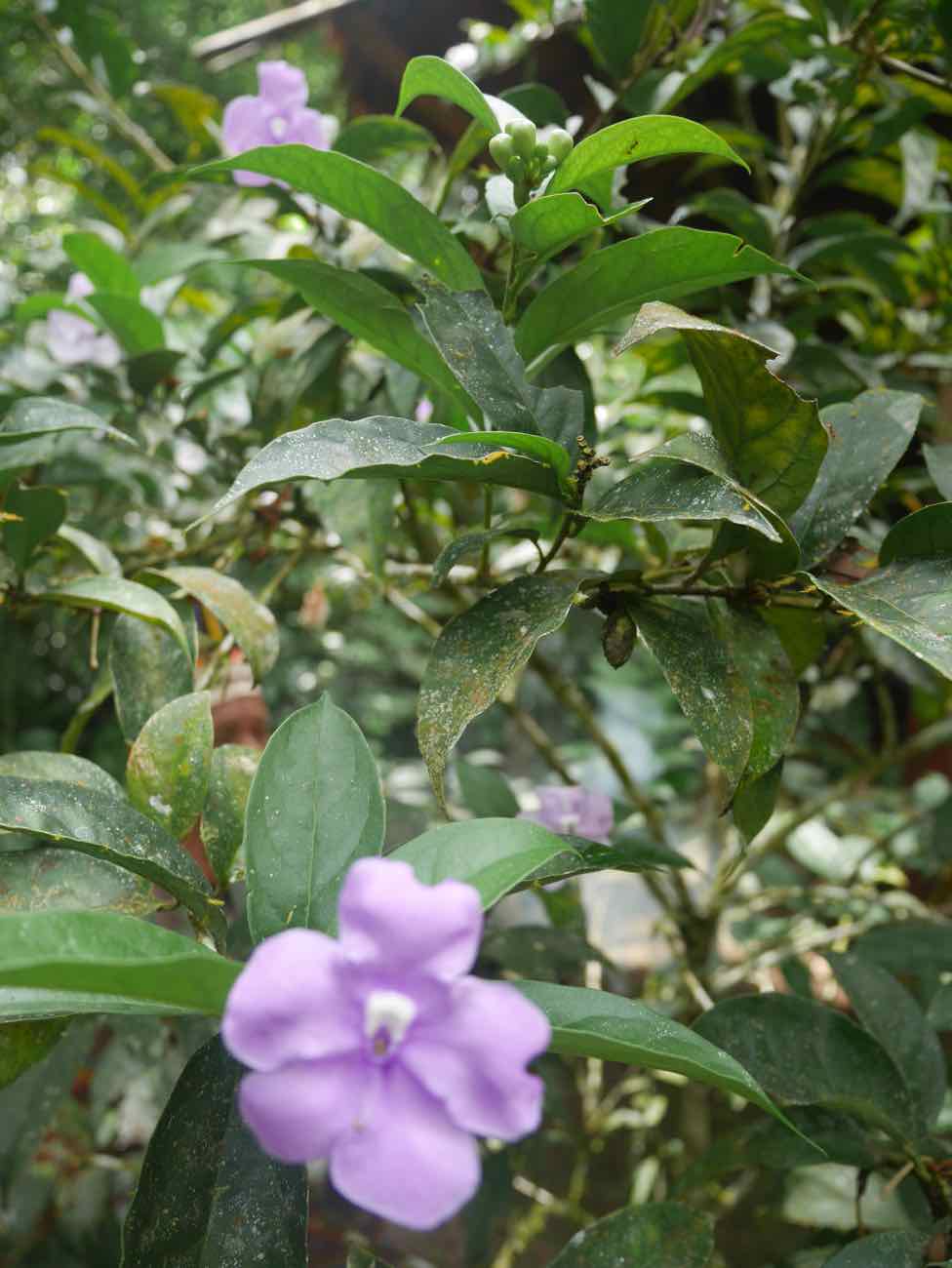
The violet flower of the Chiric sanango master tree.
Chiric sanango (Brunfelsia grandiflora; leaves)
Chuchuhuasi / Chuchuwasi (Maytenus sp, Duke & Vasquez, 1994; Heisteria pallida, Luna 1999:13; bark)

The bark of the Chullachaki caspi (Brysonima christianeae) master tree.
Chullachaqui caspi / Chullachaki caspi (Brysonima christianeae, Luna 1999:13; Remijia peruviana, Duke & Vasquez, 1994; bark)
Cocobolo (Dalbergia retusa; bark)
Cumaceba / Cumaseba (Swarzia polyphylla; wood)
Cumala de altura – caupuri (Dyalianthera sp. / Virola sp. / Iryanthera sp.; bark)
Estoraque (Myroxylon balsamum; wood)
Huacapú / Fierro caspi (Minquartia guyanensis; “Ironwood”; bark)
Huacapurana (Campsiandra angustifolia; bark)
Huarmi Renaco (Clusia rosea; vine cuts, including bark and wooden core)
Huasai / Huasahi / Acai (Euterpe precatoria; roots)
Huayra caspi / Tornillo (Cedrelinga catenaeformis; bark)
Huayruro (Ormosia coccinea / Ormosia sunkei; bark)
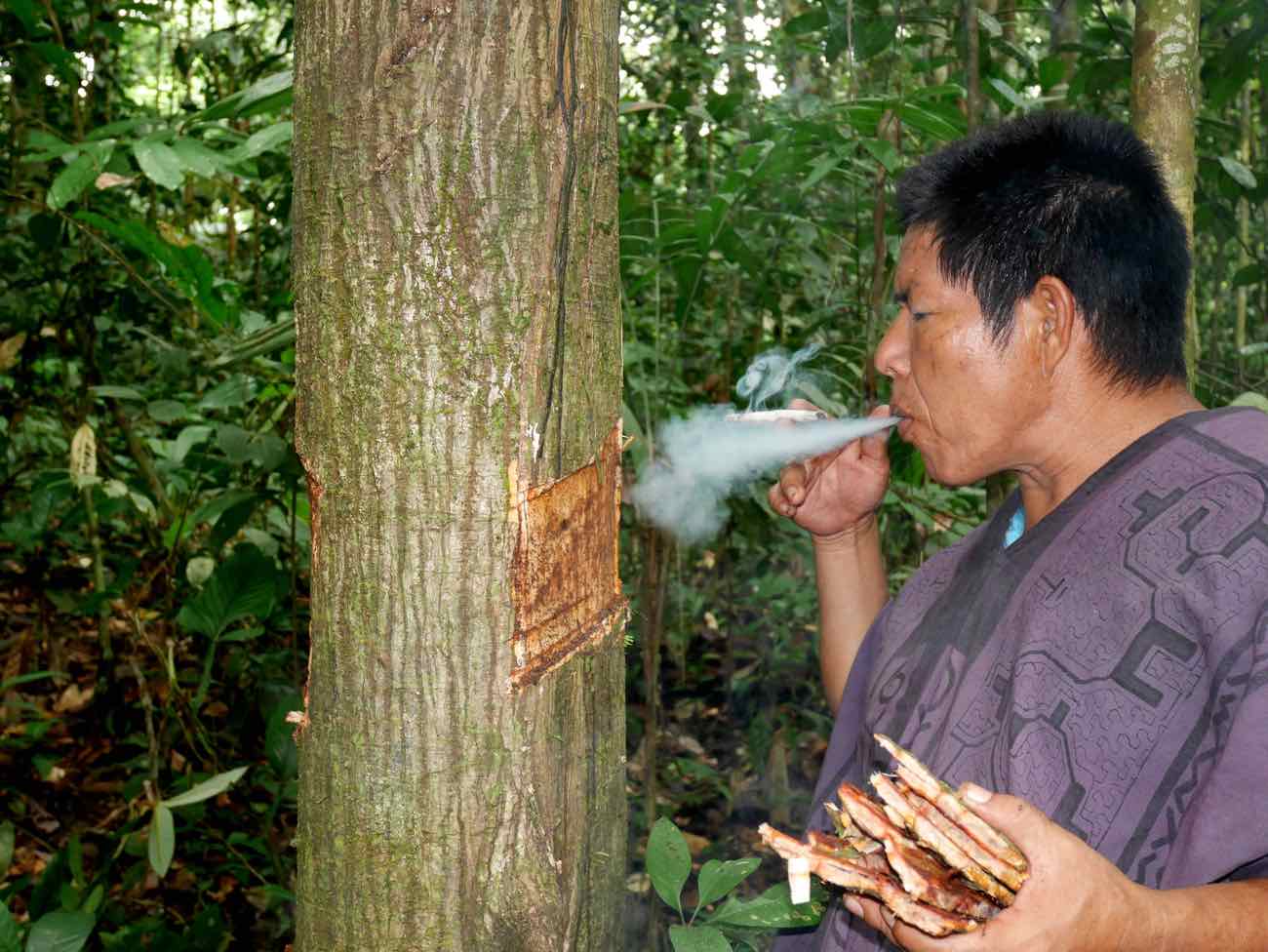
Harvesting the bark of the Icoja negra (Unonopsis spectabilis) master tree.
Icoja negra (Unonopsis spectabilis / Unonopsis floribunda; bark)
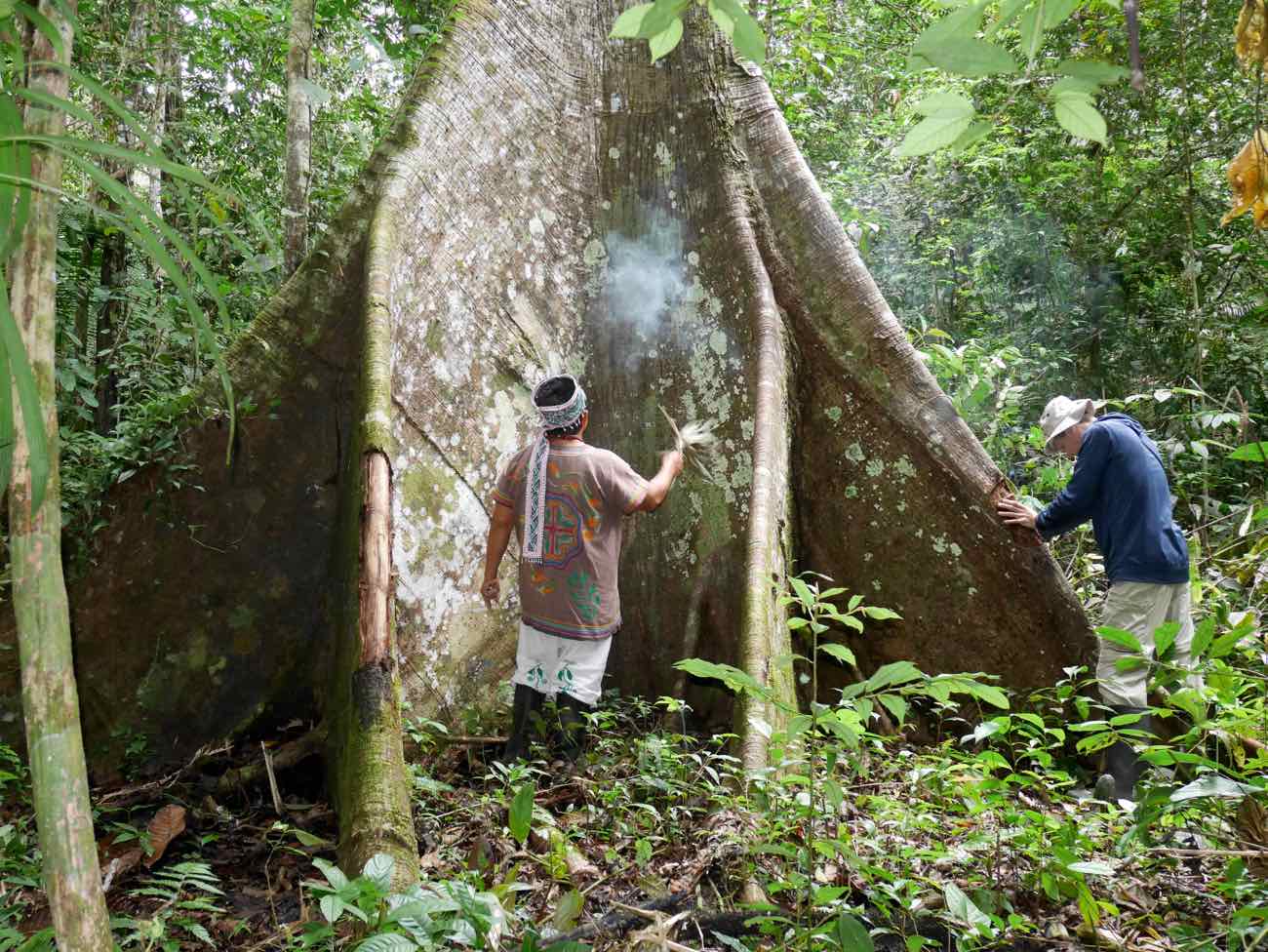
The Lupuna blanca (Ceiba pentandra), the king of all master trees of the Amazon.
Lupuna blanca (Ceiba pentandra; Kapok tree; bark)
Machimango negro (Eschweilera sp.; bark)
Matico / Cordoncillo (Piper Adundum; branches with green leaves)
Mururé (Brosimum acutifolium; bark)
Palisangre (Brosimum rubescens; wood)
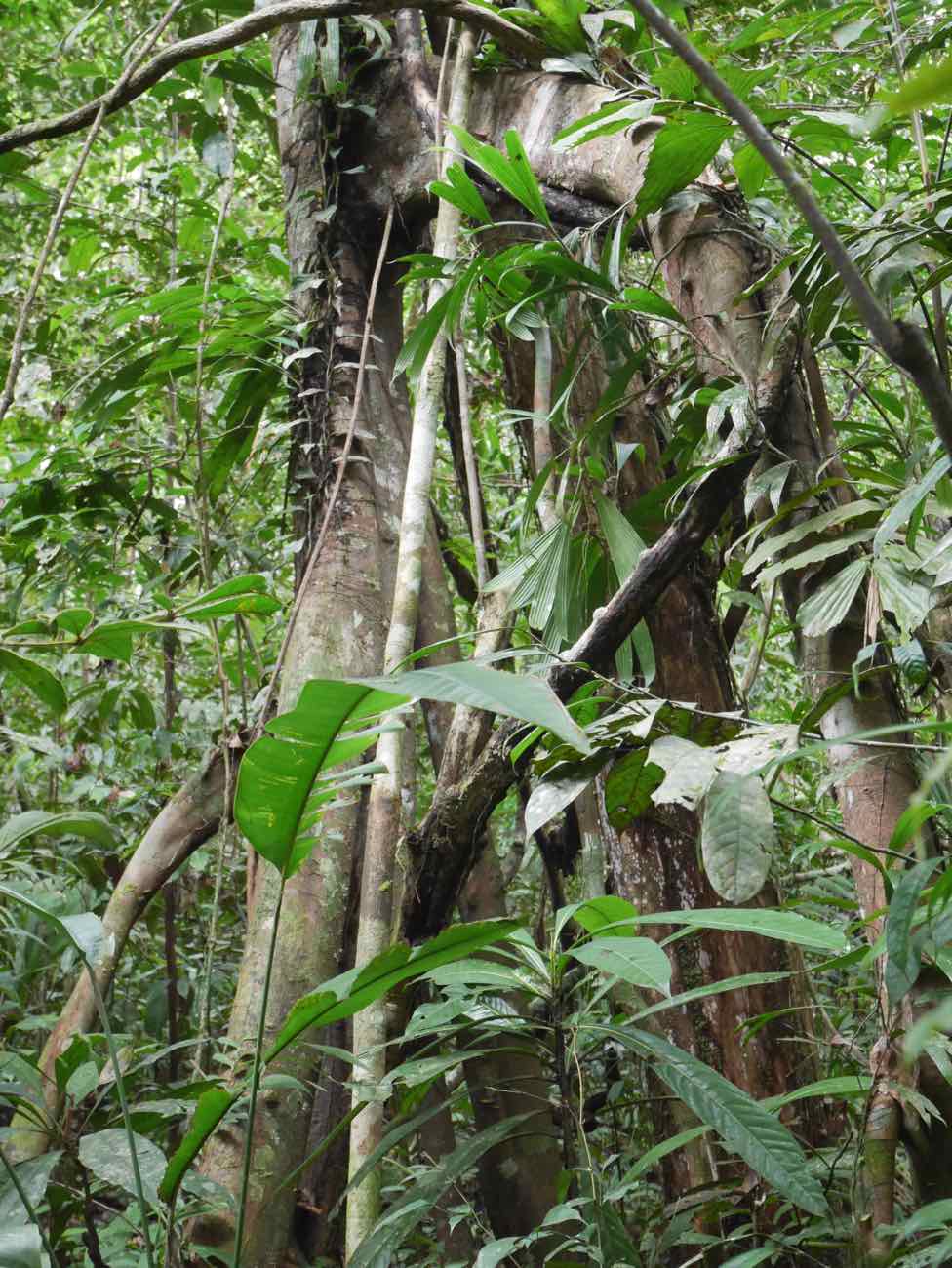
The Pampa renaco (Ficus americana) master tree.
Pampa renaco (Ficus americana Aubl.; bark)

The Puca lupuna (Cavanillesia umbellata) master tree.
Puca lupuna / Puka lupuna / Lupuna roja (Cavanillesia umbellata; bark)
Pucuna caspi / Pukuna caspi (Iryanthera tricornis, the blowgun tree; bark )
Puca tangarana / Puka tangarana / Tangarana de altura (Tachigali sp.; bark)
Remocaspi (Aspidosperma parvifolium / Aspidosperma excelsum; bark)
Renaquilla (Clusia rosea; vine cuts, including bark and wooden core)
Shihuahuaco (Dipteryx micrantha; bark)
Uchu sanango / Ullo zanango (Tabernaemontana sananho; roots)
Vena renaco (Ficus sp; bark, or vine cuts: including bark and wooden core).
Cacao (Theobroma cacao), a few Coca (Erythroxylum coca) leaves, and Mapacho (Nicotiana tabacum/Nicotiana rustica; jungle tobacco) are also added to the master trees brew, in different proportions. Cacao is reputed by Don Armando to be more a medicinal tree, than a master tree and its bark is used as admixture in the “concentrado de palos maestros” (concentrated master tree brew) mainly for its cooling energy, to balance the yang energy of the master trees. It is also used as admixture to the Ayahuasca brew, to make it taste better, adding a sweeter tune, and for its stomach-soothing properties.
_________________

Ritual offer of jungle tobacco smoke to the Coca (Erythroxylum coca) plant, in the jungle.
With either Don Guido or Don Armando it is possible to diet with a single plant teacher or master tree individually, one at a time, as well as with the whole lot of 35 master trees and vines with which is prepared the ultra-concentrated brew he makes. One may also diet the powerful Toé plant (Brugmansia sp.), starting from an absolute minimum of 15 days up to 61 days maximum (standard programme we have is made of 31 days); or else, may diet with the powerful organic black jungle Tobacco (Nicotiana tabacum, 16 days/15 nights diet, only indicated for the most senior and experienced dieteros/apprentices; drink the tobacco brew 4 times a day, for a total of 60 times in 15 nights) and with the Coca plant (Erythroxylum coca, 08-31 days), which is shamanically used to clarify the vision and for divination (it is also used in the Andes region of South America to prevent/treat soroche or altitude sickness). Both Toé and Camalonga have a strong association with dreaming states, and are used traditionally for divination and to enhance the power of vision. For more details on each type of plant diet we offer, and what is included, please visit the Ayahuma retreat page.
It is also possible to diet with the Camalonga (Thevetia peruviana, in English known as “Yellow Oleander) master tree on its own. In this case, the Camalonga diet will last for a fixed period of 31 days (the Camalonga brew is drank twice a week, in ceremony, at night, with the shaman). Camalonga is traditionally used for divination and to enhance the power of vision, whilst teaching one in dreaming (it causes a gentle intoxication, but has no psychotropic effects as such).
‘‘PLANTAS MAESTRAS” (Teacher Plants) which may be dieted individually (aside from any of the master trees and vines listed above):
- Camalonga (Thevetia peruviana)
- Coca (Erythroxylum coca)
- Mapacho (Nicotiana sp.)
- Toé (Brugmansia suaveolens, Brugmansia sp.)
- Ajos sacha (Mansoa alliacea)

Shamanic ritual in the jungle, meditating in front of the Huarmi Renaco (Clusia rosea) teacher vine, the ‘liana of love’.
”SOGAS” (Vines) which may be dieted individually:
- Cielo ayahuasca (Banisteriopsis caapi)
- Huarmi renaco (Clusia rosea)
- Lucero ayahuasca (Banisteriopsis sp.)

Spectacular giant Soliman ayahuasca (Banisteriopsis martiana) vine growing wild in the jungle surrounding our retreat centre.
- Puma ayahuasca (Banisteriopsis sp.)
- Renaquilla (Clusia rosea)
- Suni ayahuasca / Soliman ayahuasca (Banisteriopsis martiana)
- Vena renaco (Ficus sp.)
The shamanic dieta with Ayahuasca
In the specific case of the dieta with ayahuasca, one may diet with either Cielo ayahuasca (the best for initiations), Suni ayahuasca, Puma ayahuasca and Lucero ayahuasca. Puma ayahuasca is known among the Taitas of Southern Colombia as Tigre yagé (or else, Yagé tigre), and among the Ingas of Putumayo as Tigrihuasca (a Quechua composite word meaning “vine of the jaguar”), as the cross-section of the vine seems to resemble the paw of the jaguar; dieting with this variety of Ayahuasca for many years is believed to aid the shaman to shape-shift into a jaguar, during the ceremonies at night.

Representation of a “Yacuruna” (spirit of the water) on a Mural in Quistococha, Iquitos (Peru).
The Suni ayahuasca – also known by the name of Soliman ayahuasca, or black ayahuasca – is possibly the most potent variety of ayahuasca known in Peru, and is best suited to those who are highly skilled and very experienced, for advanced work. Dieting with this vine is believed to allow a Vegetalista (or an apprentice) to magically access the sub-aquatic realm and the creatures living underwater. Suni ayahuasca connects one with the two levels of the aquatic realms where dwells beings of the underwater world. On the first level one connects with creatures like fishes, pink dolphins (object of many beliefs in the Amazon, and reputed to be powerful shamans, sorcerers, bewitchers and seducers), anacondas, mermaids, Yacurunas (spirits of the water), “ghost ships”, rayamama (a giant and most feared mythological hairy stingray, 30-40 metres in circumference, which act as a lid for subterranean channels connecting enchanted cities at the bottom of lakes) and with the very energy of water, rivers, cochas (lagoons) and jungle streams. In the second level (of the aquatic/aquatic realms) live instead very strange men-like creatures who do not have a rectum, giant duck-shaped beings, and toad-like beings.
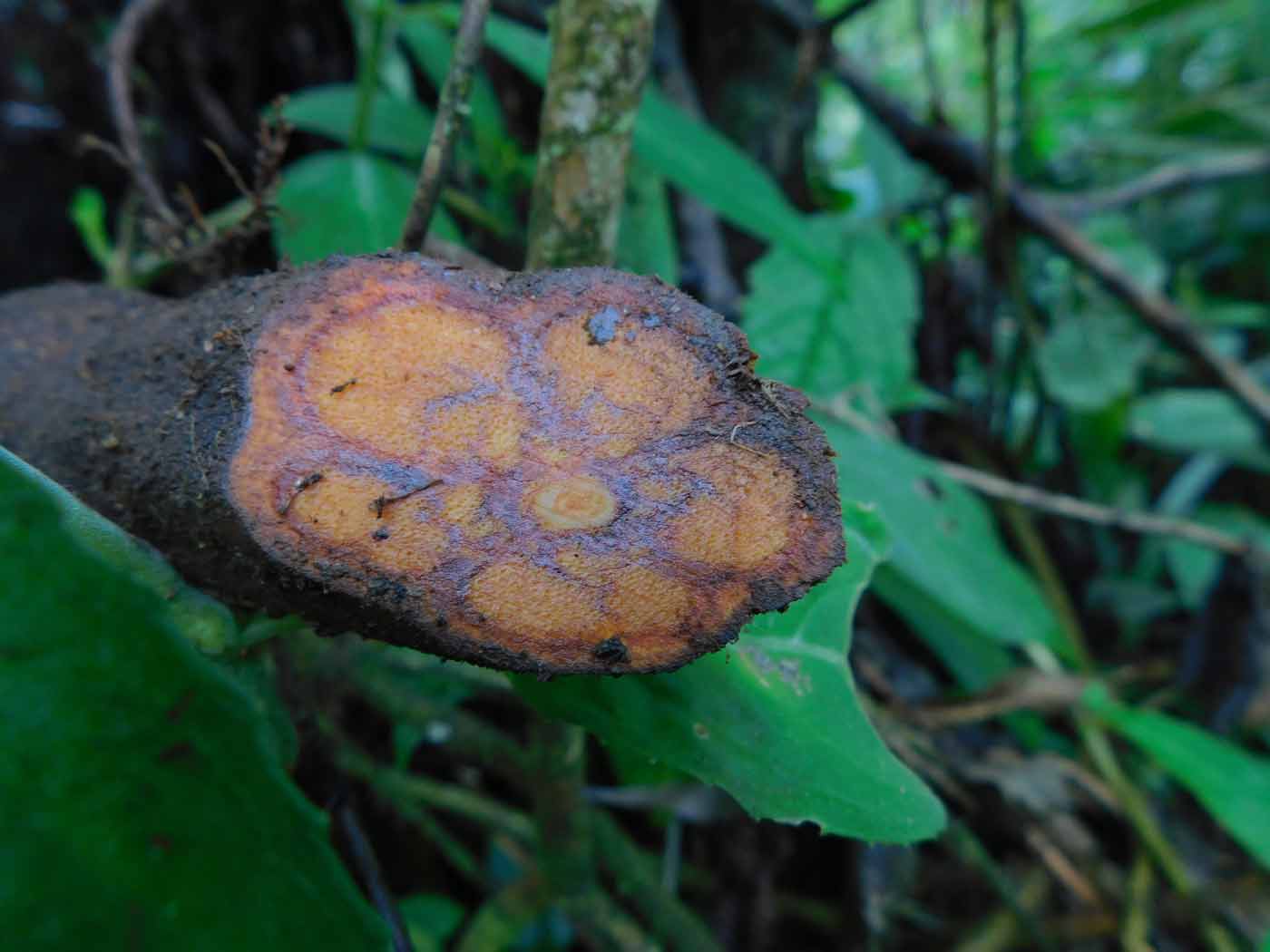
“La Pata del Tigre”, the jaguar’s paw! Cross section of a Puma ayahuasca / Yagé tigre vine, resembling the paw of a jaguar.
Ayahuasca diet: Ayahuasca brew made with a combination of either Cielo, Suni, Lucero or Puma ayahuasca.
As in the Ayahuasca retreat, Ayahuasca ceremonies, Camalonga rituals and Toé sessions, are included in *MOST but NOT ALL* types of shamanic plant diet retreat we offer. Two most prominent exceptions to this rule are the Tobacco/Mapacho diet, where there are no Ayahuasca ceremonies (exception made for the day before and the day after of the actual dieta), and the Coca plant diet, where there will be 3 Ayahuasca ceremonies per week and Toé ceremonies (smoking the dry leaves of the plant, and drinking its freshly squeezed juice, once a week), but NO Camalonga ceremonies. Please note that further exclusions may apply, depending on the type of master plant or tree you may be dieting with, at the sole discretion of the shaman.
REFERENCES:
CALVO, Cesar, The Three Halves of Ino Moxo: Teachings of the Wizard of the Upper Amazon, Inner Traditions 1995
DUKE, James Alan, VASQUEZ, Rodolfo, Amazonian Ethnobotanical Dictionary, CRC Press 1994
LUNA, L.E. & AMARINGO P., Ayahuasca Visions, The Religious Iconography of a Peruvian Shaman, Berkeley 1999
LUNA, L.E. & AMARINGO P., Ayahuasca Visions, The Religious Iconography of a Peruvian Shaman, Berkeley 1999: 50-52
LUNA, L.E., Vegetalismo. Shamanism among the Mestizo Population of the Peruvian Amazon, Acta Universitatis Stockholmiensis, Stockholm Studies in Comparative Religion 27, Stockholm 1986
MEJIA, K. & RENGIFO E., Plantas Medicinales de Uso Popular en la Amazonía Peruana, Agencia Española de Cooperación Internacional, Lima 2000
Some scientific nomenclature – especially for Huarmi renaco, Pampa renaco, Soliman ayahuasca and a few more plants – was provided by Dr. Juan RUIZ MACEDO, botanist from UNAP (Universidad Nacional de la Amazonia Peruana), Personal communication (Iquitos, 20 May 2025)
__________
Toé is a very powerful and toxic plant, its effects may be comparable to an extent to those of Iboga. It requires a very strict diet as well as utmost respect, knowledge, caution, experience and skills to be properly administered and taken, under the constant guidance of an expert shaman specialized in working with it. Equally, the Mapacho/tobacco diet is best suited to most senior/expert apprentices, and is not recommended for novices.
FURTHER INSIGHTS INTO THE SHAMANIC PLANT DIET
What Is The Shamanic Plant Dieta?
Shamanic Plant Diet Apprenticeship: The Way of Wisdom
The Master trees and Plant Teachers of the Shamanic Diet
Shamanic Plant Diet and Ayahuasca
The Shamanic Plant Diet: Restrictions, Food and Plant Teachers
__________________
Download our FREE PDF Programmes for the:
• “SHAMANIC PLANT DIETA APPRENTICESHIP” retreat (3 Months/91 Days)