
⇐ Back to Our Ayahuasca, Palero and San Pedro shamans in Peru

International guests with Palero master shaman Don Guido by a Huarmi Renaco vine, the “liana of love”, in the Amazon rainforest of our retreat centre, in Peru (near Iquitos).
____________
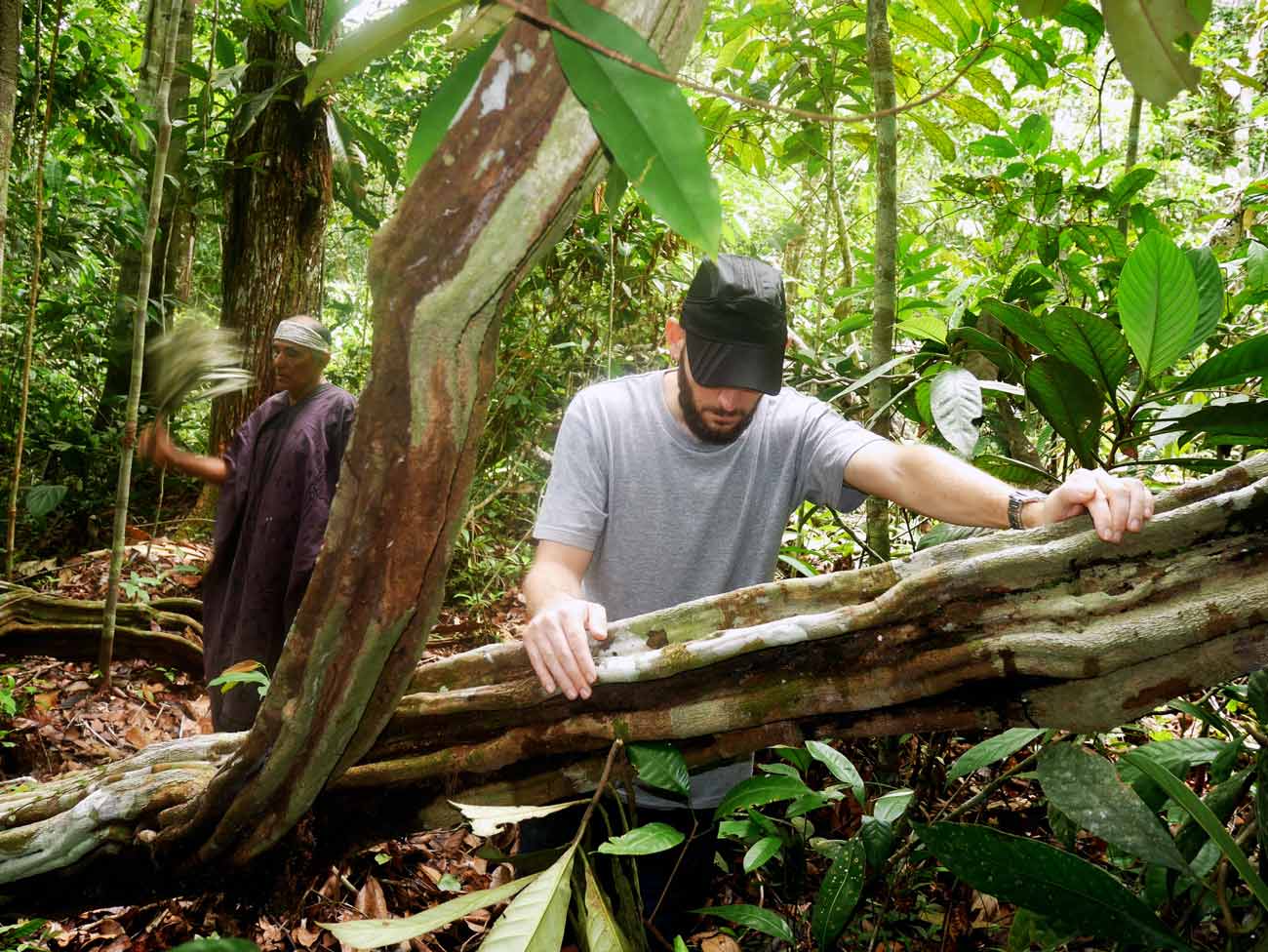
Meditating on a 400+ years old grandmother Soliman/black ayahuasca (Banisteriopsis martiana) vine, growing wild in the Amazon jungle surrounding our retreat centre.
Don Guido is a Maestro Palero (a Vegetalista who focuses in working with the spirits of the palos, or master trees), an Ayahuasquero (a shamanic healer specialised in working with Ayahuasca), and a Toesero (a type of highly specialised shaman who works with Toé – Brugmansia sp.- one of the most powerful plants in Amazonian shamanism). Toé is a highly psychoactive plant containing potent alkaloids such as scopolamine, atropine, and hyoscyamine, which can induce intense visionary and altered states of consciousness and is traditionally used in the Peruvian Amazon for healing, divination, and spiritual exploration. Working with this plant requires extensive training – through strict dietas – respect, and caution. A Toesero seeks to understand and channel Toé’s spiritual energy for healing and guidance. While Toé can be a profound teacher and healer, it’s also a very powerful plant with a very jealous – and sometimes fearsome – mother spirit (madre), so the Toesero’s expertise is vital in safely navigating its mysteries. Don Guido is also a Camalonguero (a Vegetalista who has developed a relationship with the Camalonga master tree, the Thevetia peruviana), and a Sananguero (a specialised type of Amazonian shaman who works with the Sanango class of master trees, which includes varieties such as Tabernaemontana undulata – a plant in the Apocynaceae family – or other closely related species, which are rich in alkaloids and often associated with deep spiritual work).
He is also an Oracionista, i.e. a Vegetalista who uses prayers and prayer songs to heal, and an Espiritista, an adept of a syncretic belief system with elements of ritual magic (widespread in Latin America), who specialises in working with spirits for healing, divination, and guidance (their practice focuses on direct communication with spiritual entities, which may include plant spirits, ancestors, animal spirits, or other supernatural beings). He works with spirits to diagnose and treat illnesses, guide individuals on their spiritual path, and facilitate deep healing on physical, emotional, and energetic levels. The role of the Espiritista is deeply rooted in the spiritual dimension of Vegetalismo, and their practice requires discipline, spiritual attunement, and years of training to develop their connection with the unseen world.
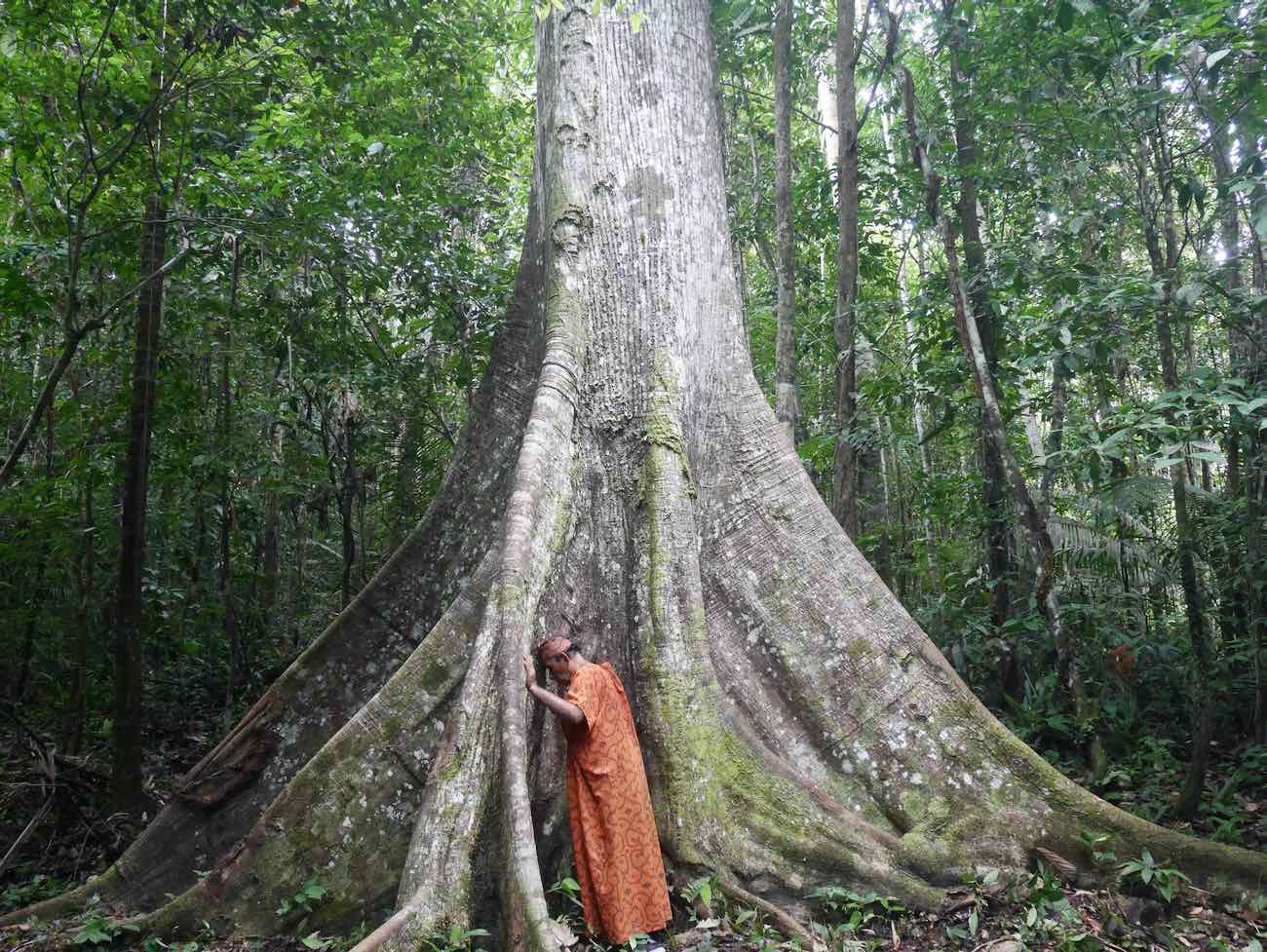
Don Guido meditating in front of a Lupuna blanca (Ceiba pentandra) master tree, in the Peruvian Amazon.
Don Guido is also a Rosicrucista (i.e. a Rosicrucian initiate/adept who has advanced through the teachings, practices, and spiritual development associated with Rosicrucianism—a mystical tradition that combines esoteric teachings drawn from ancient Egyptian mysteries, Kabbalah, alchemy, astrology, and Christian mysticism, blending them together and focusing on personal transformation and understanding of universal laws).
He began dieting the teacher plants at the age of 14, under the tutelage of his father, Diógenes Tuesta Montilla, starting with the master tree Chuchuwasha/Chuchuwasi (Maytenus krukovii), which he dieted for two months. He was recognised and “crowned” (“coronado“) as Maestro at the age of 33. After being initiated by his father, he went to apprentice with another teacher, Eduardo Panduro Inuma, and for the following 14 years he dedicated himself to advancing his knowledge, eventually reaching the level of the “sixth dimension”. Through this spiritual science, he was granted a special power known as ‘Placa de Bereno’ (“Plaque of Veneration”). According to Don Guido, the “Placa de Bereno” is an energetic golden plate that appears on the chest of an advanced healer, a spiritual power used for curing and healing especially those who have been victims of sorcery. It also serves the purpose of protecting oneself from malevolent spirits that seek to harm people. In Amazonian shamanic traditions, practitioners often acquire various spiritual tools and powers through their training and experiences. These can include protective amulets, spiritual shields, or other forms of energetic armour believed to aid in healing and protection against negative forces. Some shamans like Don Guido possess a “plaque” or “shield” that serves as a spiritual defence mechanism and the concept of a golden plaque on the chest, aligns with the idea of a spiritual shield or protective energetic amulet. Don Guido was given this golden plaque called ‘Vereno de los Verenos’ – which means “Veneration of Venerations“, i.e. “That it is to be highly venerated” – as spiritual award at the end of his 14 years of apprenticeship with his late teacher Eduardo, after reaching the very advanced level of knowledge of the “sixth dimension“. This is the highest level of mastery in the world of spiritual wisdom, where the master has fully attained the power of knowledge over all diseases and their treatments. At this stage, the master receives the golden plaque – the esteemed power known as ‘Vereno de Verenos’ [Veneration of Venerations] – and the Maestro curandero is no longer just a simple shamanic healer but has reached the status of a venerable master.

Shamanic ritual with a giant black ayahuasca vine in the Amazon jungle, with Maestro Palero Don Guido.
Don Guido has dieted with different Ayahuasca varieties, like Lucero ayahuasca, Cielo ayahuasca, Trueno ayahuasca, Rayo ayahuasca, Puma ayahuasca, Santa Rosa ayahuasca, Nudillo ayahuasca, Camotillo ayahuasca and Suni/Solimán/Solimano ayahuasca (more commonly known as Ayahuasca negra or black Ayahuasca). And whilst in his daily routine he works manly with the more common varieties of Cielo ayahuasca and Lucero ayahuasca, upon request, if one wishes to do so – as it would be the case for our 3-4 weeks Ayahuasca dieta program – he can prepare and administer a combination of four different ayahuasca varieties, like Cielo ayahuasca (Banisteriopsis caapi), Lucero ayahuasca (Banisteriopsis sp.), Puma ayahuasca (Banisteriopsis sp.) and Soliman/black ayahuasca (Banisteriopsis martiana), as we have them in our special Ayahuasca dieta retreat. On top of those four varieties, and typically for those who enlist for longer dieta retreats, he may as well prepare Ayahuasca brews made with a combination of Rayo ayahuasca, Camotillo ayahuasca, and Trueno ayahuasca (subject to availability).
Whilst the Ayahuasca brew of Don Guido is usually prepared only with Cielo ayahuasca vine cuts and Chagropanga/Chaliponga (Diplopterys cabrerana) leaves, without any other plant additives, if required/preferred/requested, the medicine may also be prepared in the style of Don Armando, with Cielo ayahuasca (Banisteriopsis caapi), Chagropanga (Diplopterys cabrerana) and/or , plus Chiric sanango (
During the smudging sessions part of the spiritual purification rituals, Don Guido employs the wood of the Palo santo tree, the leaves of Ajos sacha, Achiote, Mucura and Clavo huasca, as well as the shell of Ajos macho and/or Ajos hembra.

Don Guido, paying homage to the Remocaspi master tree, in the jungle surrounding our centre, in the Peruvian Amazon.
The different dieta styles with master trees and for the shamanic apprenticeship with Don Guido.
With Don Guido it is possible to follow either the traditional shamanic dieta with only one teacher plant (“planta maestra”), vine, shrub, or master tree (“palo maestro”) at a time, for a specific period, or else, one may opt to follow the more fast-track dieta style, dieting either with one of two different combinations of 28 master trees & vines as in combination one and two – or else more, dieting with 35 master trees, vines and plant teachers, as in combination three – in the style of Don Armando, and finally, following the latest advanced formulation in Don Guido’s lineage, dieting with 37 master trees, vines and shrubs (plus Mapacho), as in combination 4 below. In all the 28-37 master trees combinations above the concentrated brews are prepared similarly to the Ayahuasca brew, cooked over a traditional wood-fire for 8-10 hours (to extract the maximum number of alkaloids, resins, substances), ALL at once.
When dieting with an individual master tree, the minimum time of the dieta is of 1 month for each kind of “palo maestro” chosen, so in a dieta of 3 months, for instance, one may diet with up to 3 master trees in total (drinking the tea prepared with each master tree twice a month, once every 15 days).
When dieting with 28 master trees and vines with Don Guido, one may choose either one of the following two combinations:
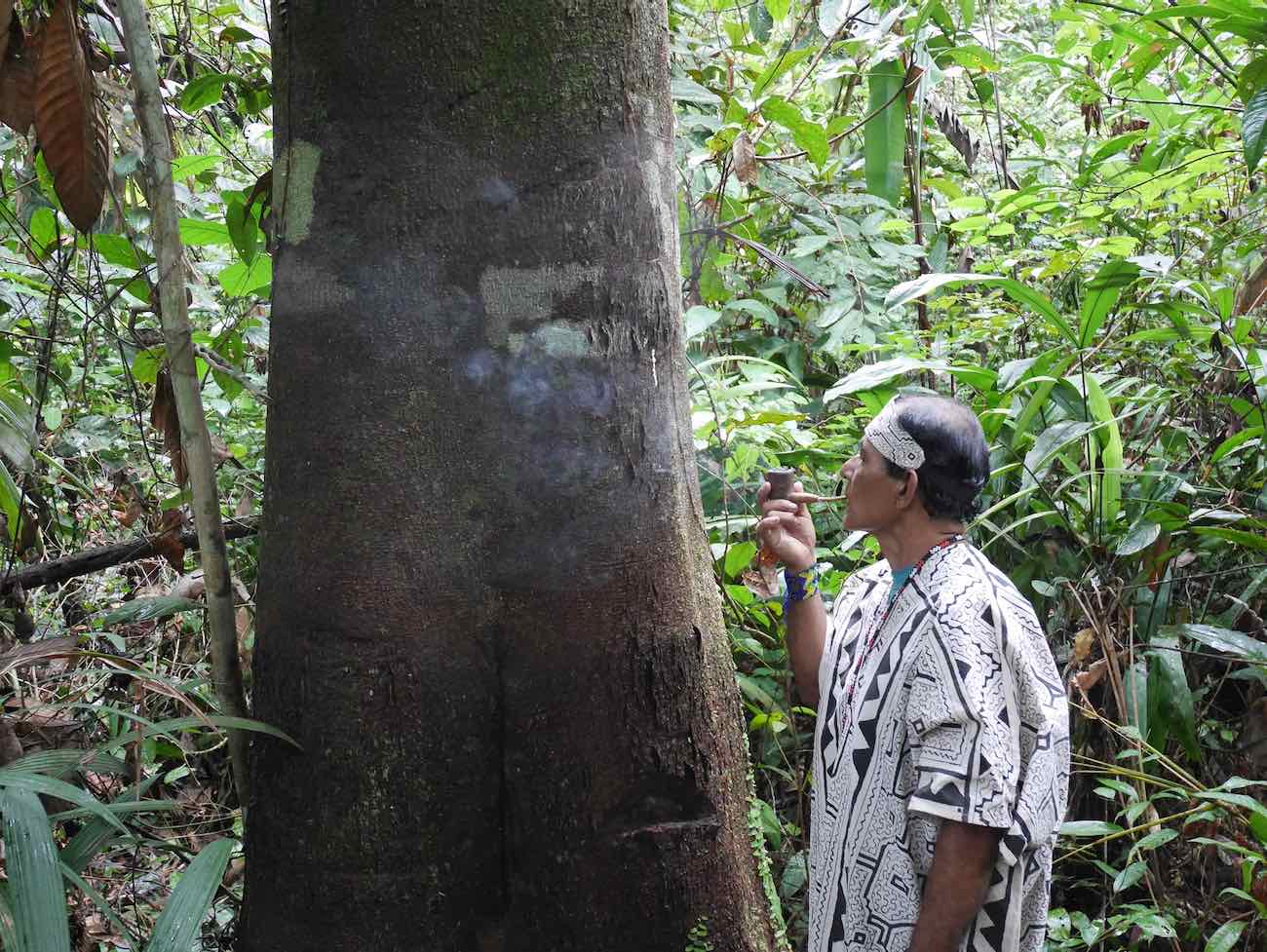
Don Guido ritually offering jungle Tobacco smoke to the Palisangre master tree, in the Amazon rainforest surrounding our centre, near Iquitos.
TWENTY-EIGHT Master trees & vines, prepared & cooked at the same time, as a concentrated brew.
Anacaspi negro, Ayahuma, Azúcar huayo, Caballo sanango, Capirona Negra (Yana Capirona), Caupuri, Chuchuhuasi, Chullachaqui caspi, Copaiba, Cumaceba, Cumaceba negra, Estoraque, Huacapú, Huacapurana, Icoja, Ipururo, Lanza caspi, Machinmango, Mururé, Palo sangre/Palisangre, Pinsha callo, Pucuna caspi, Remocaspi, Renaco Renaquilla, Shihuahuaco, Tahuarí, Ucho Zanango and Vola quiro (Bola quiro).

The Puca lupuna (Cavanillesia umbellata) master tree.
TWENTY-EIGHT Master trees & vines, prepared & cooked at the same time, as a concentrated brew.
Ayahuma, Azúcar huayo, Bobinsana, Caballo sanango, Capirona negra/Yana capirona, Catahua, Caupuri, Chullachaqui caimitillo, Chullachaqui caspi, Cumaceba, Fierro caspi, Huacapú, Huacapurana, Icoja, Mururé, Machimanago, Marupa caspi, Palo sangre/Palisangre, Pucuna caspi, Puka tangarana, Puka punga, Puka lupuna/Puca lupuna, Puka huayra caspi, Wimba, Wayruro, Remocaspi, Tahuarí and Tuiracucha lupuna.
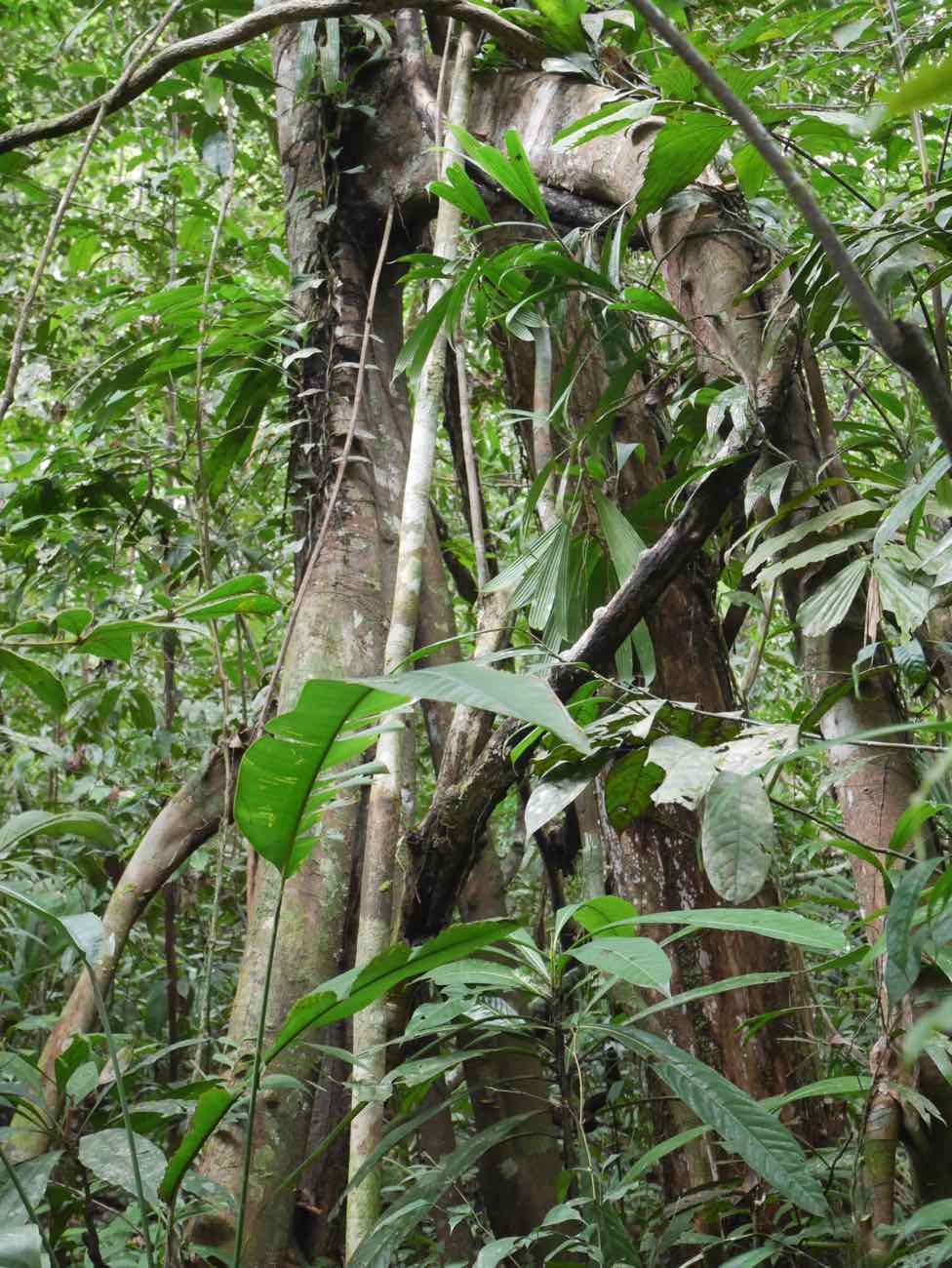
The Pampa renaco (Ficus sp.) master tree.
THIRTY-FIVE Master trees & vines, prepared & cooked at the same time, as a concentrated brew.
When dieting with the whole lot of 35+ master trees, vines and plants with Don Guido, one may diet with the following, in the same dieta style as Don Armando‘s:
Ana caspi negro (Apuleia leiocarpa; bark), Ayahuma (Couroupita guianensis, the “Cannon ball tree”; bark), Azúcar huayo (Hymenaea oblongifolia; bark), Bobinsana (Calliandra angustifolia; branches with green leaves), Bolaquiro (Schinopsis peruviana; bark), Caballo sanango (Tabernaemontana angulata; stem), Capinuri (Maquira coriacea; bark), Capirona negra / Yana Capirona (Calycophyllum spruceanum; bark), Chiric sanango (Brunfelsia grandiflora; leaves), Chuchuhuasi / Chuchuwasi (Maytenus sp, Duke & Vasquez, 1994; Heisteria pallida, Luna 1999:13; bark), Chullachaqui caspi / Chullachaki caspi (Brysonima christianeae; Luna 1999:13; bark), Cocobolo (Dalbergia retusa; bark), Cumaceba (Swarzia polyphylla; wood), Cumala de altura – caupuri (Dyalianthera sp. / Virola sp. / Iryanthera sp.; bark), Estoraque (Myroxylon balsamum; wood), Huacapú / Fierro caspi (Minquartia guyanensis; “Ironwood”; bark), Huacapurana (Campsiandra angustifolia; bark), Huarmi renaco (Clusia rosea Jacq.; the prefix “Huarmi” means “woman” in Quechua, suggesting a feminine aspect attributed to this vine; vine cuts, including bark and wooden core), Huasai / Huasahi / Acai (Euterpe precatoria; roots), Huayra caspi / Tornillo (Cedrelinga catenaeformis; bark), Huayruro (Ormosia coccinea / Ormosia sunkei; bark), Icoja negra (Unonopsis spectabilis / Unonopsis floribunda; bark), Lupuna blanca (Ceiba pentandra; Kapok tree; bark), Machimango negro (Eschweilera sp.; bark), Matico / Cordoncillo (Piper Adundum; branches with green leaves), Mururé (Brosimum acutifolium; bark), Palisangre (Brosimum rubescens; wood), Pampa renaco (Ficus americana Aubl.; bark), Puca lupuna / Puka lupuna / Lupuna roja (Cavanillesia umbellata; bark), Pucuna caspi / Pukuna caspi (Iryanthera tricornis, the blowgun tree; bark), Puca tangarana / Puka tangarana (Tachigali sp.; bark), Remocaspi (Aspidosperma parvifolium / Aspidosperma excelsum; bark), Renaquilla (Clusia amazonica Planch. & Triana); vine cuts, including bark and wooden core), Shihuahuaco (Dipteryx micrantha; bark), Uchu sanango / Ullo zanango (Tabernaemontana sananho; roots), Vena renaco (Ficus sp; bark, or vine cuts: including bark and wooden core).
THIRTY-SEVEN different Master trees, vines & shrubs – plus Mapacho – prepared & cooked at the same time, as a concentrated brew.
This advanced formulation represents the latest evolution in Don Guido’s lineage, established in May 2026. Available exclusively under Don Guido’s direct guidance, this concentrated brew expands the traditional matrix to 37 distinct master plants, anchored by rare rainforest teachers such as Cuna Lupa caspi, which Don Guido identified as a powerful Arcana for spiritual defence.
Unlike the 35-plant brew, this formulation purposefully omits cacao bark and coca leaves, focusing the concentrated brew entirely on this profound alliance of master trees, medicinal vines, and shrubs alongside Mapacho.
Complete Botanical Inventory (37 Master trees, vines & shrubs + Mapacho):
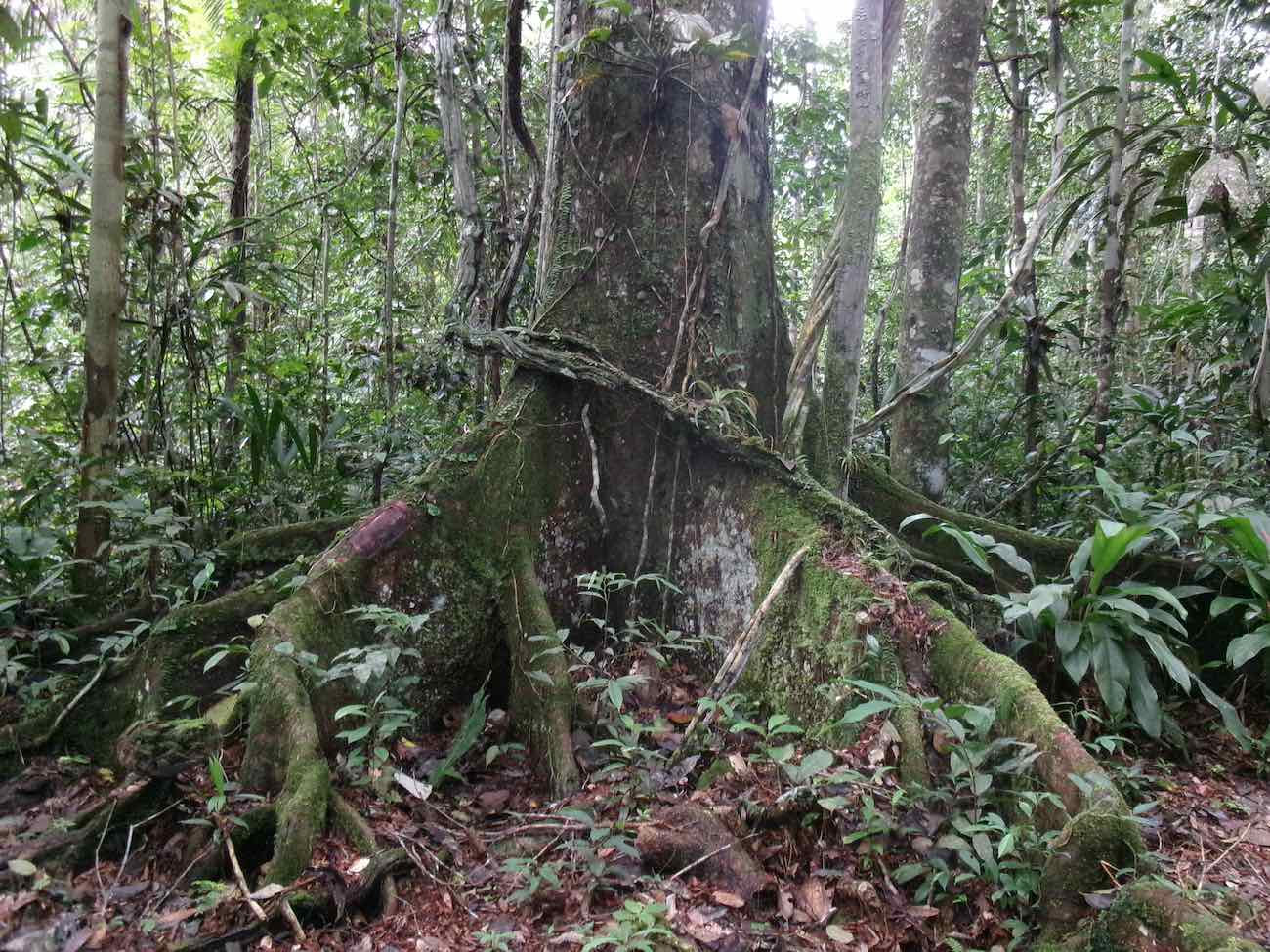
Aguila caspi (Alchornea triplinervia) master tree, in the jungle surrounding our centre.
________________
- Aguila caspi (Alchornea triplinervia)
- Anacaspi (Apuleia leiocarpa)
- Ayahuma (Couroupita guianensis)
- Azúcar huayo (Hymenaea courbaril)
- Caballo sanango (Tabernaemontana siphilitica)
- Capirona negra (Calycophyllum spruceanum)
- Chiric sanango (Brunfelsia grandiflora) – twigs with leaves, flowers, and small fruits,
- Chuchuhuasi rojo (Maytenus krukovii)
- Chullachaqui caspi (Tococa guianensis)
- Clavo huasca (Tynnanthus panurensis)
- Cumaceba (Swartzia polyphylla)
- Cuna Lupa caspi / Cuna Lopa caspi (Unidentified / Un-indexed)
- Fierro caspi (Minquartia guianensis)
- Guariuba / Guariuva (Clarisia racemosa)
- Huacapurana (Campsiandra angustifolia)
- Huarmi renaco (Clusia rosea)
- Huasaí (Euterpe oleracea) – root
- Huayra caspi (Cedrelinga cateniformis)
- Huayruro (Ormosia coccinea)
- Icoja (Unonopsis floribunda)
- Latapi caspi (Guarea guidonia)
- Lupuna blanca (Ceiba pentandra)
- Machinmango blanco (Eschweilera albiflora)
- Machinmango negro (Eschweilera coriacea)
- Mapacho (Nicotiana rustica)
- Matico / Cordoncillo (Piper aduncum)
- Motelo sanango / Motelo zanango (Abuta grandifolia) – shrub
- Mururé (Brosimum acutifolium)
- Palisangre (Brosimum rubescens)
- Pampa renaco (Ficus americana)
- Puca lupuna / Puka lupuna (Cavanillesia umbellata)
- Pucuna caspi (Brosimum utile)
- Remocaspi (Aspidosperma excelsum)
- Renaquilla (Ficus paraensis)
- Tahuari (Handroanthus serratifolius syn. Tabebuia serratifolia)
- Tangarana roja (Triplaris americana)
- Uña de gato (Uncaria tomentosa)
- Vena renaco (Ficus sp.)
_____
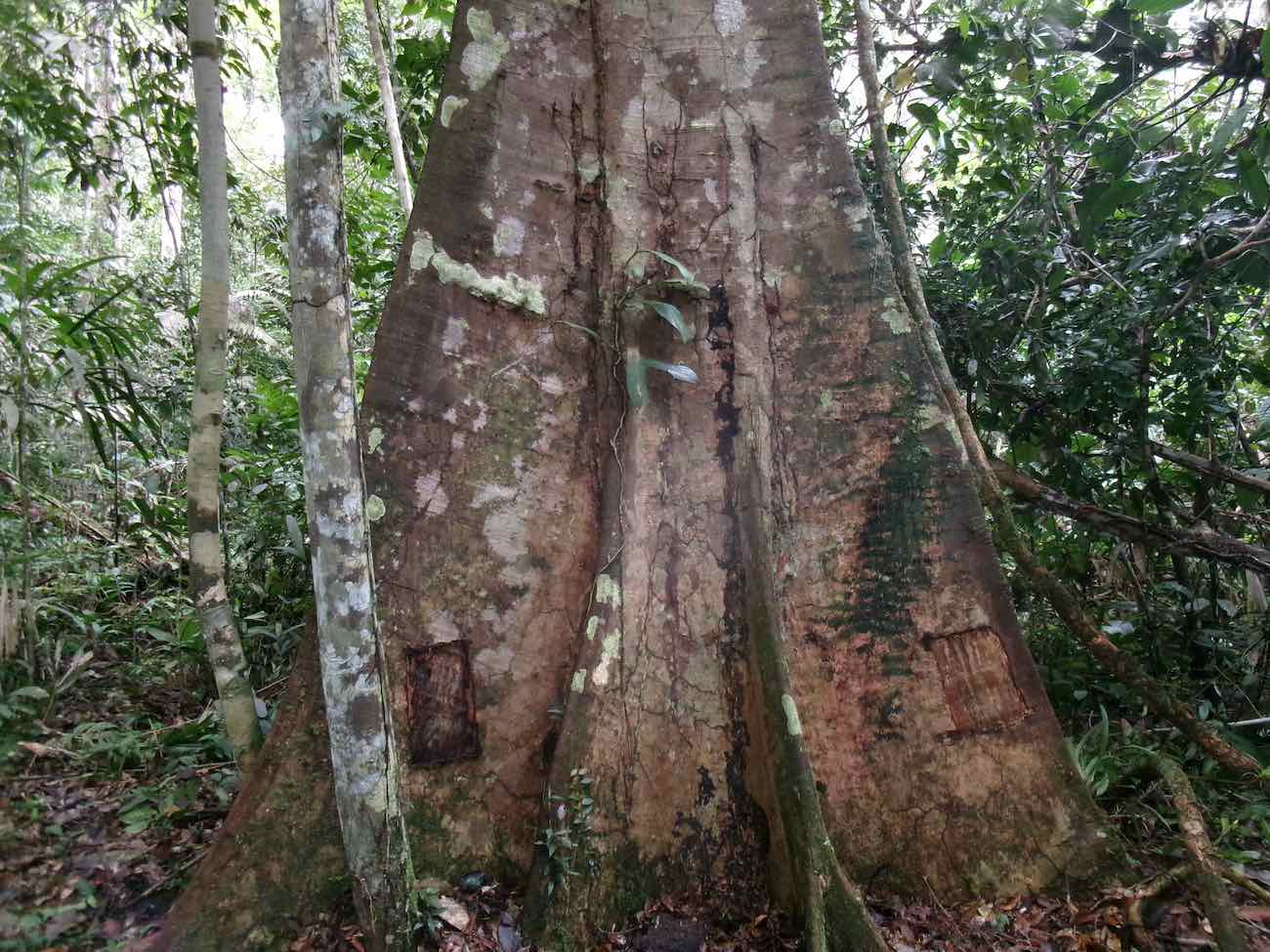
The enigmatic Cuna Lupa caspi (Unidentified) master tree, in the jungle surrounding our retreat centre.
Important Note: If you specifically wish to undertake your shamanic apprenticeship dieta with the 37/38-plant concentrated master trees brew above, your retreat must be scheduled during dates presided over by Don Guido, with the latest cut-off start date being Monday 5th of October 2026, which in turn means completing your reservation on/by 16th of August 2026.
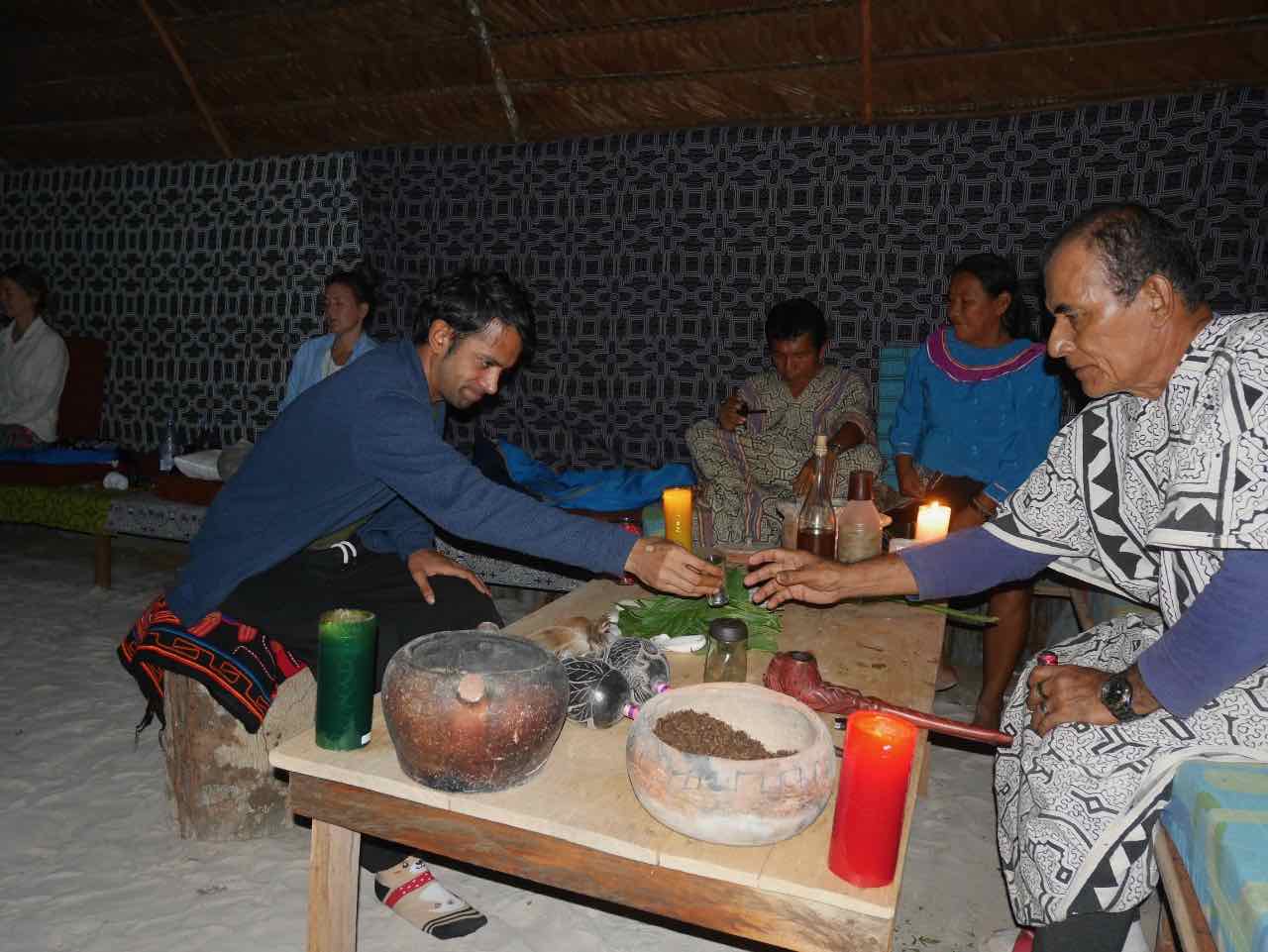
Toé (Brugmansia sp., Angel’s trumpet) ceremony at night, with Don Guido in the jungle.
The various types of shamanic dieta, allowed food & restrictions.
For a complete list of the different types of shamanic dietas we offer, and associated permitted and/or restricted food, please visit the following links for the dieta with Don Armando, as both shamans do follow the same style:
1. Strict shamanic dieta with master trees and dieta for the shamanic apprenticeship – I. Please visit this link.
2. Medium strict shamanic dieta – II. Please visit this link.
3. More flexible shamanic dieta – III. Please visit this link.
4. Shamanic dieta with an individual master tree, vine (Ayahuasca, Renaquilla, Huarmi Renaco) or plant teacher (Coca, Ajos Sacha, Toe’, Camalonga, etc) – IV. Please visit this link.
5. Pre-dieta or diet-tester – V. Please visit this link.
Don Guido maintains that during the shamanic dieta the spirits of the teacher plants and master trees manifest themselves in the guise of visions, dreams and messages/revelations, teaching one what to do and how to prepare a medicine for different types of illnesses. The teacher trees help, protect and make one strong during the dieta whilst their mother spirits teach the dieter the icaros – magical medicine songs coming directly from the plant spirit world – during the Ayahuasca ceremonies. Then, during the apprenticeship, the disciple will be taught by the shaman a medicine song mentioning the names of each and every one of the master trees taken during the dieta itself.
Don Guido also leads San Pedro cactus retreats and dietas. To incorporate this experience into your retreat, you may choose from several formats: optional ceremonies to complement an Ayahuasca or other dieta; a dedicated San Pedro segment to be combined with another retreat; or an exclusive dieta focused solely on San Pedro. For your journey, you will be guided by one of our esteemed healers: either Don Guido, Shipibo Maestro Ronel, Shipibo Maestra Celia, or Shipibo Maestra Ercilia. Regardless of who guides you or the format you choose, the San Pedro medicine will be expertly prepared and administered to ensure you have a safe and profound experience.
________________________