Shamanic Apprenticeship retreat (3 Months), PERU

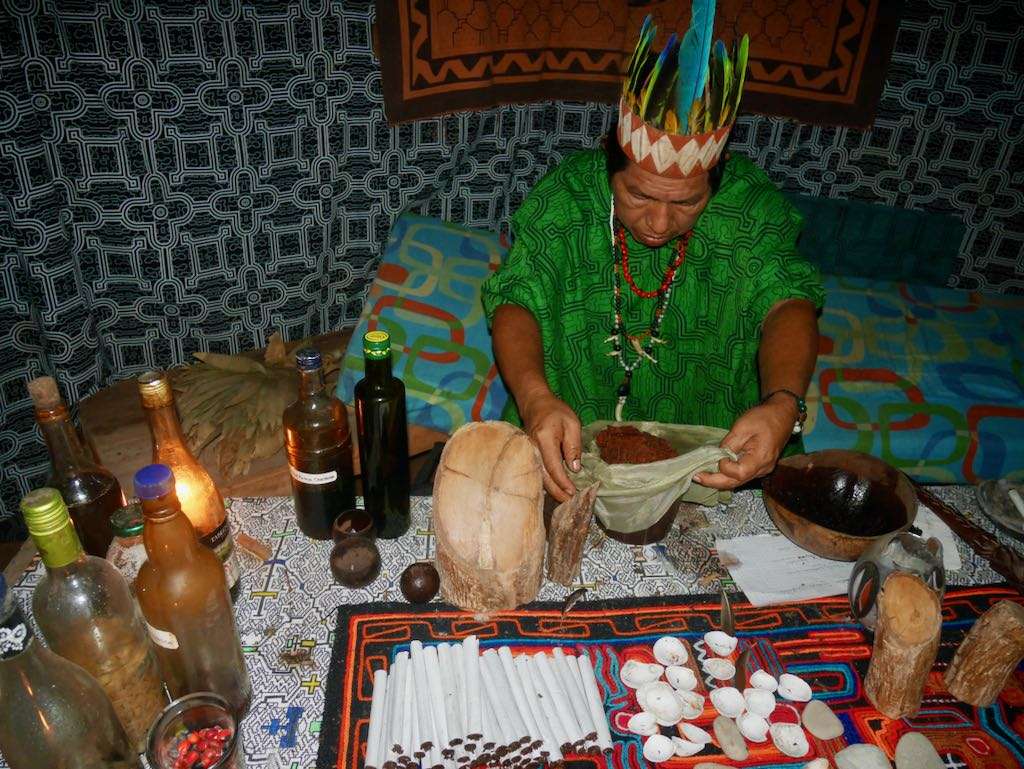
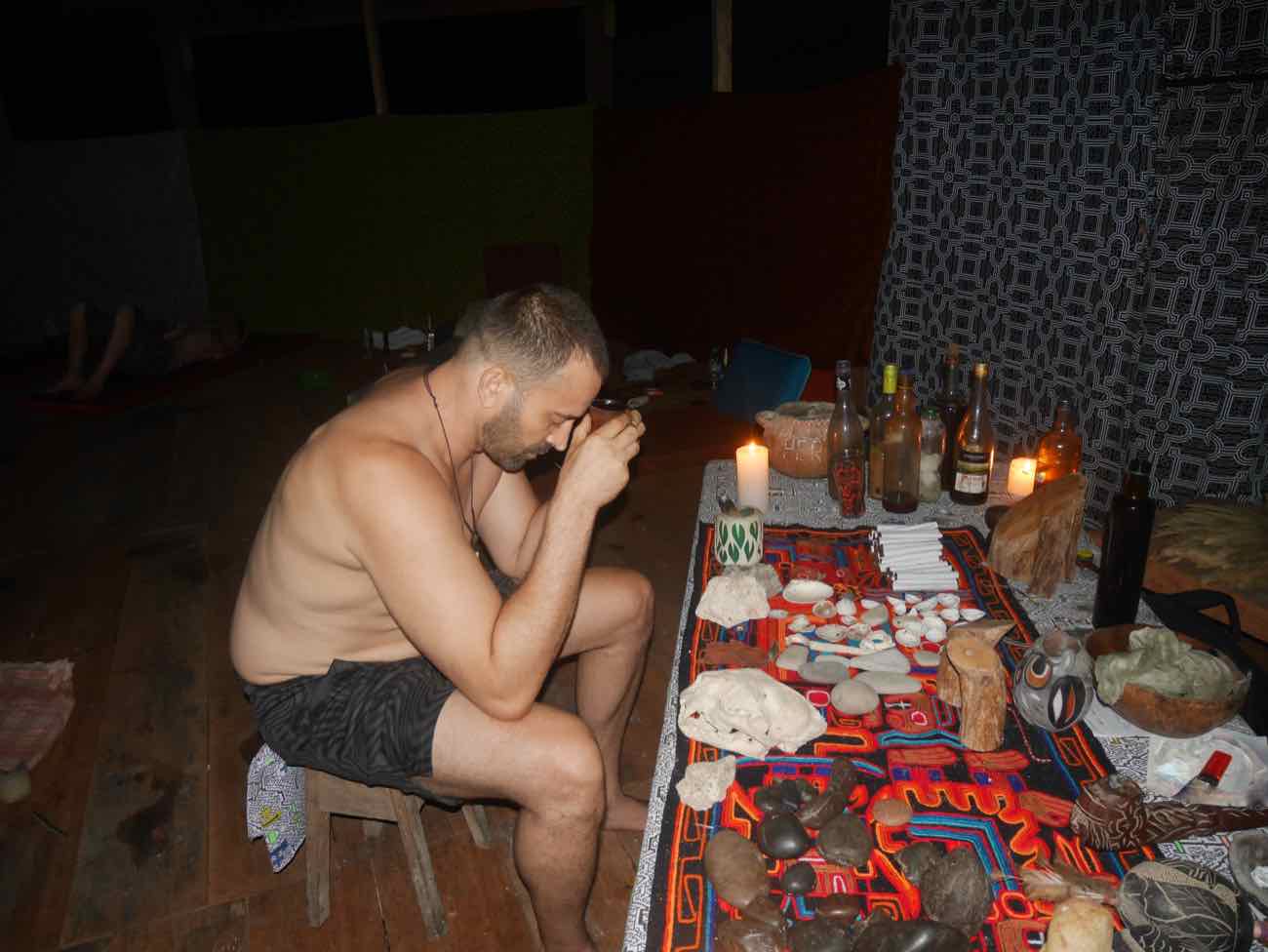
Huayra caspi ceremony at night, in the jungle. Meditating before drinking the powerful Huayra caspi master tree brew, in the Maloka.
________
What can I say about this place? It’s my second visit and once again it exceeded all my expectations.
This is by far the most extensive, challenging retreat to study under the Master Trees in Peru. I’ve been to many places and you won’t find a better teacher than Don Armando and Clever. They both go out of their way to reach you as much as possible during your training. 24 hr support and will not hold back teaching you everything you need to learn that many other shamans would never teach you. They are so caring and will become your family.
As far as the programme A+++. I gained more than I ever could have imagined. Thank you, Thank you!!!
The facility is top notch and all the master trees are on site giving you an opportunity to fully immerse yourself with the environment.
The staff is amazing and will miss them all until my next visit. You can bet that my return will be at El Mundo [Magico], working under Don Armando and Clever.
So much love for this place! Changed my life.
Jonathan Sebag, USA
Shamanic Dieta with Toé/Brugmansia (31 Days), PERU
`_________
The medicine didn’t really talk to me. But, I can say that every time I come, I leave a different person.
___
Mark Flierl, USA

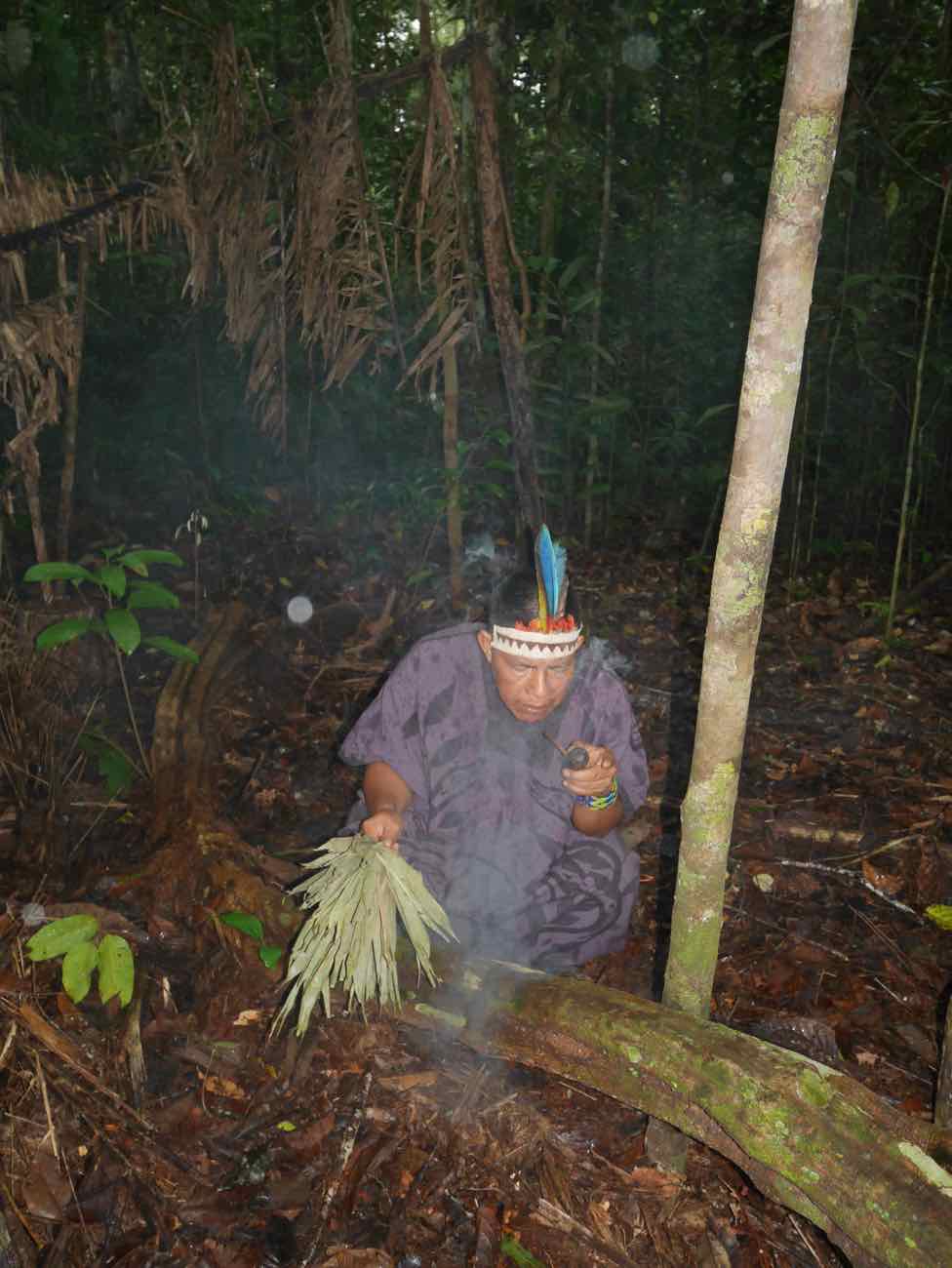
Don Armando ritually offering Mapacho smoke to the Huarmi Renaco master vine, in the jungle surrounding our centre, in the Peruvian Amazon.
______

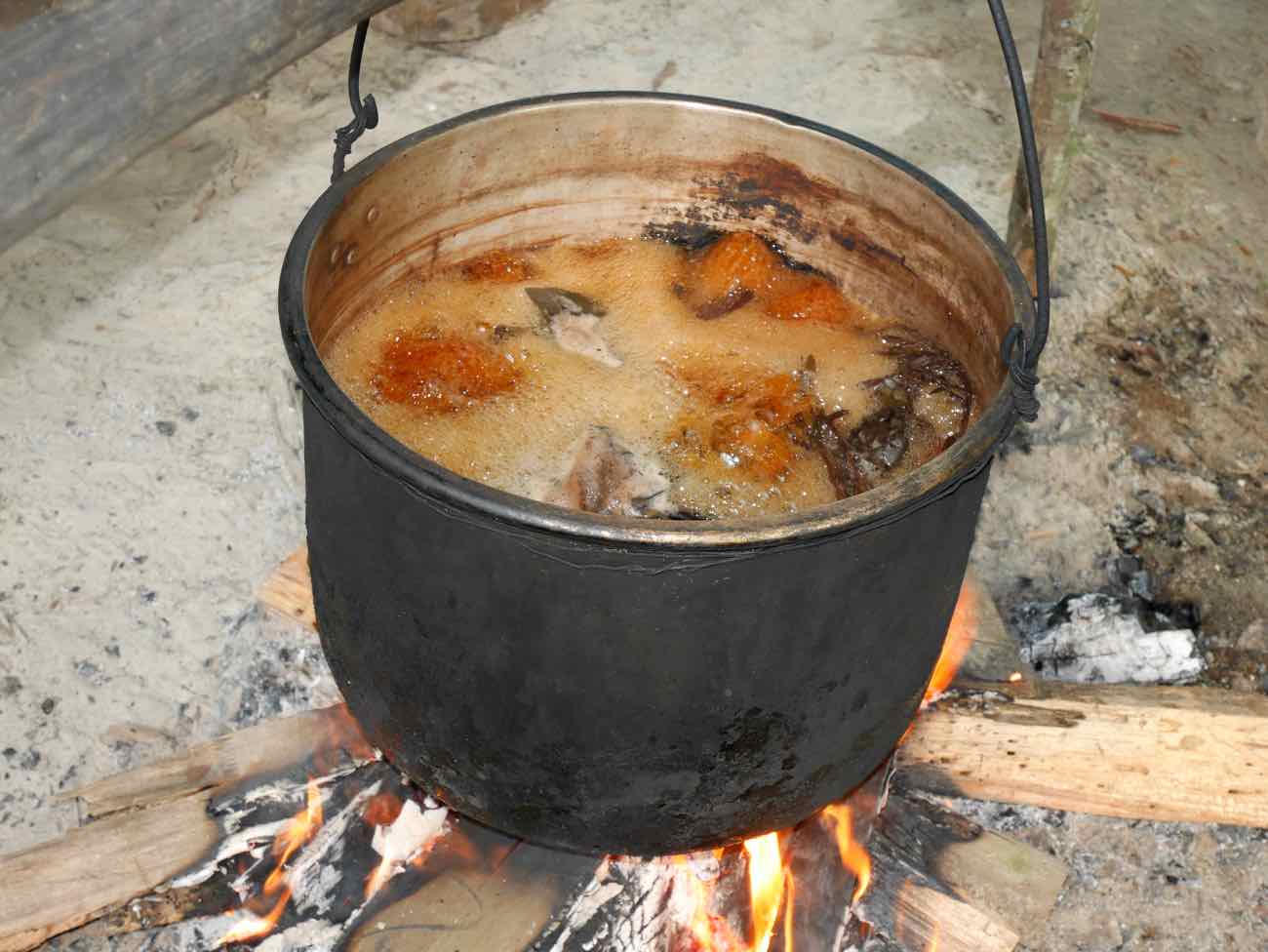
Preparing the master trees, vines and plant teachers to be used in the shamanic apprenticeship dieta.
Download our FREE PDF Programmes for the:
• “SHAMANIC PLANT DIETA APPRENTICESHIP” retreat (3 Months/91 Days)
• “SHAMANIC DIETA WITH MASTER TREES” (45 Days)
• “SHAMANIC PLANT DIETA WITH TOÈ” (31 Days)
__________________
MASTER TREES & TEACHER Plants of the shamanic Dieta
The one below is a list of the master trees, vines and teacher plants that may be “dieted” with as part of the shamanic apprenticeship with us. The actual plants one may “diet” with during the shamanic dieta may vary, depending on local availability and the specialisation of the shaman you will be training with. This also depends – whenever possible – on your own preferences and predilections (if you have already done the traditional plant diet before), and your level of experience (if applicable).
Last but not least, the choice of what master trees you should include in your dieta may equally depend on the messages that the shaman receives from his banco spirit guides/helpers during the ceremonies, as well as on the messages from the plant spirits world that one doing the dieta may receive during the ceremonies, in vision, or in dreaming. Since what we offer is an authentic shamanic dieta deeply rooted in the Vegetalista tradition of the Peruvian Amazon, the weight that revelations have here is greater than any nicely laid out programme outline (no matter how unique and technically detailed it may be), so be prepared for your schedule to be adapted/adjusted accordingly.
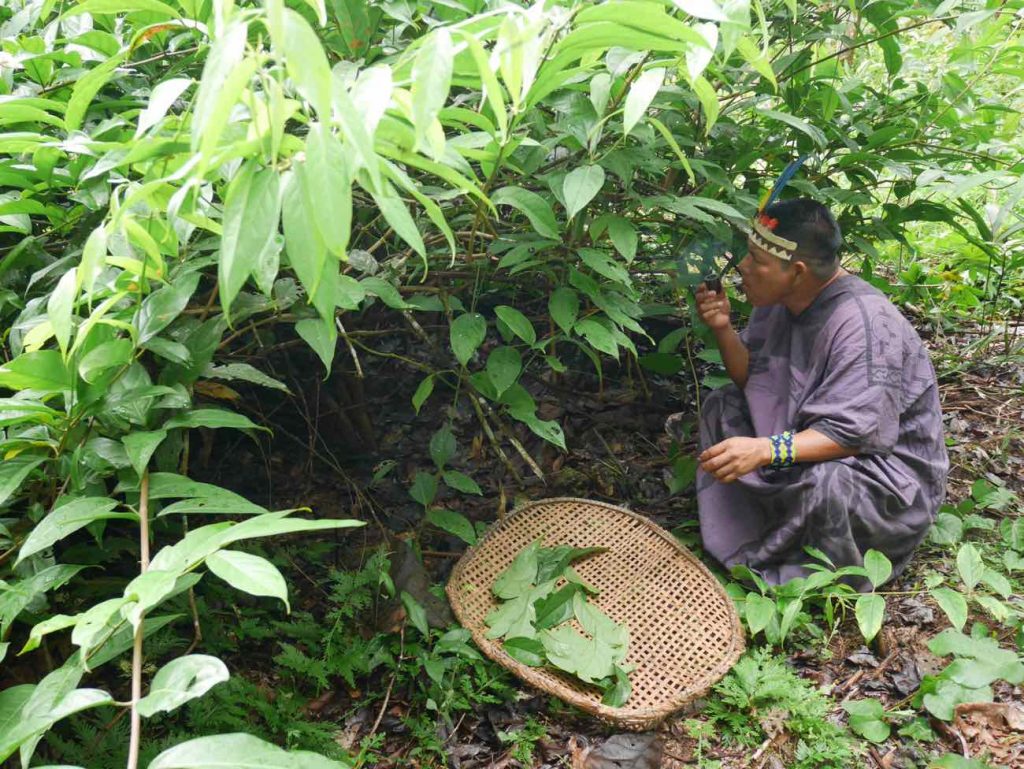
Harvesting Chaliponga (Dyplopteris cabrerana) in the Amazon jungle, in preparation of the Ayahuasca brew.
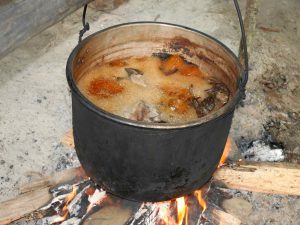
Whether opting to do the 45 days shamanic dieta, or the 3-6 months dieta for the shamanic apprenticeship with either Don Guido or Don Armando, it will be possible to diet at the same time with thirty-five Master trees and vines, with the addition of Coca leaves, Mapacho (jungle Tobacco) and the bark of the Cacao tree (to offset the yang/fire energy of the master trees with its cooling & soothing effect). All ingredients are cooked together over a traditional wood fire for about 8-10 hours until the original 50 litres of liquid are reduced to about 2 litres; the concentrated master trees brew may be drunk by the apprentice up to seven times in a month, for a maximum of 21 times, in a three months apprenticeship retreat (up to 30 times in a six months retreat). One may also opt to go for the traditional dieta with only one individual Master tree (or Teacher plant, or vine) at any given time, with the freshly harvested bark left to macerate in water, then filtered and drunk as an infusion, in ceremony.
When the Master trees are dieted all together, they are always cooked for long hours until one gets a dense concentrated extract, whilst when they are dieted individually, one at a time, they are only left in water infusion at room temperature for several hours, and the resulting tea is filtered before been drank. So, in terms of alkaloids and essences extracted from the master trees, the concentrated version of the brew offers more than the traditional tea infusion. And that is the reason why some Palero shamans repute dieting with all the Master trees to be a more powerful fast track apprenticeship, in that one learns much more, and much more quickly, compared to the traditional shamanic dieta with only one individual Master tree (or Teacher plant/vine) at a time. Don Armando, however, maintains that both styles of dieta (the traditional one, “dieting” with an individual master tree/plant at a time and the dieta with dozens of different master trees mixed together) are valid and must be respected.
There are, however, further restrictions when “dieting” with individual master trees as – in tune with what Don Armando himself reports – when the tea/brew drank in ceremony is prepared exclusively with the freshly harvested bark of the tree itself, the mother spirit of the plant appears to be *very* “jealous” and does not tolerate other plants to be mixed/ingested/used at the same time. That in turn means that when your dieta is with an individual master tree reputed to be of primary shamanic importance, there cannot usually be Toé, or Camalonga ceremonies, not even smudging with Palo Santo (an essential part of the rituals of spiritual purification),or exposure to smoke (except for Tobacco smoke). The optional San Pedro ceremonies may still be done, but they must be moved to the last month of your training.
We endeavour to offer to all our retreat participants – and especially the ones enrolling for the shamanic plant dieta/apprenticeship with us – the opportunity to experience at least once during their staying Ayahuasca prepared with the extremely rare and ultra-powerful Puma chacruna (Psychotria carthaginensis) plant teacher, which gives a much more potent trance and intoxication than the ordinary Chacruna (Psychotria viridis) and even more powerful than the Chaliponga/Chagropanga/Huambisa chacruna (Dyplopteris cabrerana), typically used as main admixture to the Ayahuasca brew in both Peru and Colombia.
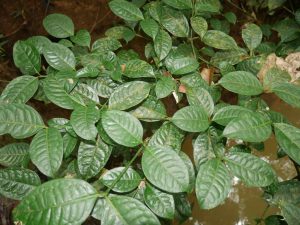
The Puma chacruna connects one with everything related to the earthly realm: living animals, plant teachers and master trees. Visions are clearer and may even take one to heavenly places during the trance. It often induces visions of a giant, raging and most powerful Puma (Puma colorado), sometimes appearing in the guise of a giant black Puma, hence the name. Don Armando was initiated to this magical plant when he was only a 22 years old curandero, when invited to diet for 9 months Suni/Soliman ayahuasca (Banisteriopsis martiana) and Puma chacruna in the native Quichua indigenous community of Panayjillo (a tributary of the Napo river).
A UNIQUE SHAMANIC DIETA WITH MORE THAN THIRTY-FIVE MASTER TREES & VINES!
__
Two Lineage Expressions: Don Armando and Don Guido
Our work at El Mundo Mágico is rooted in deep Amazonian Vegetalismo, expressed through two complementary formulations developed by our master Vegetalistas:
- The Foundational master trees brew (Don Armando’s lineage):
Governed by the sacred distinction between master trees of Primary and Secondary shamanic importance. This classic formulation combines the traditional master tree matrix with Cacao bark, Coca leaves, and Mapacho, strictly adhering to the dietary restrictions (such as the exclusion of Toé, Camalonga, and smudging) revealed to Don Armando. - The Advanced 37 master plants brew (Don Guido’s lineage):
Introduced in May 2026 and available exclusively during retreats presided over by Don Guido. This concentrated brew sets aside Cacao bark and Coca leaves, expanding the plant teacher matrix to 37 distinct species, including the elusive, protective and mysterious canopy trees like the Cuna Lupa caspi (unidentified) held together solely by Mapacho.
While each formulation represents its own distinct botanical alliance, Don Guido’s brew is administered under his own direct guidance and ceremonial protocols.
* Explore Don Guido’s lineage complete 37-master trees, vines and shrubs here →
* Continue to Don Armando’s lineage below →
__________________
Don Armando’s lineage. Diet with the following 33 Master Trees & 3 teacher vines, ALL AT ONCE:
Ana caspi negro (Apuleia leiocarpa; bark)
Ayahuma (Couroupita guianensis, the “Cannon ball tree”; bark)
Azúcar huayo (Hymenaea oblongifolia; bark)
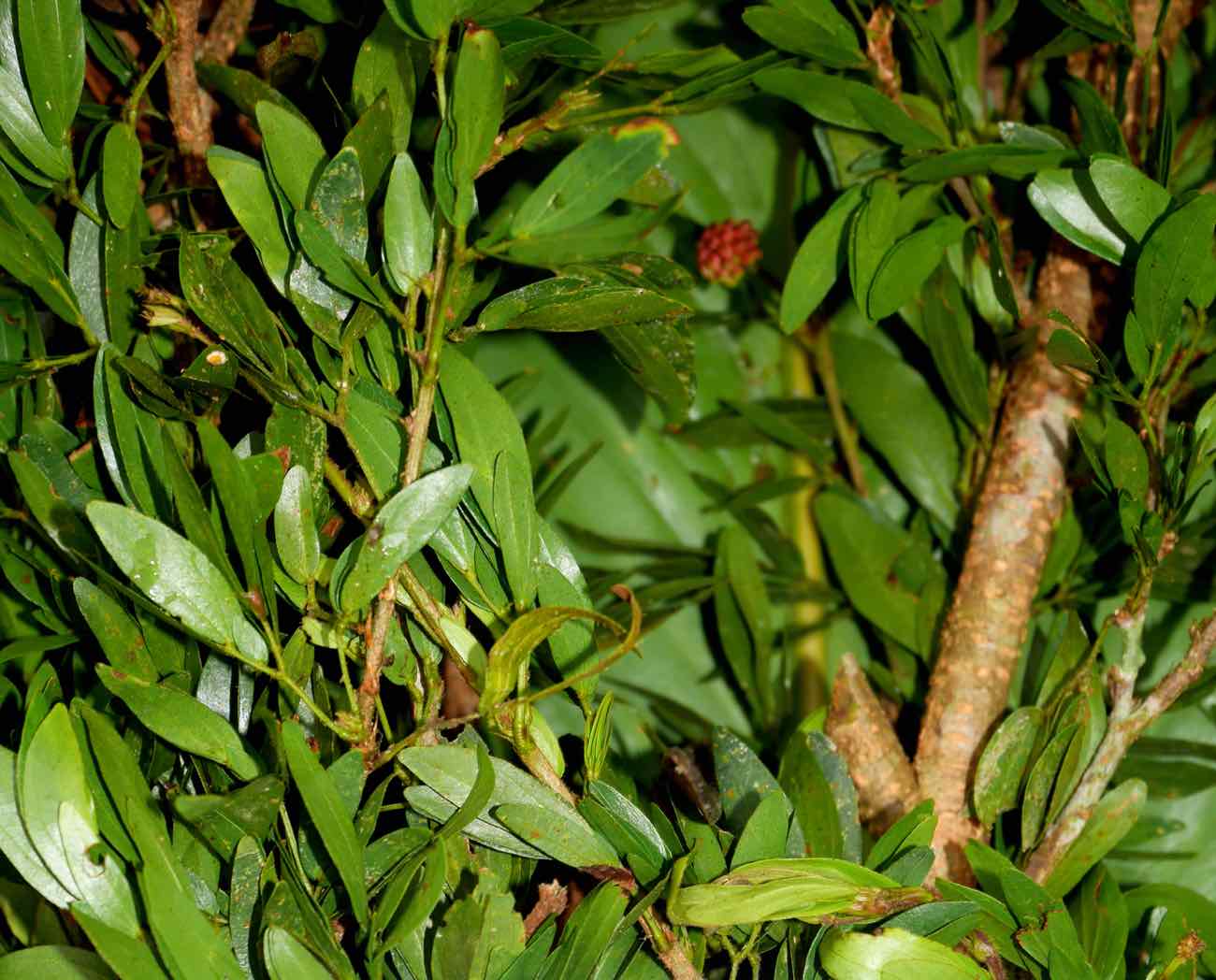
Bobinsana (Calliandra angustifolia; branches with green leaves)
Bolaquiro (Schinopsis peruviana; bark)
Caballo sanango (Tabernaemontana angulata; stem)
Capinuri (Maquira coriacea; bark)
Capirona negra / Yana Capirona (Calycophyllum spruceanum; bark)
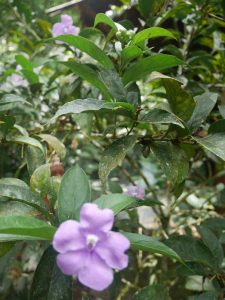
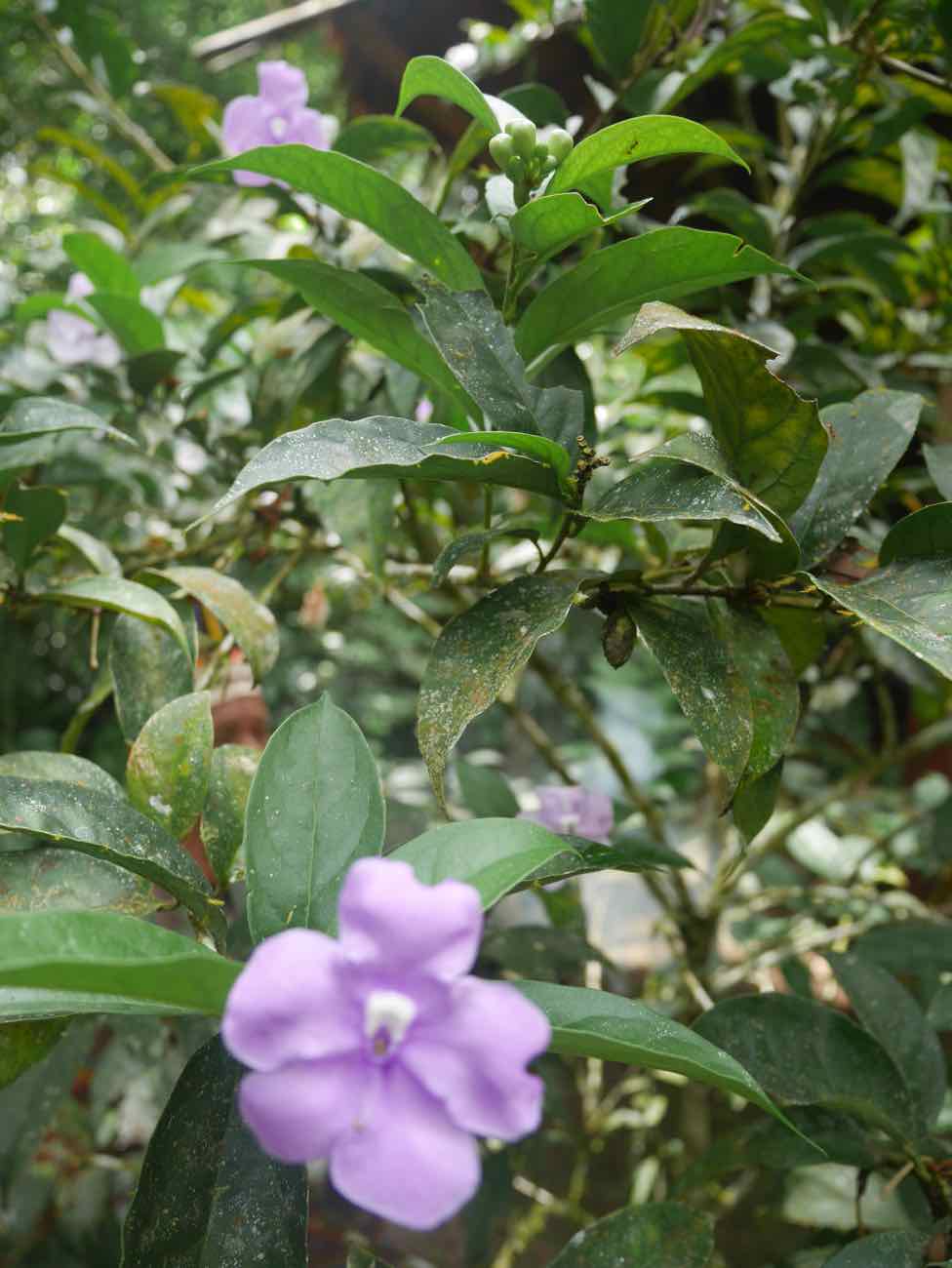
Chiric sanango (Brunfelsia grandiflora; leaves)
Chuchuhuasi / Chuchuwasi (Maytenus sp, Duke & Vasquez, 1994; Heisteria pallida, Luna 1999:13; bark)
Chullachaqui caspi / Chullachaki caspi (Brysonima christianeae, Luna 1999:13; Remijia peruviana, Duke & Vasquez, 1994; bark)
Cocobolo (Dalbergia retusa; bark)
Cumaceba / Cumaseba (Swarzia polyphylla; wood)
Cumala de altura – caupuri (Dyalianthera sp. / Virola sp. / Iryanthera sp.; bark)
Estoraque (Myroxylon balsamum; wood)
Huacapú / Fierro caspi (Minquartia guyanensis; “Ironwood”; bark)
Huacapurana (Campsiandra angustifolia; bark)
Huarmi Renaco (Clusia rosea; vine cuts, including bark and wooden core)
Huasai / Huasahi / Acai (Euterpe precatoria; roots)
Huayra caspi / Tornillo (Cedrelinga catenaeformis; bark)
Huayruro (Ormosia coccinea / Ormosia sunkei; bark)
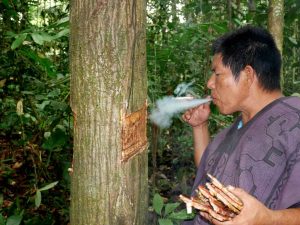
Icoja negra (Unonopsis spectabilis / Unonopsis floribunda; bark)
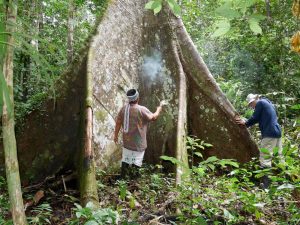
Lupuna blanca (Ceiba pentandra; Kapok tree; bark)
Machimango negro (Eschweilera sp.; bark)
Matico / Cordoncillo (Piper Adundum; branches with green leaves)
Mururé (Brosimum acutifolium; bark)
Palisangre (Brosimum rubescens; wood)
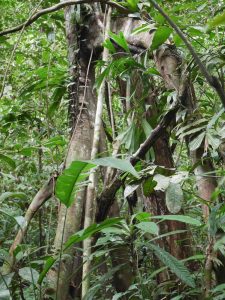
Pampa renaco (Ficus americana Aubl.; bark)
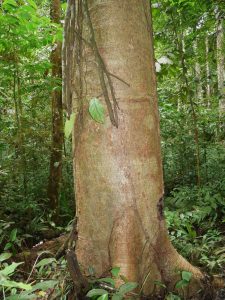
Puca lupuna / Puka lupuna / Lupuna roja (Cavanillesia umbellata; bark)
Pucuna caspi / Pukuna caspi (Iryanthera tricornis, the blowgun tree; bark )
Puca tangarana / Puka tangarana / Tangarana de altura (Tachigali sp.; bark)
Remocaspi (Aspidosperma parvifolium / Aspidosperma excelsum; bark)
Renaquilla (Clusia rosea; vine cuts, including bark and wooden core)
Shihuahuaco (Dipteryx micrantha; bark)
Uchu sanango / Ullo zanango (Tabernaemontana sananho; roots)
Vena renaco (Ficus sp; bark, or vine cuts: including bark and wooden core).
Cacao (Theobroma cacao), a few Coca (Erythroxylum coca) leaves, and Mapacho (Nicotiana tabacum/Nicotiana rustica; jungle tobacco) are also added to the master trees brew, in different proportions. Cacao is reputed by Don Armando to be more a medicinal tree, than a master tree and its bark is used as admixture in the “concentrado de palos maestros” (concentrated master tree brew) mainly for its cooling energy, to balance the yang energy of the master trees. It is also used as admixture to the Ayahuasca brew, to make it taste better, adding a sweeter tune, and for its stomach-soothing properties.
_________________
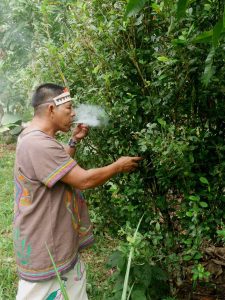
With either Don Guido or Don Armando it is possible to diet with a single plant teacher or master tree individually, one at a time, as well as with the whole lot of 35 master trees and vines with which is prepared the ultra-concentrated brew he makes. One may also diet the powerful Toé plant (Brugmansia sp.), starting from an absolute minimum of 15 days up to 61 days maximum (standard programme we have is made of 31 days); or else, may diet with the powerful organic black jungle Tobacco (Nicotiana tabacum, 16 days/15 nights diet, only indicated for the most senior and experienced dieteros/apprentices; drink the tobacco brew 4 times a day, for a total of 60 times in 15 nights) and with the Coca plant (Erythroxylum coca, 08-31 days), which is shamanically used to clarify the vision and for divination (it is also used in the Andes region of South America to prevent/treat soroche or altitude sickness). Both Toé and Camalonga have a strong association with dreaming states, and are used traditionally for divination and to enhance the power of vision. For more details on each type of plant diet we offer, and what is included, please visit the Ayahuma retreat page.
It is also possible to diet with the Camalonga (Thevetia peruviana, in English known as “Yellow Oleander) master tree on its own. In this case, the Camalonga diet will last for a fixed period of 31 days (the Camalonga brew is drank twice a week, in ceremony, at night, with the shaman). Camalonga is traditionally used for divination and to enhance the power of vision, whilst teaching one in dreaming (it causes a gentle intoxication, but has no psychotropic effects as such).
‘‘PLANTAS MAESTRAS” (Teacher Plants) which may be dieted individually (aside from any of the master trees and vines listed above):
- Camalonga (Thevetia peruviana)
- Coca (Erythroxylum coca)
- Mapacho (Nicotiana sp.)
- Toé (Brugmansia suaveolens, Brugmansia sp.)
- Ajos sacha (Mansoa alliacea)

Shamanic ritual in the jungle, meditating in front of the Huarmi Renaco (Clusia rosea) teacher vine, the ‘liana of love’.
”SOGAS” (Vines) which may be dieted individually:
- Cielo ayahuasca (Banisteriopsis caapi)
- Huarmi renaco (Clusia rosea)
- Lucero ayahuasca (Banisteriopsis sp.)
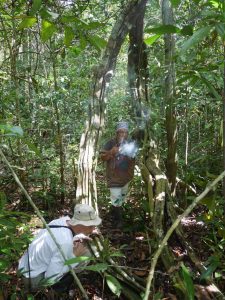
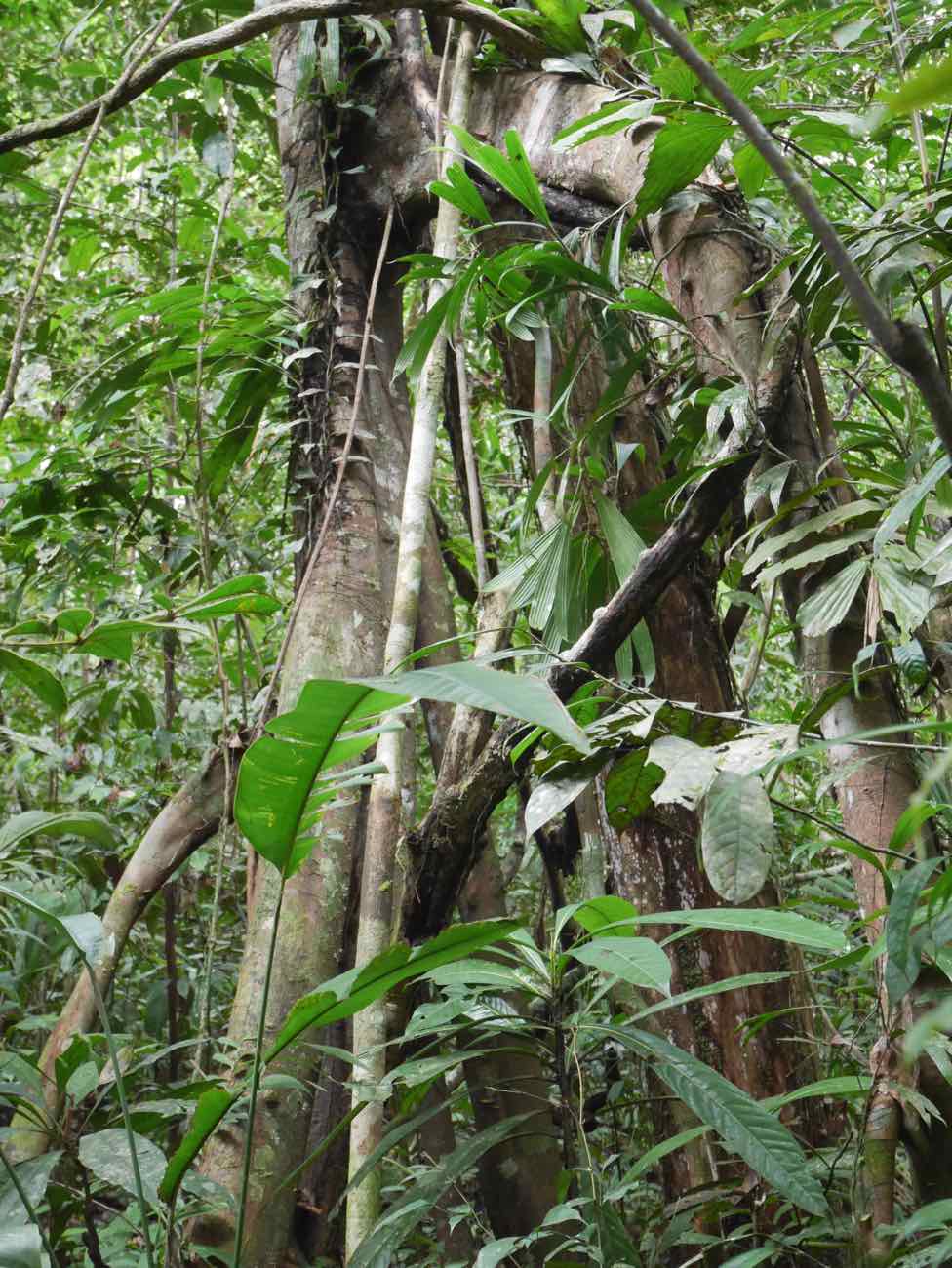
Spectacular giant Soliman ayahuasca (Banisteriopsis martiana) vine growing wild in the jungle surrounding our retreat centre.
- Puma ayahuasca (Banisteriopsis sp.)
- Renaquilla (Clusia rosea)
- Suni ayahuasca / Soliman ayahuasca (Banisteriopsis martiana)
- Vena renaco (Ficus sp.)
The shamanic dieta with Ayahuasca
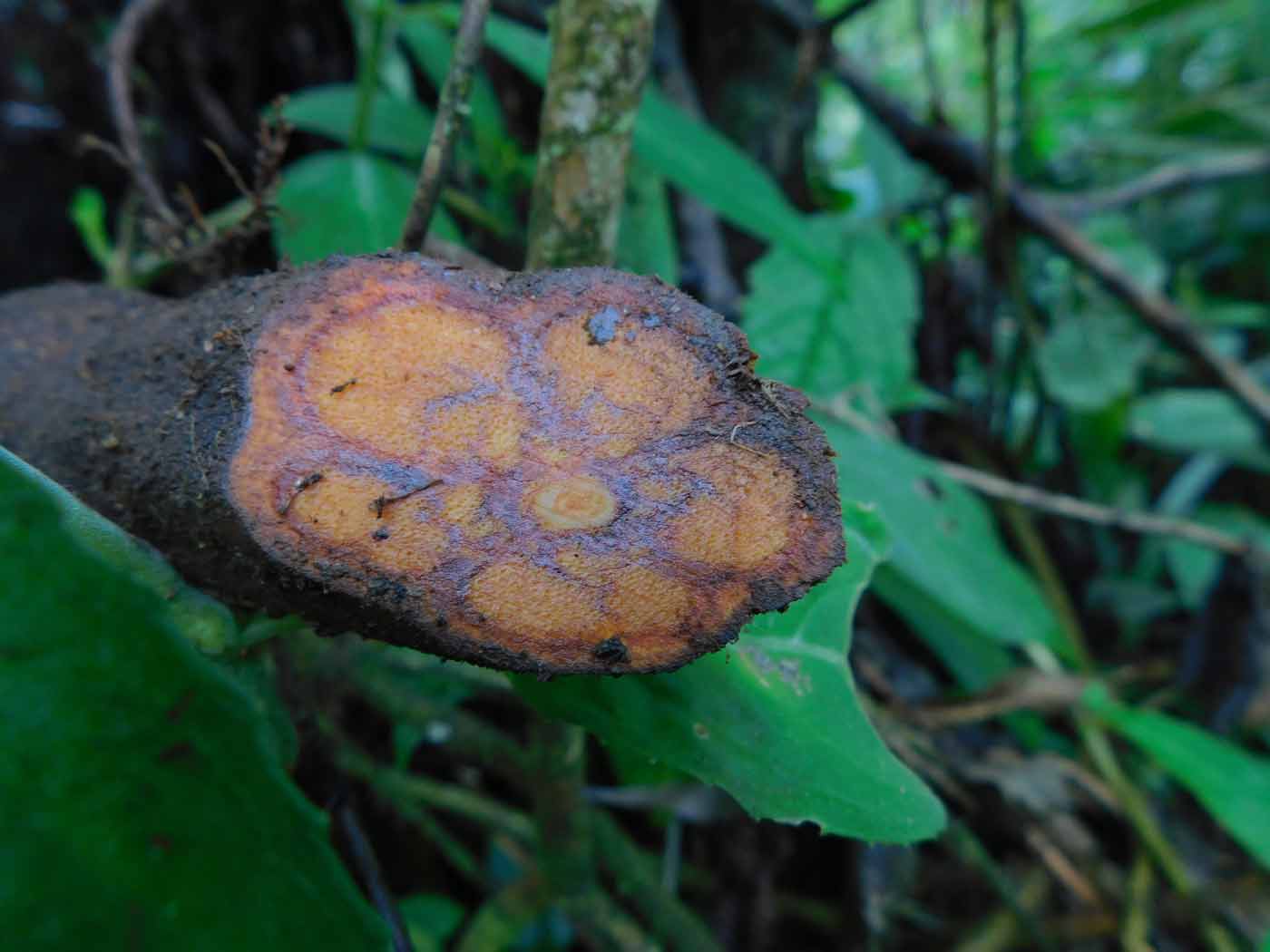
In the specific case of the dieta with ayahuasca, one may diet with either Cielo ayahuasca (the best for initiations), Suni ayahuasca, Puma ayahuasca and Lucero ayahuasca. Puma ayahuasca is known among the Taitas of Southern Colombia as Tigre yagé (or else, Yagé tigre), and among the Ingas of Putumayo as Tigrihuasca (a Quechua composite word meaning “vine of the jaguar”), as the cross-section of the vine seems to resemble the paw of the jaguar; dieting with this variety of Ayahuasca for many years is believed to aid the shaman to shape-shift into a jaguar, during the ceremonies at night.
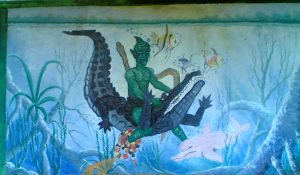
The Suni ayahuasca – also known by the name of Soliman ayahuasca, or black ayahuasca – is possibly the most potent variety of ayahuasca known in Peru, and is best suited to those who are highly skilled and very experienced, for advanced work. Dieting with this vine is believed to allow a Vegetalista (or an apprentice) to magically access the sub-aquatic realm and the creatures living underwater. Suni ayahuasca connects one with the two levels of the aquatic realms where dwells beings of the underwater world. On the first level one connects with creatures like fishes, pink dolphins (object of many beliefs in the Amazon, and reputed to be powerful shamans, sorcerers, bewitchers and seducers), anacondas, mermaids, Yacurunas (spirits of the water), “ghost ships”, rayamama (a giant and most feared mythological hairy stingray, 30-40 metres in circumference, which act as a lid for subterranean channels connecting enchanted cities at the bottom of lakes) and with the very energy of water, rivers, cochas (lagoons) and jungle streams. In the second level (of the aquatic/aquatic realms) live instead very strange men-like creatures who do not have a rectum, giant duck-shaped beings, and toad-like beings.

“La Pata del Tigre”, the jaguar’s paw! Cross section of a Puma ayahuasca / Yagé tigre vine, resembling the paw of a jaguar.
Ayahuasca diet: Ayahuasca brew made with a combination of either Cielo, Suni, Lucero or Puma ayahuasca.
As in the Ayahuasca retreat, Ayahuasca ceremonies, Camalonga rituals and Toé sessions, are included in *MOST but NOT ALL* types of shamanic plant diet retreat we offer. Two most prominent exceptions to this rule are the Tobacco/Mapacho diet, where there are no Ayahuasca ceremonies (exception made for the day before and the day after of the actual dieta), and the Coca plant diet, where there will be 3 Ayahuasca ceremonies per week and Toé ceremonies (smoking the dry leaves of the plant, and drinking its freshly squeezed juice, once a week), but NO Camalonga ceremonies. Please note that further exclusions may apply, depending on the type of master plant or tree you may be dieting with, at the sole discretion of the shaman.
REFERENCES:
CALVO, Cesar, The Three Halves of Ino Moxo: Teachings of the Wizard of the Upper Amazon, Inner Traditions 1995
DUKE, James Alan, VASQUEZ, Rodolfo, Amazonian Ethnobotanical Dictionary, CRC Press 1994
LUNA, L.E. & AMARINGO P., Ayahuasca Visions, The Religious Iconography of a Peruvian Shaman, Berkeley 1999
LUNA, L.E. & AMARINGO P., Ayahuasca Visions, The Religious Iconography of a Peruvian Shaman, Berkeley 1999: 50-52
LUNA, L.E., Vegetalismo. Shamanism among the Mestizo Population of the Peruvian Amazon, Acta Universitatis Stockholmiensis, Stockholm Studies in Comparative Religion 27, Stockholm 1986
MEJIA, K. & RENGIFO E., Plantas Medicinales de Uso Popular en la Amazonía Peruana, Agencia Española de Cooperación Internacional, Lima 2000
Some scientific nomenclature – especially for Huarmi renaco, Pampa renaco, Soliman ayahuasca and a few more plants – was provided by Dr. Juan RUIZ MACEDO, botanist from UNAP (Universidad Nacional de la Amazonia Peruana), Personal communication (Iquitos, 20 May 2025)
__________
Toé is a very powerful and toxic plant, its effects may be comparable to an extent to those of Iboga. It requires a very strict diet as well as utmost respect, knowledge, caution, experience and skills to be properly administered and taken, under the constant guidance of an expert shaman specialized in working with it. Equally, the Mapacho/tobacco diet is best suited to most senior/expert apprentices, and is not recommended for novices.
FURTHER INSIGHTS INTO THE SHAMANIC PLANT DIET
What Is The Shamanic Plant Dieta?
Shamanic Plant Diet Apprenticeship: The Way of Wisdom
The Master trees and Plant Teachers of the Shamanic Diet
Shamanic Plant Diet and Ayahuasca
The Shamanic Plant Diet: Restrictions, Food and Plant Teachers
__________________
Download our FREE PDF Programmes for the:
• “SHAMANIC PLANT DIETA APPRENTICESHIP” retreat (3 Months/91 Days)

Soliman ayahuasca (Banisteriopsis martiana) ritual, in the jungle surrounding our retreat centre, in Peru.
Download our FREE PDF Programmes for the:
• “SHAMANIC PLANT DIETA APPRENTICESHIP” retreat (3 Months/91 Days)
• “SHAMANIC DIETA WITH MASTER TREES” (45 Days)
• “SHAMANIC PLANT DIETA WITH TOÈ” (31 Days)
__________________
General Restrictions of the Plant Teachers Diet
Total sexual abstinence should be observed during the shamanic plant diet (dieta) retreat – usually beginning from at least fifteen days before until thirty days after the completion of the training in our retreat centre (the shaman will give one guidelines and recommendations to follow, for the post-diet period, towards the end of the diet) – as well as maintaining a certain degree of relative isolation. Guests enrolling in the shamanic dieta shouldn’t expose themselves to direct sunlight, or to the rain (to avoid problems of sensitivity to humidity) and should avoid contact with strong smells (like perfumes and deodorants, exception made for those perfumes/colognes which have a specific shamanic use). Also, the diet must not be interrupted/curtailed: one must fully commit to the period chosen for his/her apprenticeship. Moreover, if one wishes to stick to the traditional diet, then shouldn’t use any toothpaste, shaving foam, or soap. A way around this may be – however – to use a natural clay or carbon-based toothpaste and natural, unfragranced, sulphur-based soap. These restrictions – gently favoured by our traditional palero shamans, but not compulsory, and less so implemented, unless one wants to – may come from the time when shamans retreated “al monte”, in virgin, pristine jungle to do their diet with master plants and trees, in complete isolation, and had to avoid being detected by wild animals.
Food Restrictions and Different Degrees of Flexibility in the Shamanic Diet
The following food restrictions usually apply to the shamanic diet: no salt, sugar, vinegar, sweets, spices, chilli, fats, oil, seasoning, canned food, stimulants, alcohol, fruit (including bananas, pineapple, mango and all sweet, tropical and citrus fruit), fruit juices, red meat, garlic, onions, lemons, industrial drinks, chilled drinks and no spaghetti/pasta/noodle, or caffeine-based drinks are allowed. Strictly, no pork, peccary, or wild boar meat and derivatives. Depending on who will be your teacher, there might be periods of rest (called “descanso”, in Spanish) – typically if/when one feels physically too debilitated and weak – during which the rigorous shamanic diet might be temporarily suspended for 1-2 days, and one might be allowed to eat almost normally.
There are different levels of strictness and flexibility in the food traditionally allowed in the shamanic dieta by Don Armando or Don Guido. The stricter form of dieta is the one which should be followed when doing the shamanic apprenticeship and dieting with master trees. To cater for the needs of guests who might find it too hard to follow the traditional dieta, it is possible at times to follow a “medium strict” and “more flexible” dieta style. To complete the picture of the various type, please visit the links to the dieta with individual master trees and to the pre-dieta or diet tester where you fill find in more detail what exactly is allowed for each type of shamanic dieta.
The food in the “flexible diet” temporarily allowed during the periods of break will be shamanically “treated” with icaros so that it won’t conflict or negatively influence your diet training.
Food Allowed in the Plant Teachers Diet
There are less food restrictions on the plant diet testers, to make it more flexible and accessible to potential candidates who may not need to enter into the strict traditional Amazonian training to follow the path of the shaman. Yet, some food from the list below – as specified – may require the final approval of the shaman you will be dieting with, so please ultimately check directly with him. Different shamans have different styles and degrees of acceptance as for what food might or might not be allowed during the dieta. Here is a list of the food which may be allowed during the shamanic diet with us:
- fish (the best is the Boquichico)
- green plantains (unseasoned: roasted, grilled, or boiled)
- rice
- rice pudding (unsweetened, unsalted)
- oat
- oatmeal
- coconut water (occasionally)
- lemon leaves tea
- lemon-grass (hierba luisa) tea
- free-range chicken (only allowed during the pre-dieta/diet tester, or at the very end of the shamanic diet proper)
- eggs (only allowed during the pre-dieta/ diet tester)
- carrots and broccoli (only allowed during the pre-dieta, or if specific dietary requirements have been agreed upon, before the beginning of the dieta retreat, typically, for 100% vegetarians, or vegans)
- fruit (only allowed during the pre-dieta, or if specific dietary requirements have been agreed upon, before the beginning of the shamanic dieta retreat, typically, for 100% vegetarians, or vegans)
- salad (only allowed during the pre-dieta, or if specific dietary requirements have been agreed upon, before the beginning of the dieta retreat, typically, for 100% vegetarians, or vegans).
All food needs to be unseasoned, unsweetened and unsalted. Fish will usually be served chargrilled. If one feels too debilitated because of the unsalted/unsweetened diet, one may have food with little salt and sugar, as well as eat fruit. This temporary suspension of rules, is devised to avoid physical exhaustion and depletion, and is entirely at the discretion of the Maestro you will be dieting with. This period of temporary lifting of some dietary restrictions may be between one and two days, before resuming the strict shamanic dieta. It remains paramount, however, to adhere to the traditional strict shamanic dieta especially if and when dieting with master trees, and all the more when taking the ultra concentrated master trees brew prepared with 35 master trees and vines, to connect with the energy and mother spirit of the plants.
What You May Do
- Read, listen to – or play – (appropriate, contemplative) music (acoustic instruments only, respecting the peace of other people).
- Write, rest, sleep, dream, have visions, meditate.
- Drink Ayahuasca, San Pedro (optional extra), smoke Toé and have Camalonga together with the shaman-s.
- Drink freshly squeezed Toé juice and black jungle Tobacco (depending on the specific programme you book).
- Learn how to conduct Ayahuasca ceremonies, helping the shaman during the rituals (shamanic apprenticeship only, 3+ months onwards).
- Smoke Mapacho (organic black jungle Tobacco).
- Jungle hikes with shaman and guide/facilitator, getting to know the many master trees, as well as the medicinal and teacher plants found in the 70 hectares of beautiful rainforest surrounding the centre.
- Shamanic rituals with the master trees and the giant black ayahuasca (Suni ayahuasca) vine growing wild in the jungle surrounding our retreat venue.
With the shamanic diet one will be in tune with the Plant Spirit’s subtle world, and become more sensitive to the plants’ energies. Part of the teaching – the “theoretical” part – happen in dreaming and through visions, when the spirit of the plants, the ”genios de las plantas maestras”, come and reveal things to the apprentice-shaman.
__________________
FURTHER INSIGHTS INTO THE SHAMANIC PLANT DIET
What Is The Shamanic Plant Dieta?
Shamanic Plant Diet Apprenticeship: The Way of Wisdom
The Master trees and Plant Teachers of the Shamanic Diet
Shamanic Plant Diet and Ayahuasca
The Shamanic Plant Diet: Restrictions, Food and Plant Teachers
__________________
Download our FREE PDF Programmes for the:
• “SHAMANIC PLANT DIETA APPRENTICESHIP” retreat (3 Months/91 Days)
• “SHAMANIC DIETA WITH MASTER TREES” (45 Days)
• “SHAMANIC PLANT DIETA WITH TOÈ” (31 Days)
_________________
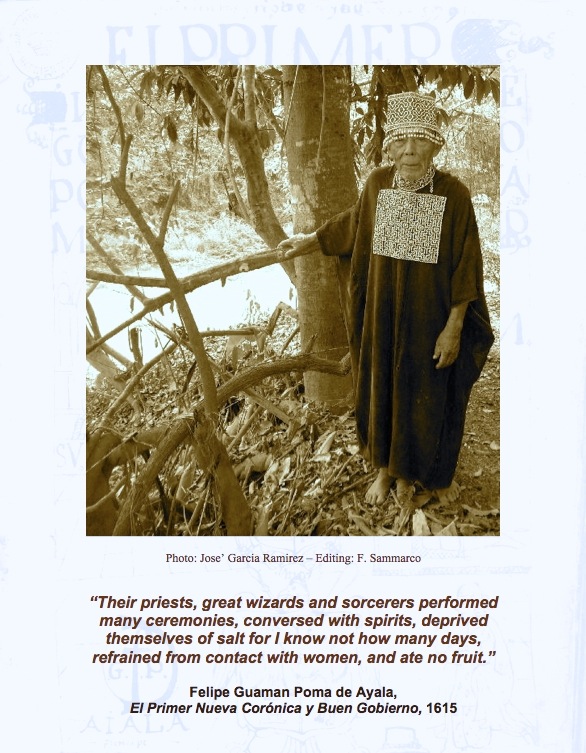
The shamanic plant diet…in the words of Guaman Poma de Ayala
Download our FREE PDF Programmes for the:
• “SHAMANIC PLANT DIETA APPRENTICESHIP” retreat (3 Months/91 Days)
• “SHAMANIC DIETA WITH MASTER TREES” (45 Days)
• “SHAMANIC PLANT DIETA WITH TOÈ” (31 Days)
__________________________

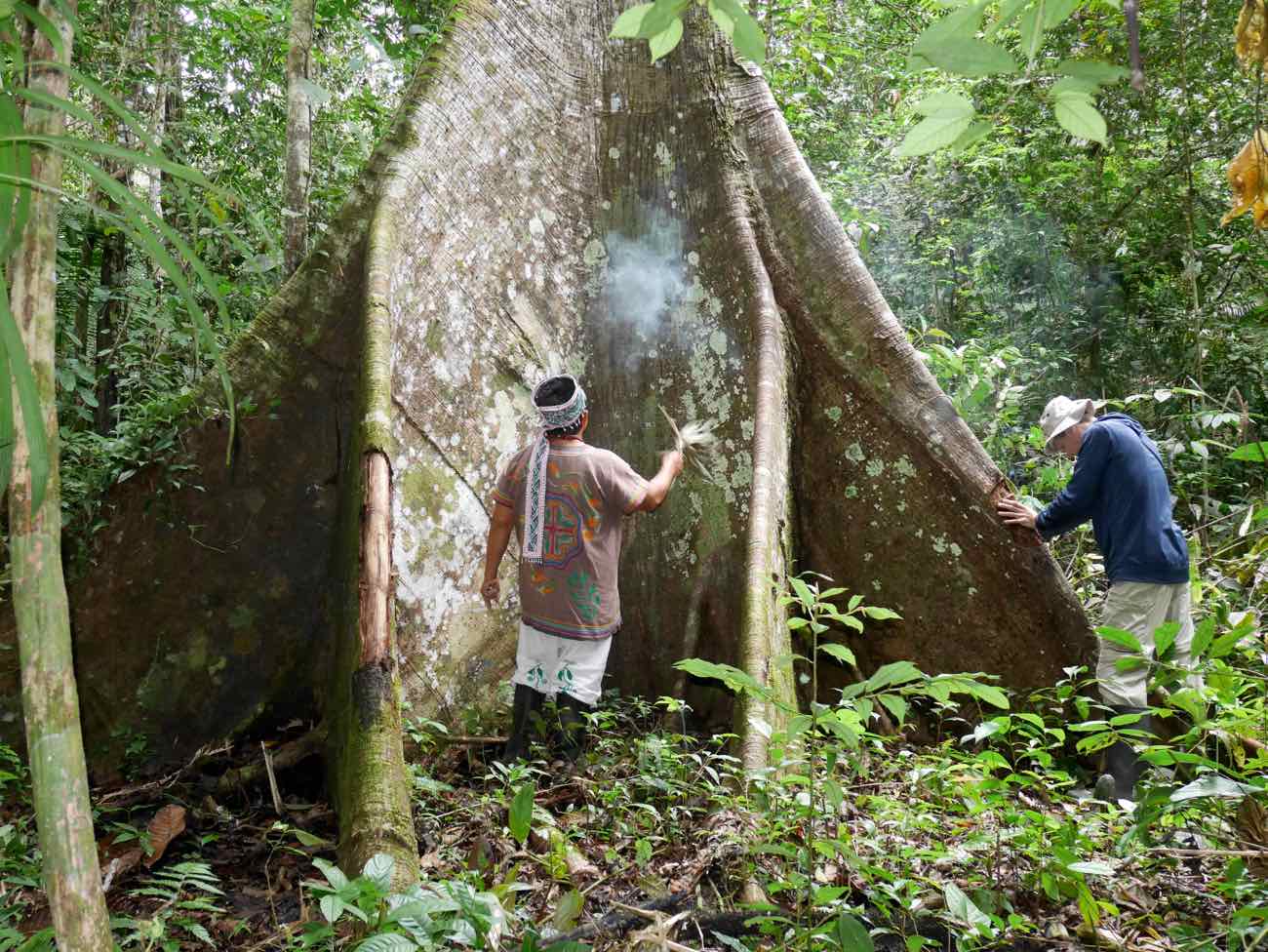
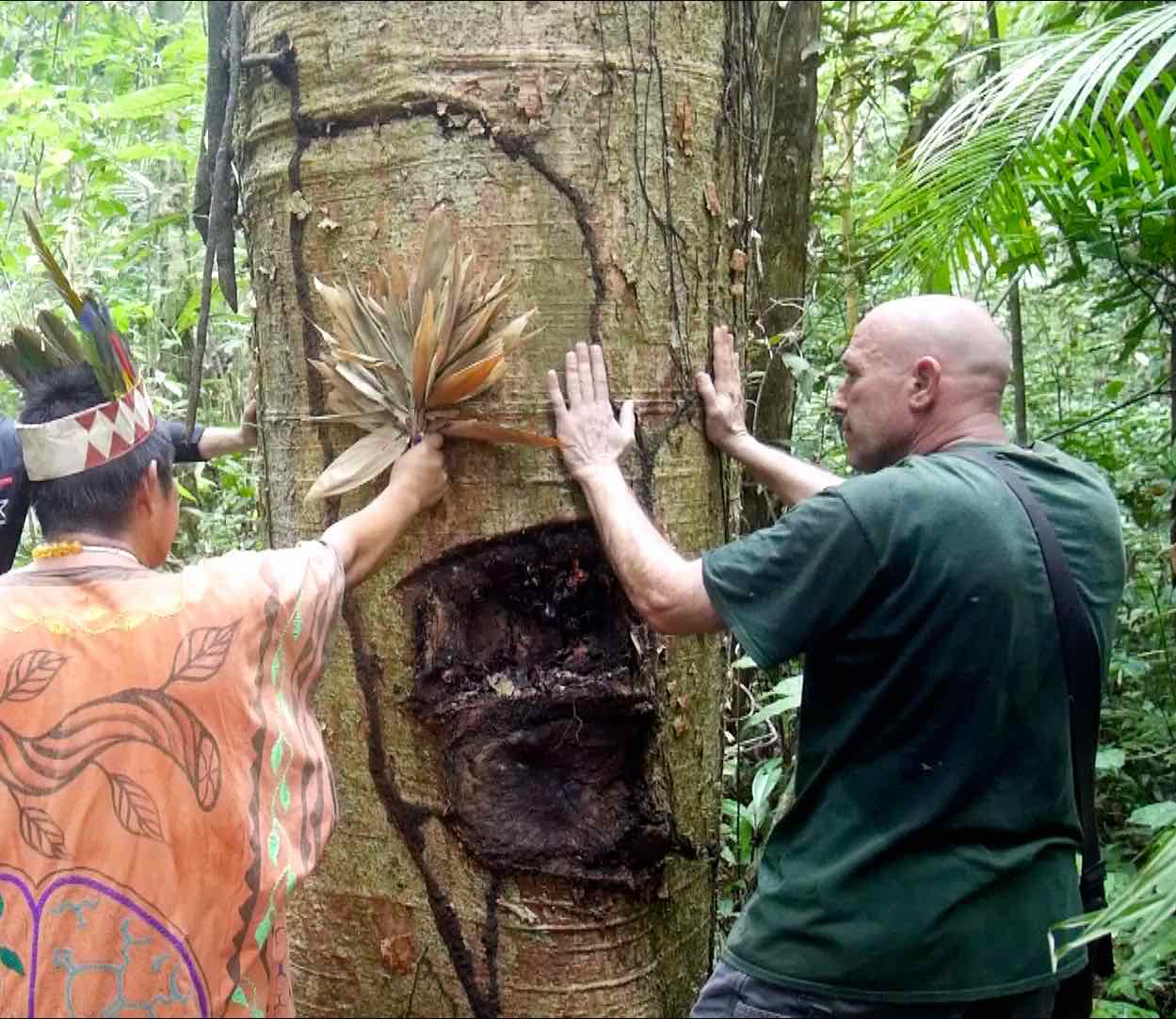
Don Armando and the giant Lupuna blanca (Ceiba pentadra), the emperor of all master trees of the Amazon rainforest.
The DIFFERENT TYPES OF SHAMANIC PLANT DIET WE OFFER
The term “diet” is the literal translation of the Spanish word “dieta”, which refers to the shamanic apprenticeship – that is, training via the plant diet – as it is practised by the vegetalista shamans of the Peruvian Amazon. Guests who wish to deepen their experiential understanding of Amazonian shamanism and are prepared to commit themselves in a disciplined – yet very friendly, comfortable and welcoming – traditional setting, may also engage in the proper shamanic training and initiation with the plant teachers diet. The traditional, long shamanic apprenticeship via the plant diet is, essentially, the shamanic initiation the Amazonian way and is better suited to those who have been previously exposed to the Ayahuasca experience in the jungle and are acquainted with deep medicine work. We are happy to offer short “testers” of shamanic plant dieta – from just 8 days onward – to those who have a specific interest in experiencing Amazonian shamanism but do not have the background, or the time, to engage in a long training in the jungle. Whilst the shamanic apprenticeship proper (see in detail what it includes, in the PDF program “Shamanic Apprenticeship: 3 Months Shaman Dieta with Plant Teachers, Ayahuasca, Camalonga and Thirty-five Master trees and vines“) would require an initial stage of at least 3 months /13 weeks of training, it is altogether possible to do a shamanic master tree diet of 45 days, taking once an ultra-concentrated brew prepared with 35 different types of Master trees and vines (cooked in the guise of the Ayahuasca concoction, over a traditional wood fire, for up to 8-10 hours, together with jungle tobacco, few fresh Coca leaves and the bark of the Cacao tree). This would be the equivalent – in terms of what one may learn from the master trees – of a 3 months shamanic apprenticeship whereby one diets with only one teacher tree at a time, each month. Conversely, if one were to do a 3 months/13 weeks apprenticeship dieting with the 35 master trees/vines all at once, the shamans maintain that this would be the equivalent of what one would learn – from the teacher trees – in no less than 6 months/26 weeks, dieting with only one master tree at a time. Being the Maestro Palero a Vegetalista shaman working with the spirits of the powerful teacher trees, renowned in Amazonian shamanism to grant the one who diets with them power, strength, stability, knowledge and wisdom – the choice of what plants to choose for the shamanic apprenticeship naturally falls in the category of the master trees themselves (even though one may diet with an individual master tree, vine, shrub, or plant teacher at a time). As we already said elsewhere:
“Those maestros who have dieted with palos maestros (sacred teacher trees) are called paleros and are reputed to be stronger than just ayahuasqueros (those maestros specialized in working only – or mainly – with Ayahuasca, and who may have as well dieted only – or mainly – with Ayahuasca). […] It is common belief in the Amazon that Ayahuasca may teach one on condition that it will be dieted with palos.”
With Don Armando there are different degrees of flexibility and strictness when it comes to the shamanic dieta. Learn more about the different varieties of food allowed in the dieta with Don Armando here. The strictest type of shamanic dieta one may engage with is the traditional Amazonian shamanic apprenticeship with master plants and trees, whilst the most flexible is instead the pre-dieta, or short dieta tester.
Download our FREE PDF Programmes for the:
• “SHAMANIC PLANT DIETA APPRENTICESHIP” retreat (3 Months/91 Days)
• “SHAMANIC DIETA WITH MASTER TREES” (45 Days)
• “SHAMANIC PLANT DIETA WITH TOÈ” (31 Days)

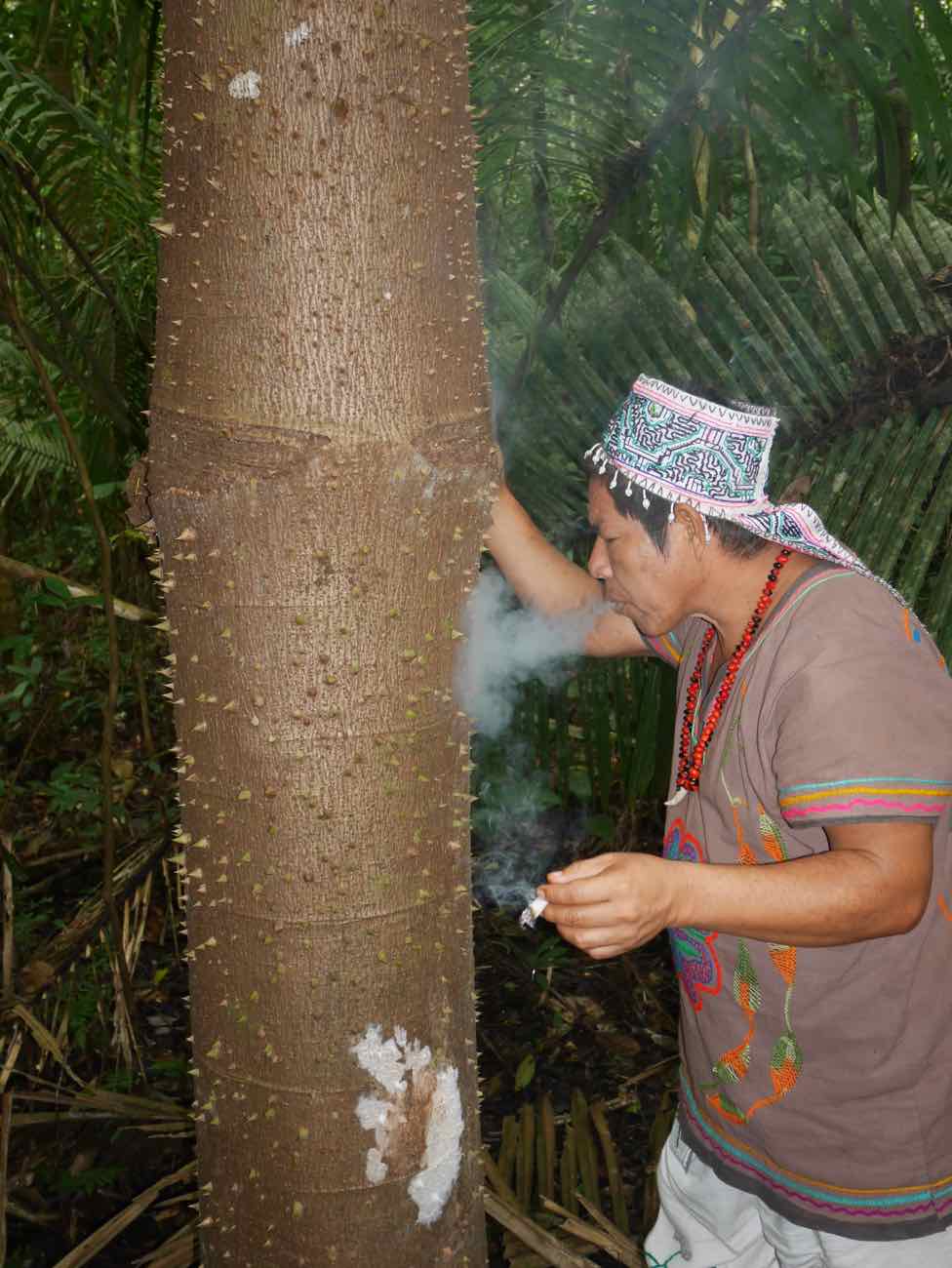
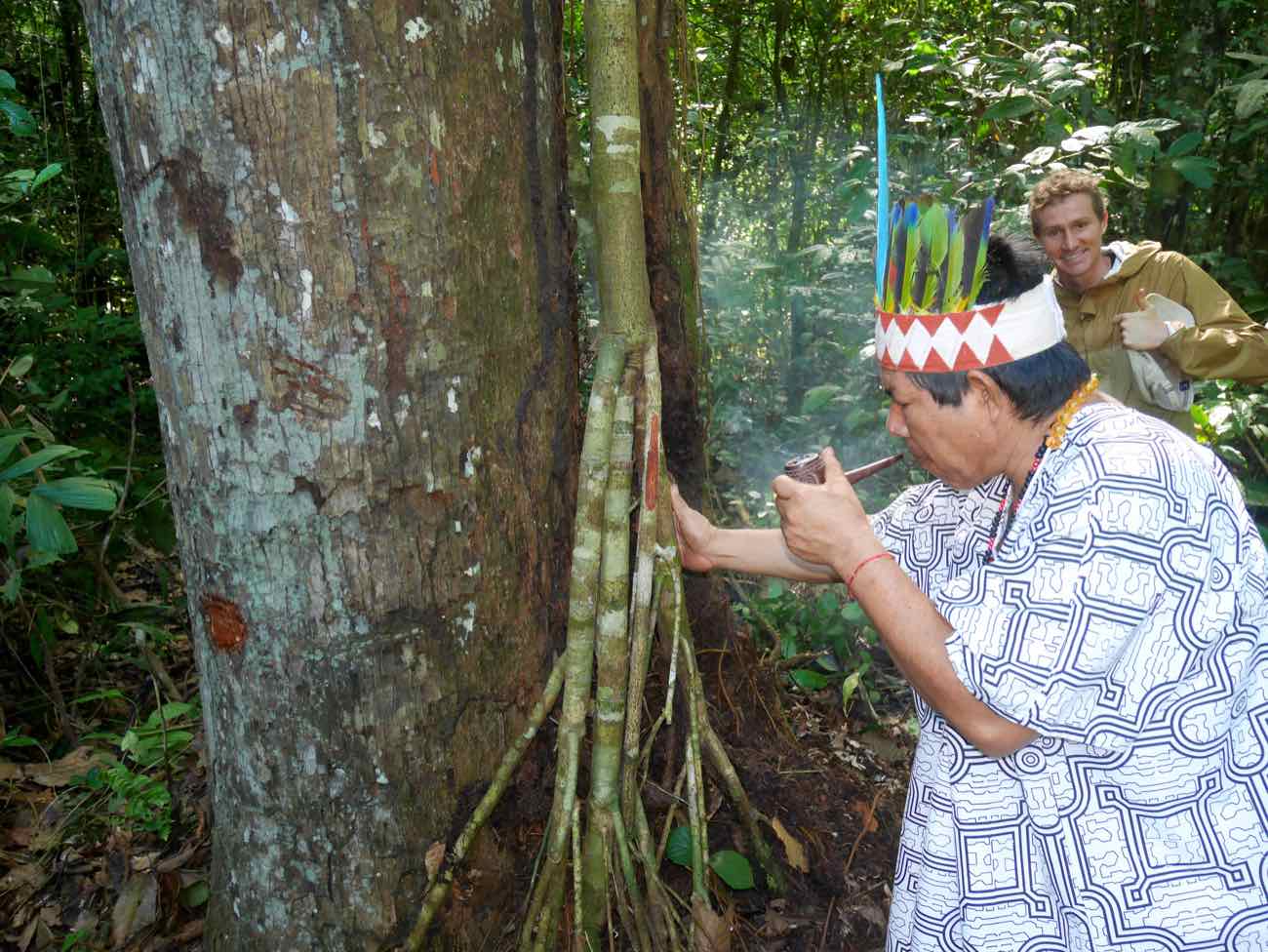
Shaman Don Armando ritually offering Mapacho smoke to the Puca lupuna master tree, in the Amazon jungle.
Why the plant diet?
This is done, in the Peruvian Amazon, to become a shaman, a Maestro. The concept of plants as teachers is of paramount importance in Amazonian shamanism. The actual dietary restrictions imposed by the “dieta” are only an aspect – a conditio sine qua non – albeit an important one, of the training. The other reason why traditionally one may be required to do “la dieta” is healing, physical and emotional healing. These are the two essential – and parallel – avenues at the core of the experience with the plants: shamanic apprenticeship and healing. Anthropologist Luis Eduardo Luna thus reassumes this concept:
“The plants which are used as plant-teachers have a double function. They may be used as medicinal plants for various illnesses, or as plant-teachers if they are used under the special conditions of diet and segregation.” (*)
Download our FREE PDF Programmes for the:
• “SHAMANIC PLANT DIETA APPRENTICESHIP” retreat (3 Months/91 Days)
• “SHAMANIC DIETA WITH MASTER TREES” (45 Days)
• “SHAMANIC PLANT DIETA WITH TOÈ” (31 Days)
___________________

Don Armando ritually blowing Mapacho smoke to a young specimen of Lupuna blanca master tree, in the Amazon rainforest of Peru.
The traditional apprenticeship
“The Lupuna is a magical tree, and is also the greatest Master tree of the jungle. The spirit of the Lupuna tree is known as the Master of the shamans, or the Master of the Masters. Inside the Lupuna dwell many spirits of Plant Teachers and Master Trees of the jungle, that’s why it’s a magical tree. When you learn from the Lupuna you must be willing to be part of the guardians of the forest, who conserve, protect, respect and love nature.”
Shipibo Maestra Ercilia Ahuanari Brito
____________

In awe in front of the “Lupuna blanca” master tree, in the Amazon rainforest of Peru. Photo © El Mundo Magico
It is important to stress that the traditional apprenticeship may be a long commitment, that would require normally a minimum of three months of “plant diet”, in the jungle. Icaros – the magical songs that the plant spirits teach to the apprentice – may be received at the end of an even longer period of diet, which may last up to six months. Thus, for an initial shamanic apprenticeship, done the traditional way, one should consider a plant diet between three and six months, up to one year and more.There are indigenous and mestizo (i.e. mixed blood or acculturated) shamans who routinely advance their knowledge, retiring ”al monte” (that is, in pristine, isolated jungle areas), and doing the plant diet, at any stage of their training, whether novices or expert vegetalistas, young or old. Since in Amazonian shamanism the plant is the teacher, the larger the number of plants one diets with, and the longer the diet, the more advanced and comprehensive one’s knowledge becomes. The real apprenticeship is a business that may last years, not weeks, or months, but Western pilgrims will nevertheless be able to benefit in many ways even from a few weeks, or few months, of shamanic plant diet.
In any case, no matter what your main drive is, curiosity shouldn’t be at the core of your motivations for doing this retreat. Serious motivation and an “unbending intent”, yes. A deep magnetic attraction and love for plants and the rainforest, an inner resonance with the shamanic path and/or a specific need for healing, should be at the core of your desire to engage with the plant teachers diet.
Download our FREE PDF Programmes for the:
• “SHAMANIC PLANT DIETA APPRENTICESHIP” retreat (3 Months/91 Days)
• “SHAMANIC DIETA WITH MASTER TREES” (45 Days)
• “SHAMANIC PLANT DIETA WITH TOÈ” (31 Days)
__________________________
The intrinsic value of the plant diet retreat as a inner and sacred journey in the wilderness
Alongside the two main traditional avenues of healing and shamanic apprenticeship, we may envisage a third opening worth to explore for the plant diet retreat: an inner and sacred journey in the wilderness. In the proliferation of shamanic journeys openings in the modern world, the “teacher plants diet” is a unique experience that may offer you a revolutionary potential of deep transformation and perceptual shift, of a different understanding of the world and of yourself. The teacher plants open the gates of perception, but in order for that to happen one’s intentions should be pure and strong, as preliminary condition of success. The settings where this may take place are unusual ones.
The “don Juan” of Carlos Castaneda spoke of “stopping the world”, of practising the art of “not doing”, to interrupt the flux of habits and consolidated ideas that we have about the world, very much a like a Taoist “not doing”. An “interruption” of the world as we know it, that is – an interruption of the normal way of living and relating with the world – is what Saints, Sages, Yogis and Prophets of all ages did, retiring in the wilderness to find themselves and open to the Spirit, cultivating their inner essence away from the worldly seductions of civilization. Even Huang-Ti, the mythical Yellow Emperor who ruled the four corners of the world, took refuge for several months on a mountain, to find his true self! Fasting, celibacy and isolation in the wilderness were the conditions where revelations took place and illuminations were received, for thousands of years, worldwide. Without going too far in cultural parallels, think at Jesus and his forty days spent alone in the desert!
Set aside shamanic apprenticeship and healing – for which long commitments are required – the intrinsic value of the plant diet is that of an inner journey of self-discovery, of a vision quest in the amazing environment of the Amazon Rainforest. This is one aspect of the plant diet: a retreat in the wilderness in search of the inner self. This value is intrinsic to the experience, and may paradoxically be even independent from the actual shamanic training side – which is and remain, however – the main reason for which one should be doing it. You will learn about the plants, the way the shamans of the Amazon do! Worth to take note of, there are shamans who diet the plants throughout their entire life!!
Download our FREE PDF Programmes for the:
• “SHAMANIC PLANT DIETA APPRENTICESHIP” retreat (3 Months/91 Days)
• “SHAMANIC DIETA WITH MASTER TREES” (45 Days)
• “SHAMANIC PLANT DIETA WITH TOÈ” (31 Days)
The diet with plant teachers
Teacher plants (plantas maestras) may be “dieted” in the form of a special preparation made by the shaman who makes a beverage with water and the scraped roots, barks or other parts of teacher plants, trees or vines, for the apprentice (dietero, if male, or dietera, if female) to drink over a set up period, in conditions of celibacy and physical isolation in the jungle. The brew may either be obtained by scraping parts of the fresh plant and leaving them into water for some time, or else, using the so called bañomaria method. In either case the shaman may whistle or sing his icaros to the medicina (the tea that the dietero/a will drink, prepared by the shaman). Dieteros (or dieteras) on the other hand, will sing the icaros of the plant they are dieting with, to their plant medicine.
As it should have been clear by now, the dieta is of course something more, much more complex, magic and mysterious than a simple “diet”. Along with the implicit food restrictions – no salt, sugar, spices, oils, fats, alcohol, stimulants, pork meat (and, according to the purpose of the diet and to the maestro), a pre-condition without which the proper outcome would not be guaranteed – there are other specific conditions to respect, among which two are very much important: celibacy and and certain degree of physical seclusion.
The altered state of consciousness – which is the configuration needed to access the plant spirit world – is therefore achieved by a series of restrictions, whilst being alone in the forest with the shaman. That is the traditional way. During the period of the apprenticeship (dieta) the candidate must also refrain from entering in contact with menstruating women (including having his/her clothes touched/washed by, or having his/her food prepared by a lady in this condition). Traditionally, it is only the shaman who should attend the apprentice during the time of his/her own diet, and only the shaman should take care to bring (or even prepare) the food for the apprentice. There are different traditions, set-ups and ways to see menstruating women and the dieta, and almost any maestro has his or her own views on the topic. Female apprentices are – of course – most welcome to join in. Shipibo Maestro Rosendo even maintained that women learn plant-based shamanism more quickly than men, as the spirits of the plants teachers enter and settle inside them more easily.
One important thing that many shamans vegetalistas have stressed as being the most vital aspect of the dieta training is “dietar la mujer”, that is, refraining from sexual activity. Main reason being that teacher plant spirits are said to be very jealous of human sexuality. So, as sign of respect for them, one must enforce this precept whilst doing the diet. Also remember the words of Carlos Castaneda’s don Juan: “warriors who adventure in the unknown must be tight with their sexual energy”. Plant spirits are jealous and energy must be preserved to engage in encounters with the unknown!
Download our FREE PDF Programmes for the:
• “SHAMANIC PLANT DIETA APPRENTICESHIP” retreat (3 Months/91 Days)
• “SHAMANIC DIETA WITH MASTER TREES” (45 Days)
• “SHAMANIC PLANT DIETA WITH TOÈ” (31 Days)
What’s the main difference between the plant-teachers diet and a normal Ayahuasca retreat?
The difference between the “plant diet” and the normal Ayahuasca retreat is the special settings and conditions where the first takes place, in the Amazon Rainforest, where the shamanic teachings are received under the guidance of the shaman, whilst observing special dietary restrictions. The main difference is in the intensity and the unicity of the experience, as in the plant diet and in the long shamanic apprenticeship one will be exposed to an incredible amount of rituals and ceremonies – with plant teachers like Ayahuasca, Camalonga, Brugmansia, Mapacho as well as ritually drinking the ultra concentrated brew prepared with thirty-five different types of master trees and vines (something that, to the best of our knowledge, only we seem to offer among all other centres in the northern Peruvian Amazon, and most likely in the whole of Peru!) – with a great potential for the transformation of one’s life. Those enrolling for the shamanic apprenticeship should not interact with visitors/other guests and should not have physical contact with them (e.g. must avoid kisses, hand-shaking, hugs, etc.) to avoid unbalancing energies, and must also avoid direct exposure to the rain and to the sun. Guests doing the plant diet may be required to smoke (although not necessarily to inhale) Mapacho – organic black jungle tobacco – as part of their apprenticeship, and be ready to ritually drink in the course of one ceremony a very strong tobacco brew prepared by the shaman.
Download our FREE PDF Programmes for the:
• “SHAMANIC PLANT DIETA APPRENTICESHIP” retreat (3 Months/91 Days)
• “SHAMANIC DIETA WITH MASTER TREES” (45 Days)
• “SHAMANIC PLANT DIETA WITH TOÈ” (31 Days)
__________________________

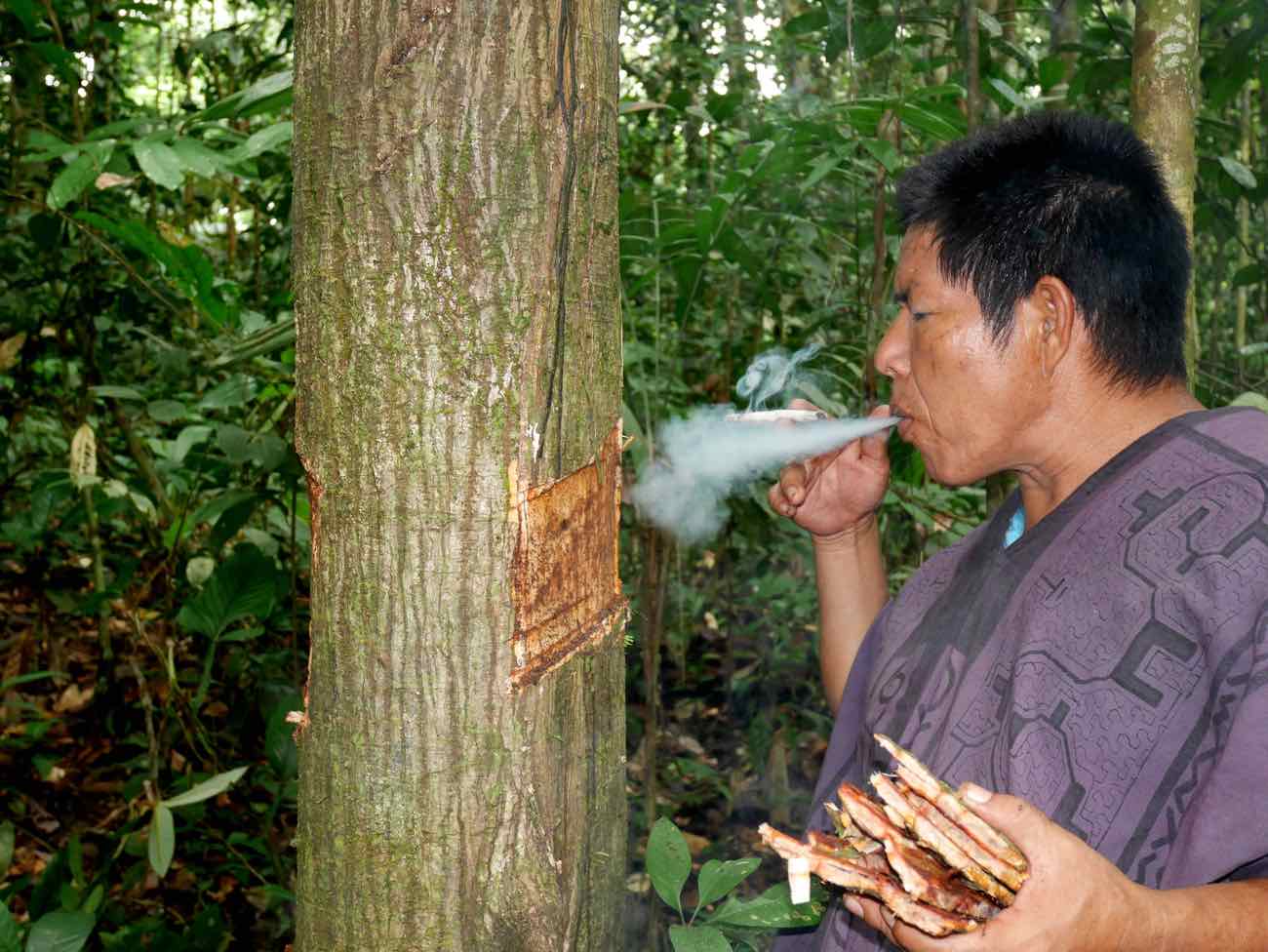
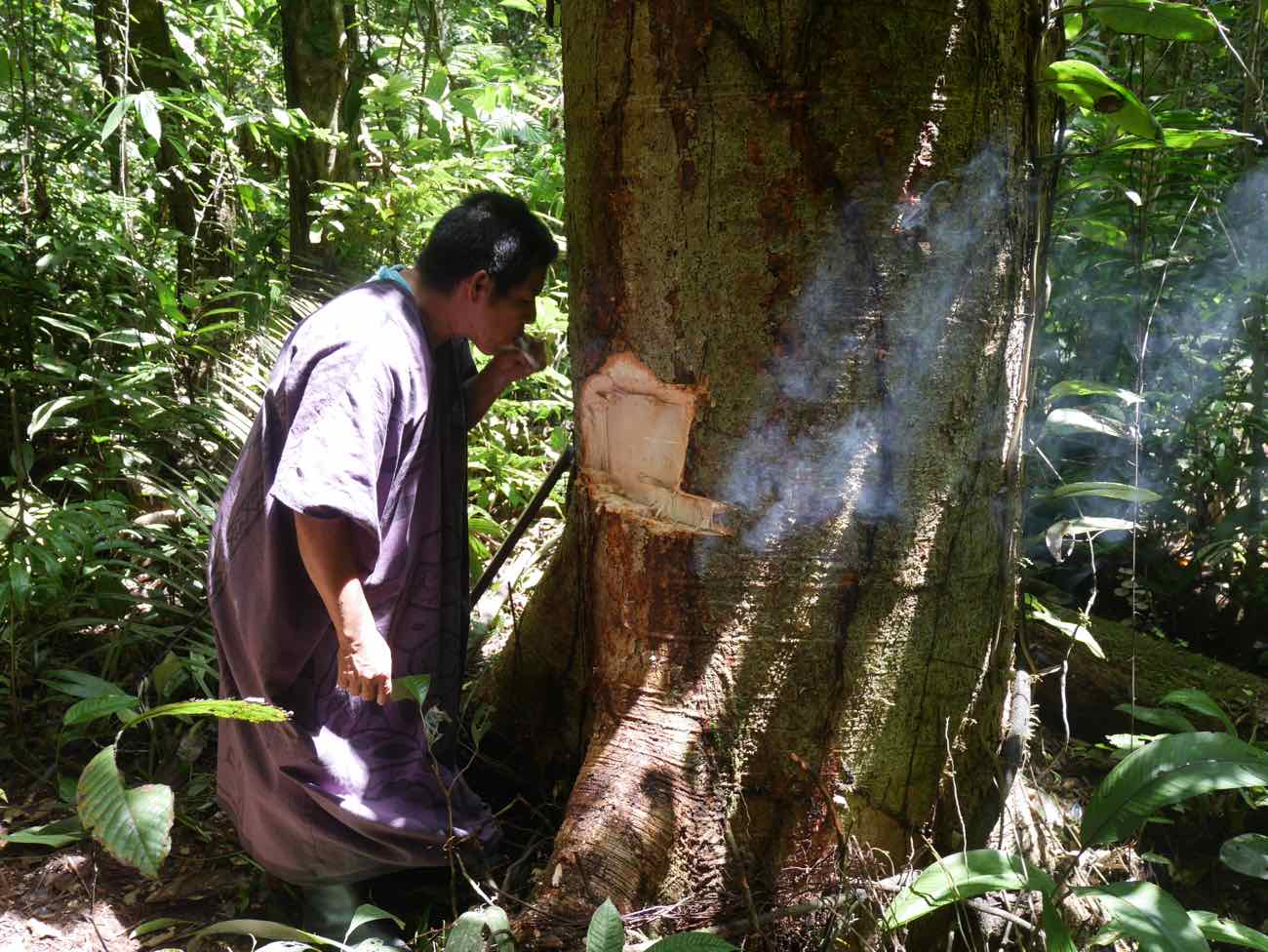
Ritually offering jungle tobacco smoke to the Chullachaqui caspi master tree, before harvesting its bark.
Ayahuasca and Tobacco: Two Important Plant Teachers
The spirits of the Ayahuasca and Tobacco plants are believed to be – by all the vegetalistas of the Peruvian Amazon – closely related. The use of tobacco is really a must for all dieteros: like all over South America, Mapacho (Nicotiana Tabacum, Nicotiana Rustica) – either cultivated, or in its most potent wild form – is considered a sacred plant with the power to cleanse, purify and protect one from negative energies and malevolent spirits. Not by chance, at the beginning of each ceremony, the Ayahuasca brew is soplada (e.g. is blown smoke on), with a Mapacho cigarro (i.e. a cigar made with jungle tobacco), to tame and guide in a benevolent way the indomitable spirit of the Ayahuasca medicine. The blowing of mapacho smoke over a patient’s body (top of the head, back, chest, hands and feet) is a consolidated practice during every healing session and during all Ayahuasca ceremonies.
Anthropologist Luna thus report on the importance of the use of tobacco among the vegetalistas of the Peruvian Amazon:
“Although I emphasized [..] the use and role of ayahuasca, it is important to realize that this plant is one among others which belong to the category of the plant teachers. Tobacco, one of them, is in a way more important than ayahuasca, because it is considered to be a mediator between the vegetalista and other plant spirits. Sin el tabaco no se puede usar ningun vegetal (without tobacco no other plant can be used), says Don Emilio. Tobacco purifies the body and expels the illness. […] Tobacco is also the food of spirits […] Mastering the use of tobacco, either smoked, or ingested orally or through the nostrils, is part of the shamanic initiation […]. Tobacco is always present at ayahuasca sessions.” (*)
Luna, L. E. Vegetalismo. Shamanism Among the Mestizo Population of the Peruvian Amazon – Acta Universitatis Stockholmiensis – 27, 1986:159.
FURTHER INSIGHTS INTO THE SHAMANIC PLANT DIET
What Is The Shamanic Plant Dieta?
Shamanic Plant Diet Apprenticeship: The Way of Wisdom
The Master trees and Plant Teachers of the Shamanic Diet
Shamanic Plant Diet and Ayahuasca
The Shamanic Plant Diet: Restrictions, Food and Plant Teachers
______________________
Download our FREE PDF Programmes for the:
• “SHAMANIC PLANT DIETA APPRENTICESHIP” retreat (3 Months/91 Days)