
⇐ Back to Our Ayahuasca, Palero and San Pedro shamans in Peru
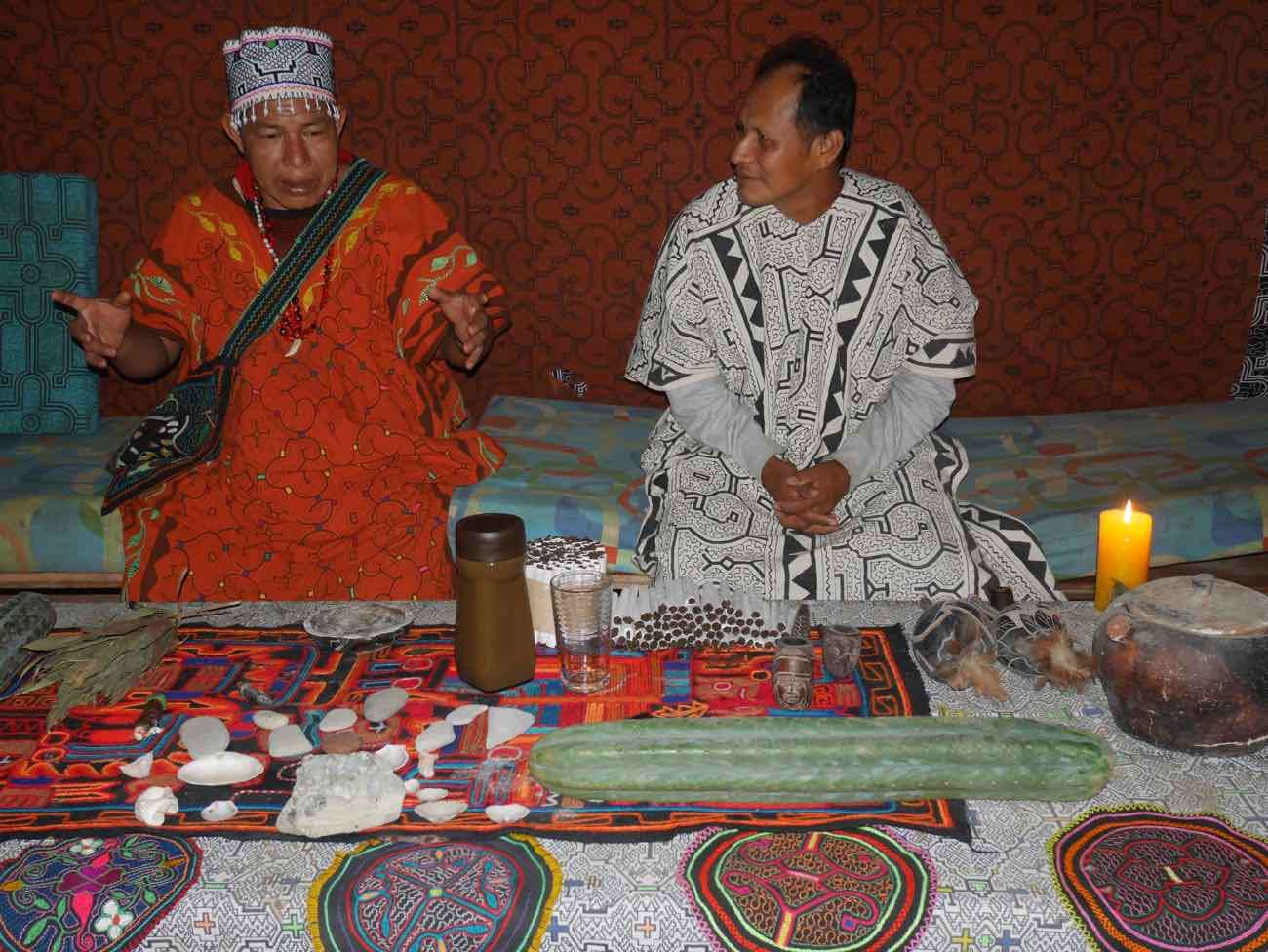
San Pedro (Huachuma) ceremony with Maestro Ronel (right) and Don Armando (left).
Shipibo-Conibo Maestro Ronel Chavez Isaman takes care of our San Pedro & Ayahuasca retreats, usually assisted by his Shipibo wife Mariluz. He is an Ayahuasquero and a Huachumero/Sampedrista, e.g. a Vegetalista/Curandero specialised in working with the Huachuma – better known as San Pedro (Trichocereus macrogonus var. pachanoi) – the legendary visionary “cactus of the Four Winds“. A Huachuma diet with him lasts from a minimum of 31 days/30 nights to a maximum of 91 days/90 nights, during which there will be two San Pedro and two Ayahuasca ceremonies per week, which may be alternated with “rest days”, every other day. For more info on our San Pedro retreats please visit the link here.
Maestro Ronel is a very gentle and compassionate Maestro, and prepares a very strong, almost sweet and creamy-like, concentrated Ayahuasca brew which goes by the name of “miel de Ayahuasca”, e.g. “Ayahuasca honey”.
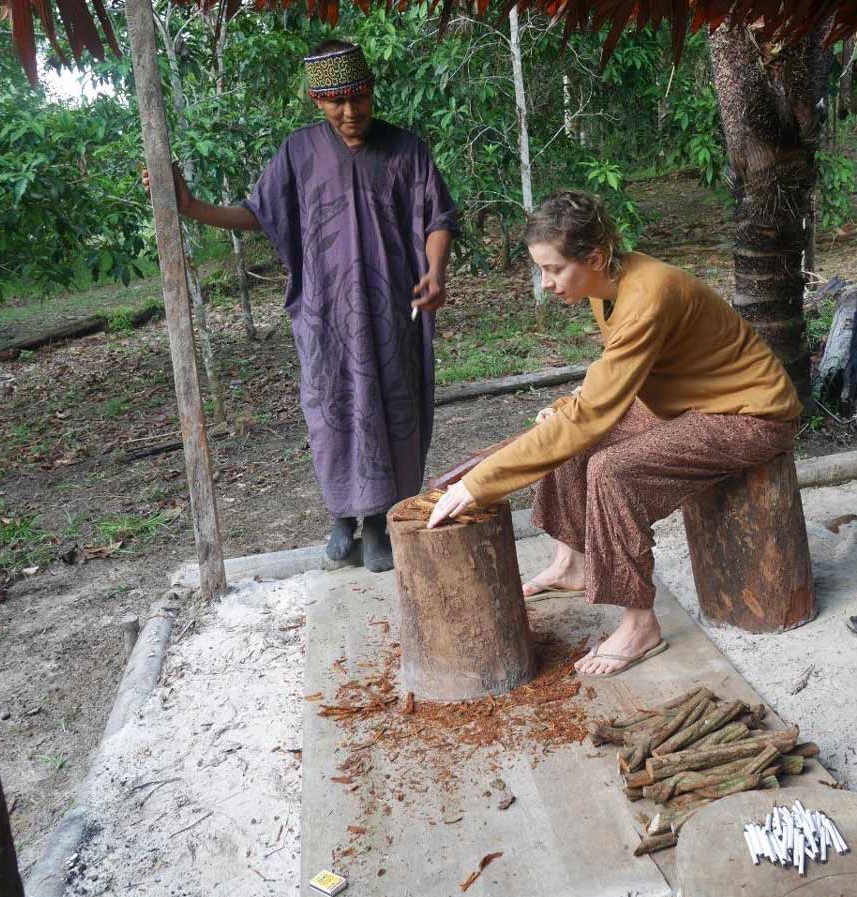
Shipibo Maestro Ronel supervising the preparation of Ayahuasca
⇐ Back to Our Ayahuasca, Palero and San Pedro shamans in Peru
⇐ Back to Our Ayahuasca, Palero and San Pedro shamans in Peru
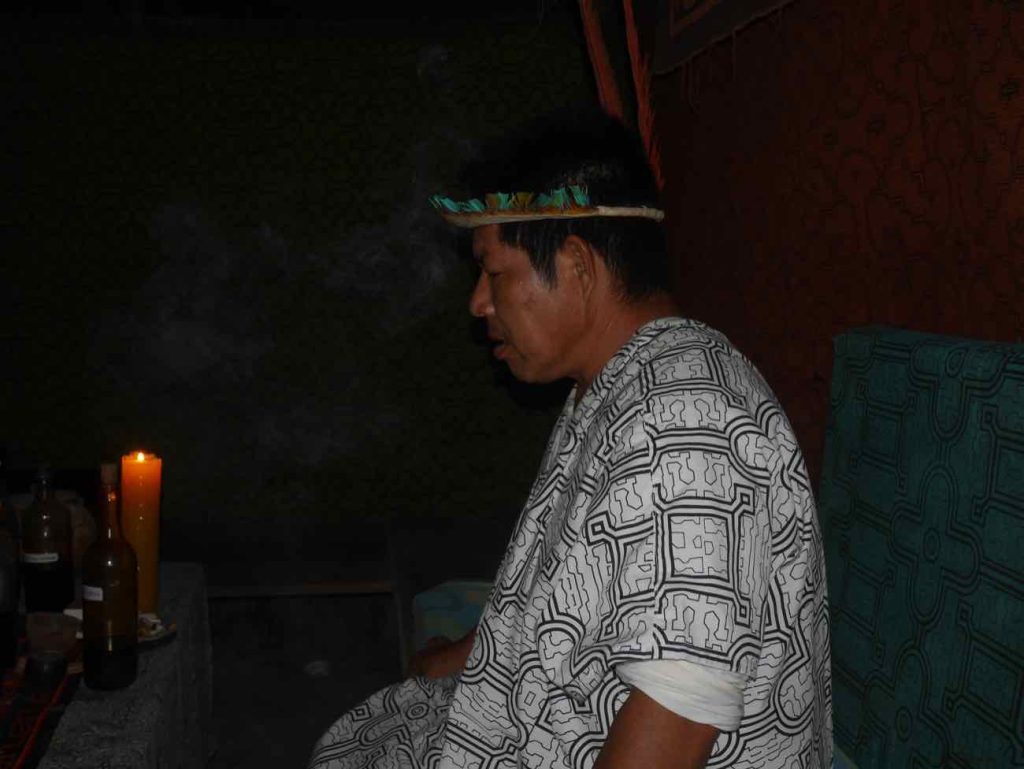
Ayahuasca ceremony with master shaman Don Armando, in our centre in the Peruvian Amazon.
________________
“Don Armando is easily the most powerful shaman I have ever met, he is the real deal and a true master. I believe he is one of the few “Banco shamans” that still exist! I consider it one of the greatest gift of my life that I could learn, study and drink medicine from/with him! He’s the best!” Read more…
Leo Van Veenendaal, AUSTRALIA
________________
Traditional Amazonian shaman Don Armando was born in the Santana community of river-dwellers located off the Rio Amazonas, in the Peruvian Amazon basin. He is of Remo Auca descent on side of his father, and Coto Auca descent on side of his mother (both of his parents were indigenous people from Ecuador, living near the frontier with Peru, above the Rio Napo). The Aucas (a Quechua/Quichua term, which literally means “wild”) are an Amerindian indigenous group related to the Huaoranis (or Waoranis) – known to be fearless warriors and extraordinary hunters – dwelling in eastern Ecuador, on the northwestern Amazon. His teacher was also a Remo Auca whilst two of his grandmothers (on side of father and mother) were of Cocama [Kukama] ancestry.
Don Armando is a most distinguished Palero (a shaman/vegetalista who is specialised in working with master trees), an Ayahuasquero (a Maestro specialised in working with Ayahuasca; and also one of the *very few* shamans in Peru who can prepare Ayahuasca made with the magical Puma chacruna plant), a Camalonguero (a Maestro skilled in working with Camalonga – Thevetia peruviana), a Toesero (a shaman specialised in working with the powerful Toé – Brugmansia suaveolens – plant teacher), a Sananguero (a shaman specialised in working with the Sanango class of master trees), a Huachumero (a Maestro skilled in working with the San Pedro/Huachuma visionary cactus, to which he was initiated by his teacher in Tarapoto, in the region of San Martin, in Peru) and a Rosacrucista (an adept of Rosicrucianism, a mystical-esoteric tradition). He was initiated to Ayahuasca by his grandfather shaman when he was only 12, and initiated to the shamanic dieta (with many different master plants, master trees, shrubs, and vines) since the age of 15. After the initial 3 years of dietas learning the ways of traditional Amazonian medicine and la ciencia (the science) of Vegetalismo, at the age of 18 he was formally appointed as Curandero by his teacher. He has now fully matured over 37 years of experience in the field of shamanic plant medicine, and he is one of the shamans with the most extensive knowledge of Amazonian plants we ever worked with in both Peru and Colombia.
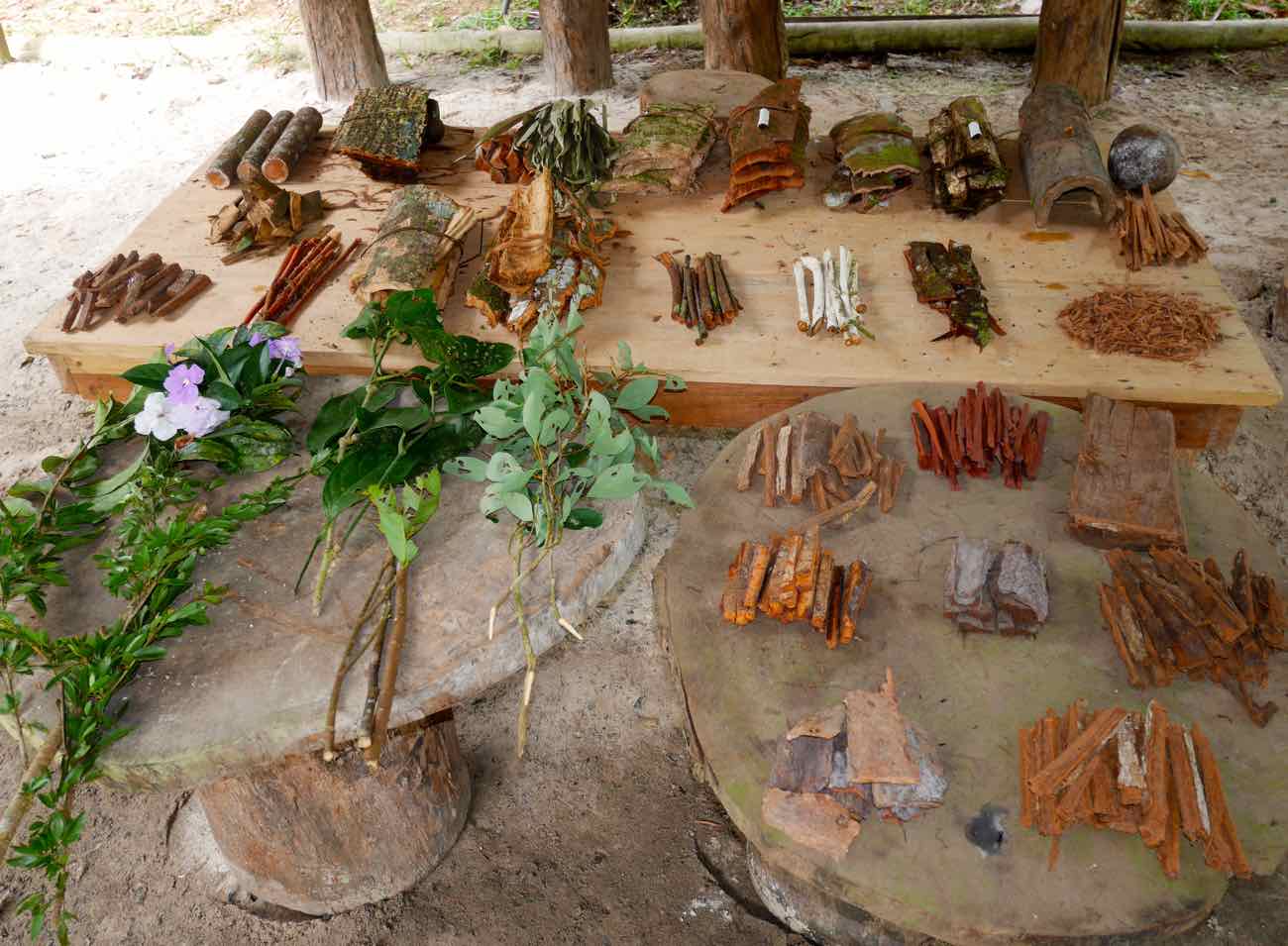
Some of the master trees, vines and plant teachers used by Don Armando in the making of the concentrated brew to be taken during the 45 days shamanic dieta with master trees and the 3 months shamanic apprenticeship with him.
Diet with nearly 40 master trees, vines, and plant teachers at once…
Don Armando prepares a very powerful concentrated brew made with a total of 35 master trees and vines (including the magical Lupuna blanca, the king of all master trees) to be ritually drunk during the long shamanic dietas with master trees and during the dita for the shamanic apprenticeship. He also works with a vast array of plants like Ayahuasca (Banisteriopsis sp.), Coca* (Erythroxylum coca), San Pedro (Echinopsis pachanoi syn. Trichocereus pachanoi), Camalonga (Thevetia peruviana), Mapacho (Nicotiana tabacum, Nicotiana rustica), Cacao (Theobroma cacao) and Toé (Brugmansia suaveolens), which rank among the most revered plant teachers of Peru.
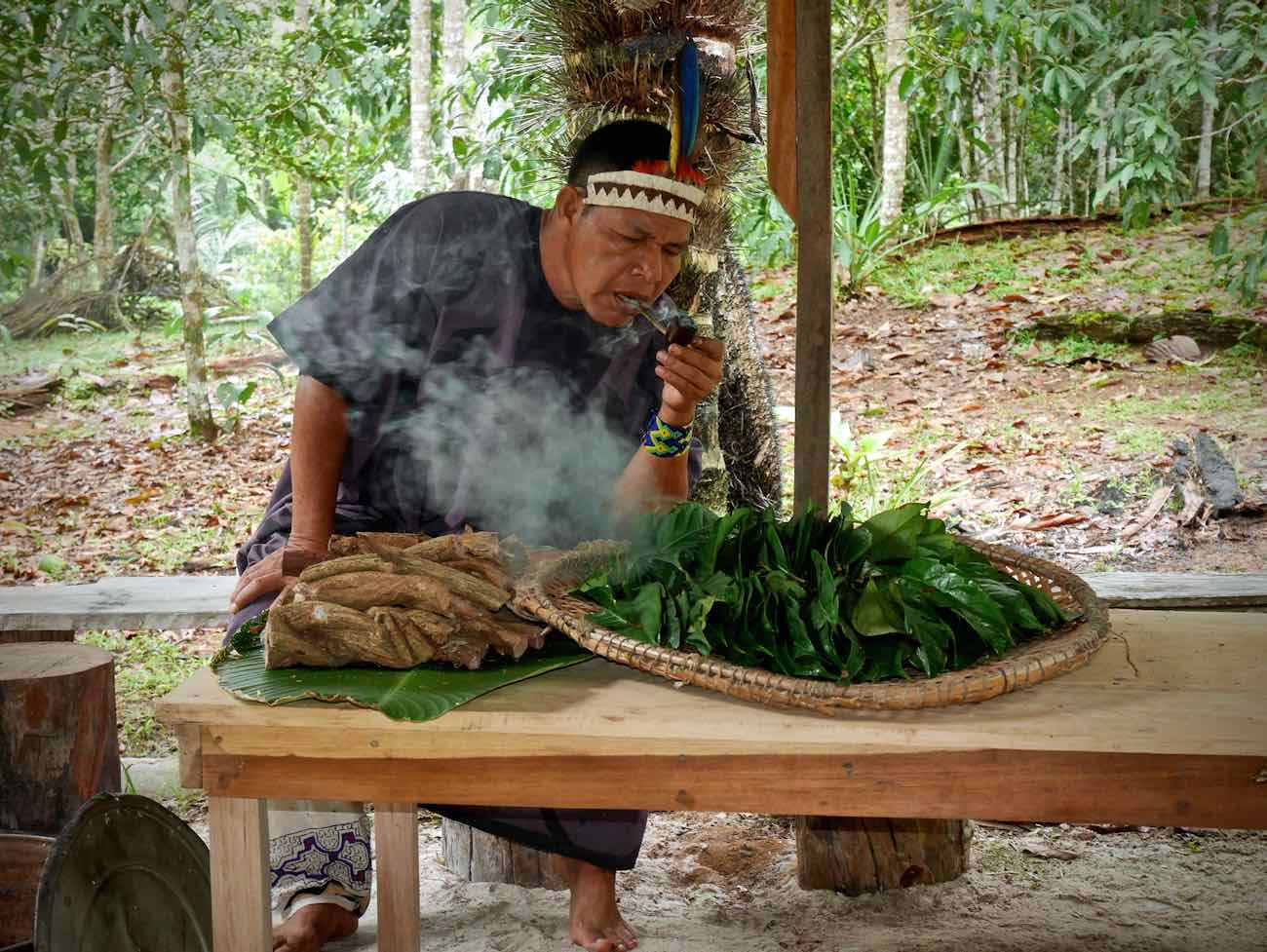
Blowing Mapacho smoke to a bunch of freshly harvested Chaliponga (Diplopterys cabrerana) leaves and Cielo ayahuasca vine cuts, in preparation of the Ayahuasca brew.
With Don Armando you have the choice of following either a very intense & more powerful shamanic dieta than that is offered in the vast majority of the retreat centres in Peru – with nearly 40 among master trees, vines, and plant teachers, to be taken ALL at once, as a highly concentrated brew prepared in the guise of the Ayahuasca medicine – or else, go for the traditional shamanic dieta, dieting with only one master plant, master tree, shrub, or vine at a time (this will be anyway necessary/mandatory when dieting with special plants like Toé, Ayahuasca, Coca*, Camalonga, or Mapacho, among others). The same options are also available when doing a shamanic dieta retreat with Don Guido.
In the specific case of the Ayahuasca diet, one may diet with either Cielo ayahuasca (the best for initiations), Suni ayahuasca (Soliman ayahuasca/black ayahuasca), Lucero ayahuasca and Puma ayahuasca (learn more here).
The various types of shamanic dieta – I
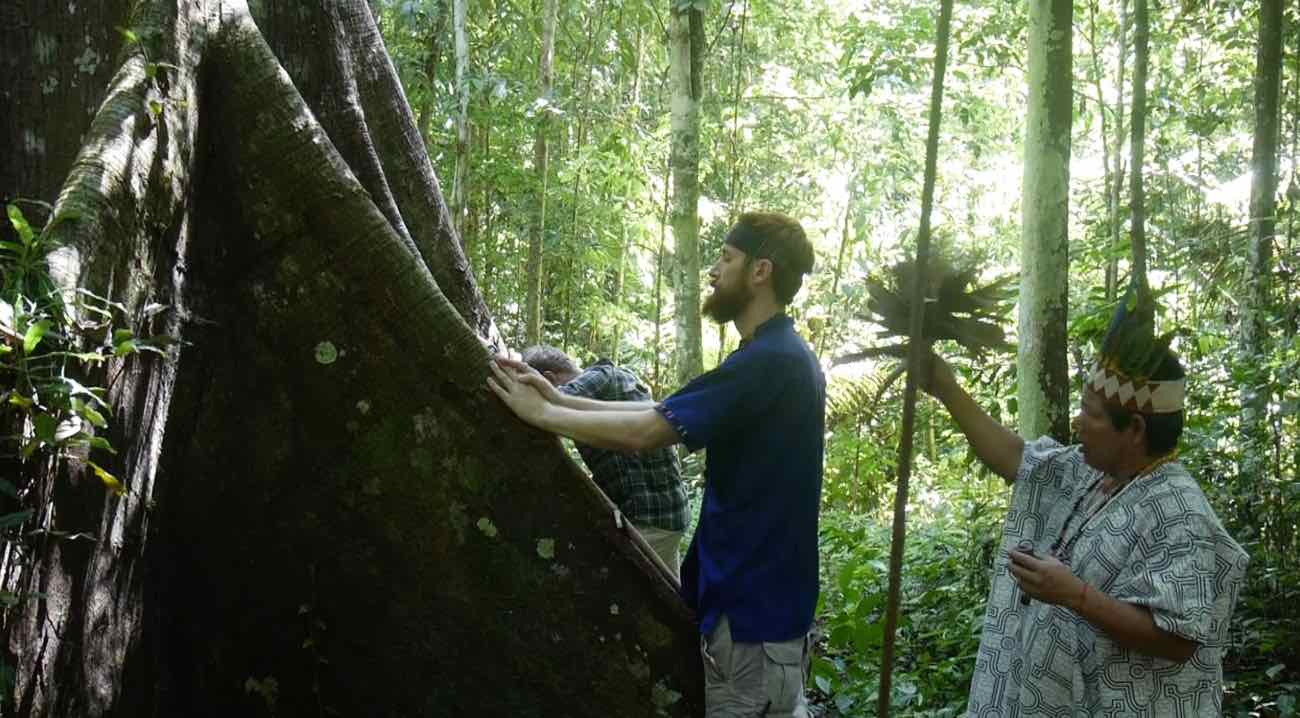
Lupuna blanca (Ceiba pentandra) ritual with apprentices, in the Peruvian Amazon jungle.
In the strict shamanic dieta with master trees and in the shamanic apprenticeship dieta only the following food are allowed by either Don Armando, or Don Guido:
Boquichico (Amazonian river fish), Acarahuazú (Amazonian river fish), Tucunaré (Amazonian river fish), Palometa (Amazonian river fish), Sardines, Ractacara (Amazonian river fish) – all roasted/grilled and unseasoned – oatmeal, porridge (without any sugar or salt, known locally as mazamorra de avena), rice, salad, green plantains (roasted/grilled), green plantains drink (cooked green plantains ground in water and drank as juice), coconut water (occasionally), lemongrass tea, and lemon leaves tea.
Free range chicken (pollo/gallina de chacra) is only allowed at the end, when the diet is finished and deliberately broken (dieta de alta), either as grilled meat or in form of chicken broth. No oil, fat, spices, chilli, salt, sugar, sweets, or fruit are allowed. Should one feel very debilitated during the dieta they could be given food with a little bit of salt and a a bit of sweet fruits (always “cured” by the shaman with special protective icaros, to avoid harm) for 1-2 days only, then they will return to their usual strict dieta, with no salt, sugar, fruit, fats, oil, spices, or sweets.
Learn more...
Medium strict shamanic dieta – II
For those who find it too hard to cope with the traditional strict shamanic dieta, there is a slight more flexible option with more food allowed, as follows:
Boquichico (Amazonian river fish), Acarahuazú (Amazonian river fish), Tucunaré (Amazonian river fish), Palometa (Amazonian river fish), Sardines, Ractacara (Amazonian river fish) – all roasted/grilled and unseasoned – oatmeal, porridge (without any sugar or salt, known locally as mazamorra de avena), rice, salad, green plantains (roasted/grilled), green plantains drink (cooked green plantains ground in water and drank as juice), coconut water (occasionally), lemongrass tea, and lemon leaves tea. A little bit of salt is allowed twice a week. Then vegetables like potatoes, onions, garlic, carrots, beetroots, cabbage, lettuces, broccoli, Chiclayo vegetables and coriander. Fruit like bananas, apples, pears, grapes and mandarins might also be allowed. No sugar.
More flexible shamanic dieta – III
And for those who need an even more flexible option, with more variety allowed, the following food may be allowed in their dieta:
Boquichico (Amazonian river fish), Acarahuazú (Amazonian river fish), Tucunaré (Amazonian river fish), Palometa (Amazonian river fish), Sardines, Ractacara (Amazonian river fish), Paiche (Arapaima gigas, Amazonian river fish), chicken – all roasted/grilled and unseasoned – oatmeal, porridge (without any sugar or salt, known locally as mazamorra de avena), rice, rice pudding (unsalted/unsweetened), coconut water (allowed occasionally), salad, cooked green bananas, green banana juice (ground in water and taken as juice, unsalted and unsweetened), Chinese cabbage, cabbage, broccoli, lettuce, Chiclayo vegetables, tomatoes, cucumbers, carrots, beetroots, potatoes, onions and garlic. A little bit of oil and salt is allowed. Fruits like bananas, apples, pears, oranges, and tangerines may also be allowed. Lemon leaves tea, as well as lemongrass and camomile teas may be allowed.
Shamanic dieta with an individual master tree, vine (Ayahuasca, Renaquilla, Huarmi Renaco) or plant teacher (Coca, Ajos Sacha, Toe’, Camalonga, etc) – IV
Food usually allowed by Don Armando and Don Guido in the traditional dieta with an individual master tree, vine or teacher plant:
Boquichico (Amazonian river fish), Acarahuazú (Amazonian river fish), Tucunaré (Amazonian river fish), Palometa (Amazonian river fish), Sardinas, Ractacara (Amazonian river fish), all chargrilled. Green bananas (chargrilled), rice, oatmeal, rice pudding, salad, tomatoes, lettuce, cabbage, cucumber, broccoli. All without salt and sugar. NO fruit. Coconut water, lemongrass and camomile tea are also permitted.
Pre-dieta or diet-tester – V
Food usually allowed by Don Armando and Don Guido in the more flexible pre-dieta (short diet tester):
Boquichico (Amazonian river fish), Acarahuazú (Amazonian river fish), Tucunaré (Amazonian river fish), Palometa (Amazonian river fish), Sardines, Ractacara (Amazonian river fish), green bananas (char-grilled), cooked green bananas, green bananas juice (ground in water and taken as juice, without salt or sugar), oatmeal, porridge (without salt or sugar), rice, rice pudding (without salt or sugar), coconut water (allowed but not every day), salad, Chinese cabbage, cabbage, broccoli, lettuce, Chiclayo vegetables, tomatoes, cucumbers, carrots, beetroot, potatoes, onions, garlic. A little bit of oil and salt is allowed. Fruit like bananas, apples, pears, oranges and tangerines may also be allowed, as well as lemon leaves tea, lemongrass tea, and camomile tea.
______________________

Shamanic ritual with the giant Lupuna blanca master tree, the emperor of all master trees of the Amazon rainforest.
Shamanic dieta and shamanic apprenticeship – Disclaimer:
Whilst we will do our utmost to accommodate and cater for different dietary requirements (including for vegans, as an optional extra), please note that the shamanic dieta – and even more so the dieta for the shamanic apprenticeship – demands tuning with the food traditionally allowed, passed down to the shamans by the spirits of the plant teachers themselves. Don Armando maintains that the more flexible a shamanic dieta is, the less one will learn. And if one gets to the point of basically allowing most – when not all – food NOT contemplated in the traditional dieta, then one shouldn’t expect to be doing a proper shamanic apprenticeship. It will be more like a normal Ayahuasca retreat, and one may still receive visions and purge, but won’t learn from the mother spirits of the master trees and plant teachers, and won’t be doing a proper shamanic training.
___
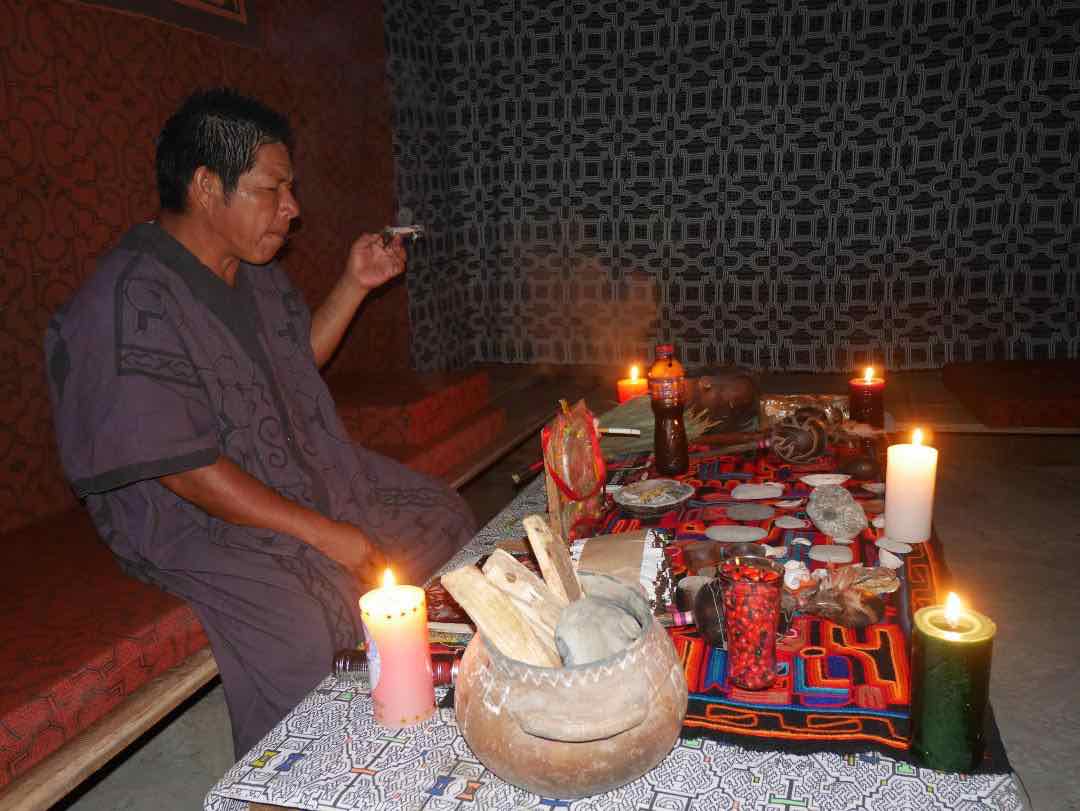
Ayahuasca ceremony in our retreat centre, in the Peruvian Amazon, near Iquitos.
A very powerful Ayahuasca brew
Don Armando prepares a very strong Ayahuasca brew with Cielo ayahuasca vine cuts mixed with 500 leaves of the Chaliponga (also known as Chagro, or Chagropanga, in Quechua – the Diplopterys cabrerana vine), the leaves of the Chacruna (Psychotria viridis) plant, Mapacho cigars (Nicotiana tabacum/Nicotiana rustica, organic black jungle tobacco), 10 fresh Coca* leaves, 10 Chiric sanango leaves, and the bark of the Cacao tree (which ultimately gives the brew a rather sweeter flavour, and contains also a kind of gel which is soothing for the stomach).
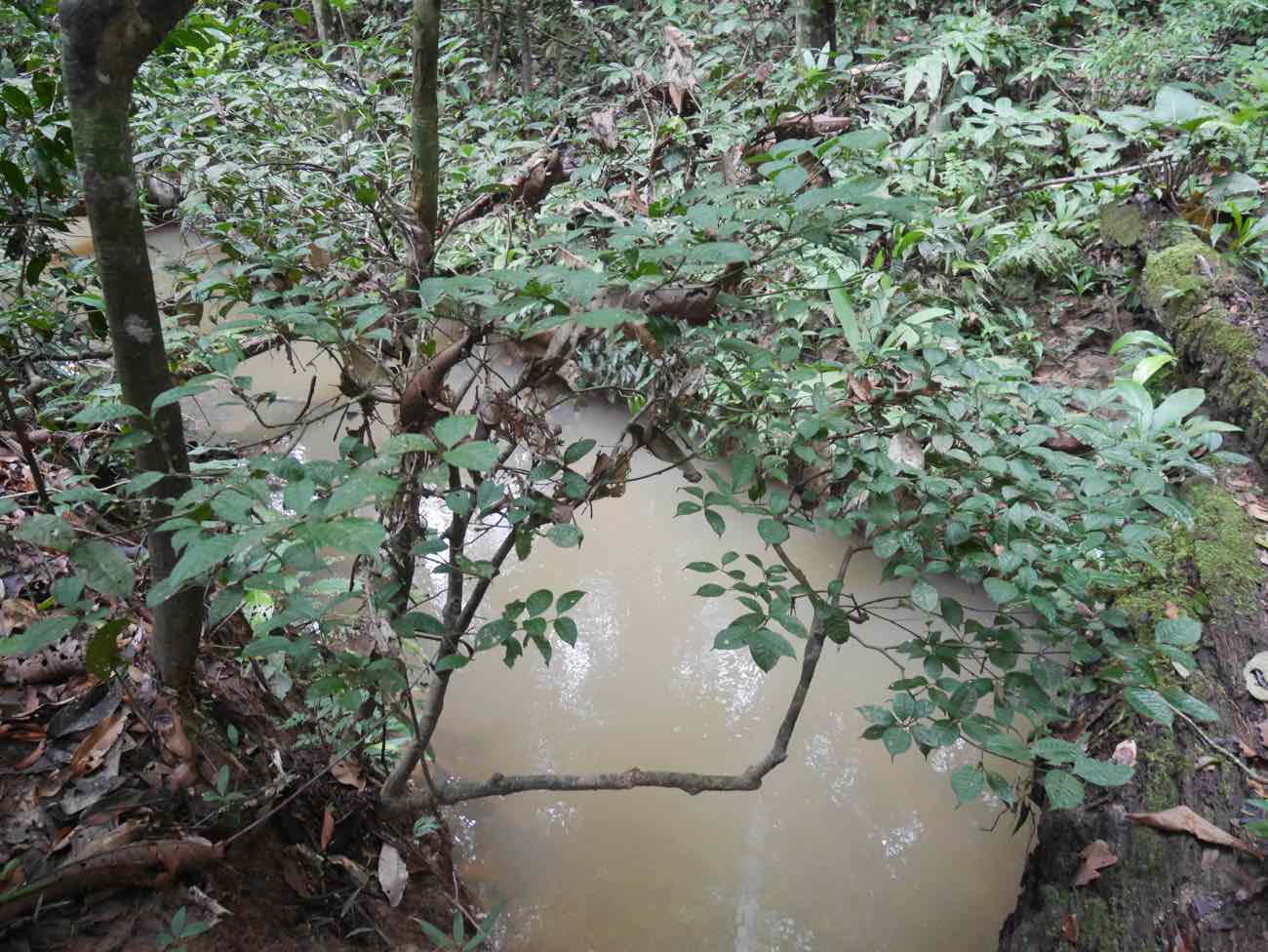
The powerful and very rare Puma chacruna (Psychotria carthaginensis) plant, growing by a jungle stream in a remote area of the rainforest.
The magical Puma chacruna plant teacher
Subject to availability (it’s a rare plant, very hard to find), we endeavour to offer our participants to experience *at least once* in the course of their retreat the Ayahuasca brew prepared with the magical Puma chacruna (Psychotria carthaginensis) plant teacher, possibly the most powerful ever main plant additive to the Ayahuasca medicine we know of. There is a different schedule of Ayahuasca ceremonies in the shamanic dieta when Puma chacruna is added to the brew. For more details please visit: https://www.elmundomagico.org/plant-teachers-shamanic-diet/#ayahuasca-puma-chacruna.
Don Armando first dieted with Suni/Soliman ayahuasca (Banisteriopsis martiana) prepared with Puma chacruna for 3 months, when he was a 22 years old curandero, as part of a larger dieta of 9 months in the small indigenous Quichua community of Panayjillo, located near the Napo river, under invitation from the local Curaca (higher authority), Don Fidel Alvarado Do Santos.
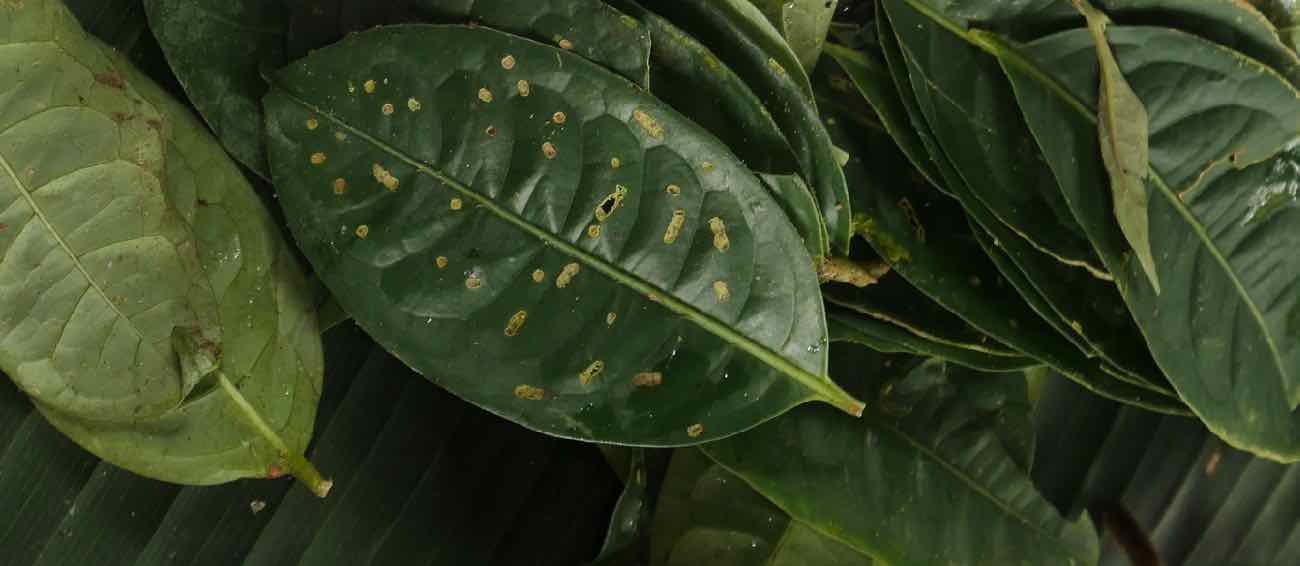
Puma chacruna (Psychotria carthaginensis) leaves close-up. The leaves of this rare plant may be used as admixture to the Ayahuasca brew.
The Puma chacruna grows in the rainforest, mainly on the edges of small jungle streams. The mother spirit of this plant appears in vision as either a giant, raging, all-powerful red-coloured Puma (puma concolor), or as a giant black panther. It connects one with the earthly realm, with all living animals, plant teachers and master trees. Ayahuasca prepared with Puma chacruna delivers many more, more intense and much more powerful visions than the brew prepared with the conventional Chacruna (Psychotria viridis), or Chaliponga/Chagropanga (Diplopterys cabrerana). To find and harvest the Puma chacruna plant teacher in the wilderness it may be necessary to trek for a full day in the Amazon jungle.
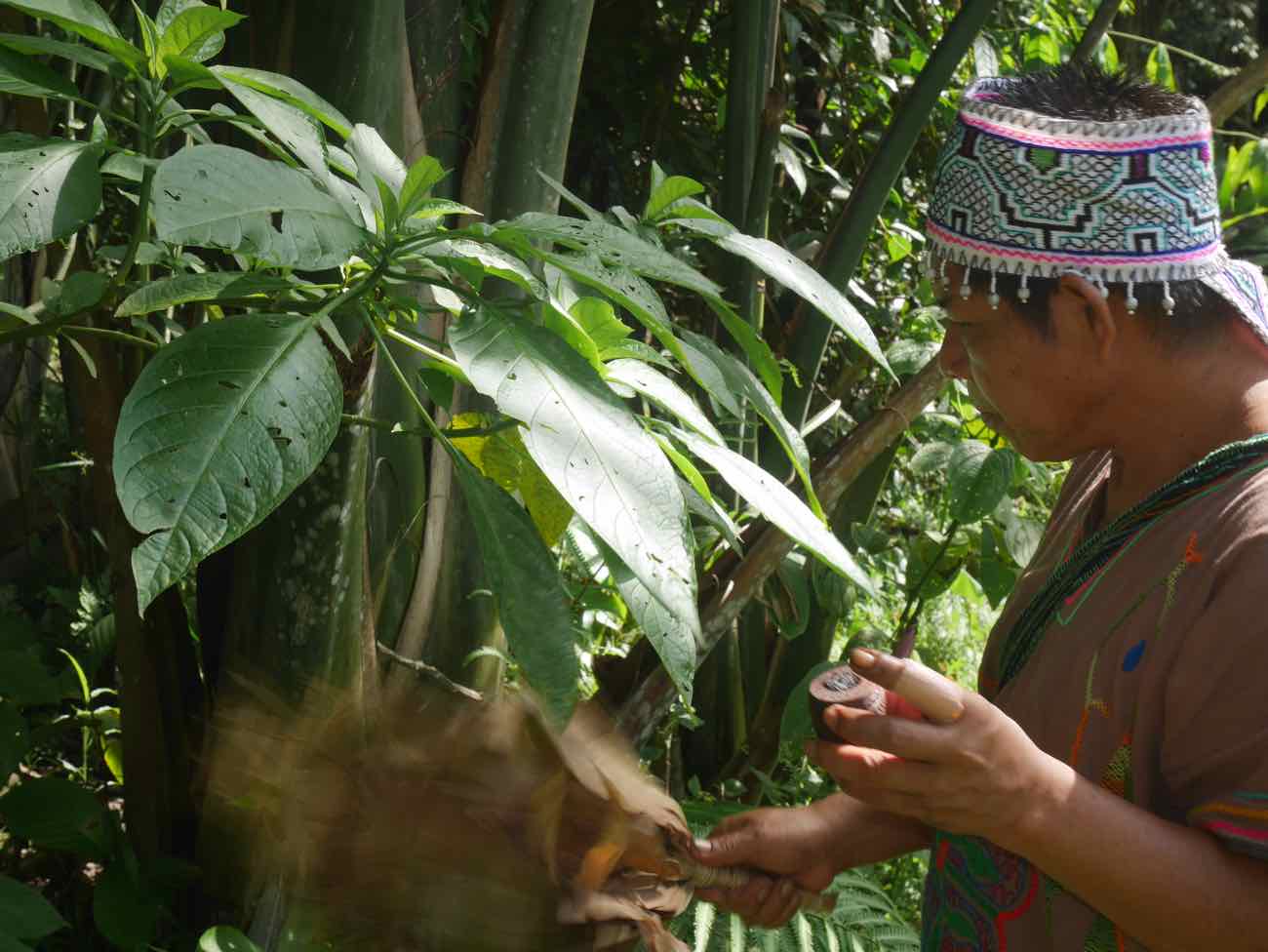
Offering Mapacho smoke and rhythmically shaking the shakapa in front of the powerful Toé (Brugmansia suaveolens) plant teacher, before the harvest.
The icaros
Don Armando’s icaros are sang mostly in Quichua, or in a mixture of Quichua and Spanish, with the addition of some words in Remo Auca tongue (especially when he is in trance). During the Ayahuasca ceremony he smokes two Mapacho (Nicotiana rustica/Nicotiana tabacum) cigars at once, to invoke and summon the genios (mother spirits) of the shamanic medicine, and the spirits of the Palos Maestros (master trees), inviting them to the ritual to share Ayahuasca with them.

San Pedro (Echinopsis pachanoi syn. Trichocereus pachanooi) ceremony with Don Armando (left) and Shipibo Maestro Ronel (right), in our centre, in the Peruvian Amazon jungle.
The San Pedro
You may complement your Ayahuasca, healing diet, or shamanic plant dieta or apprenticeship retreat, with a San Pedro ceremony. Or else, for those who wish to do a more in-depth work with San Pedro, the legendary Cactus of the Four Winds, we also offer a full 8 days/7 nights San Pedro retreat with him (which includes 4 San Pedro, 2 Ayahuasca, 1 Camalonga and 1 smoked Toè ceremonies).
______________________________________
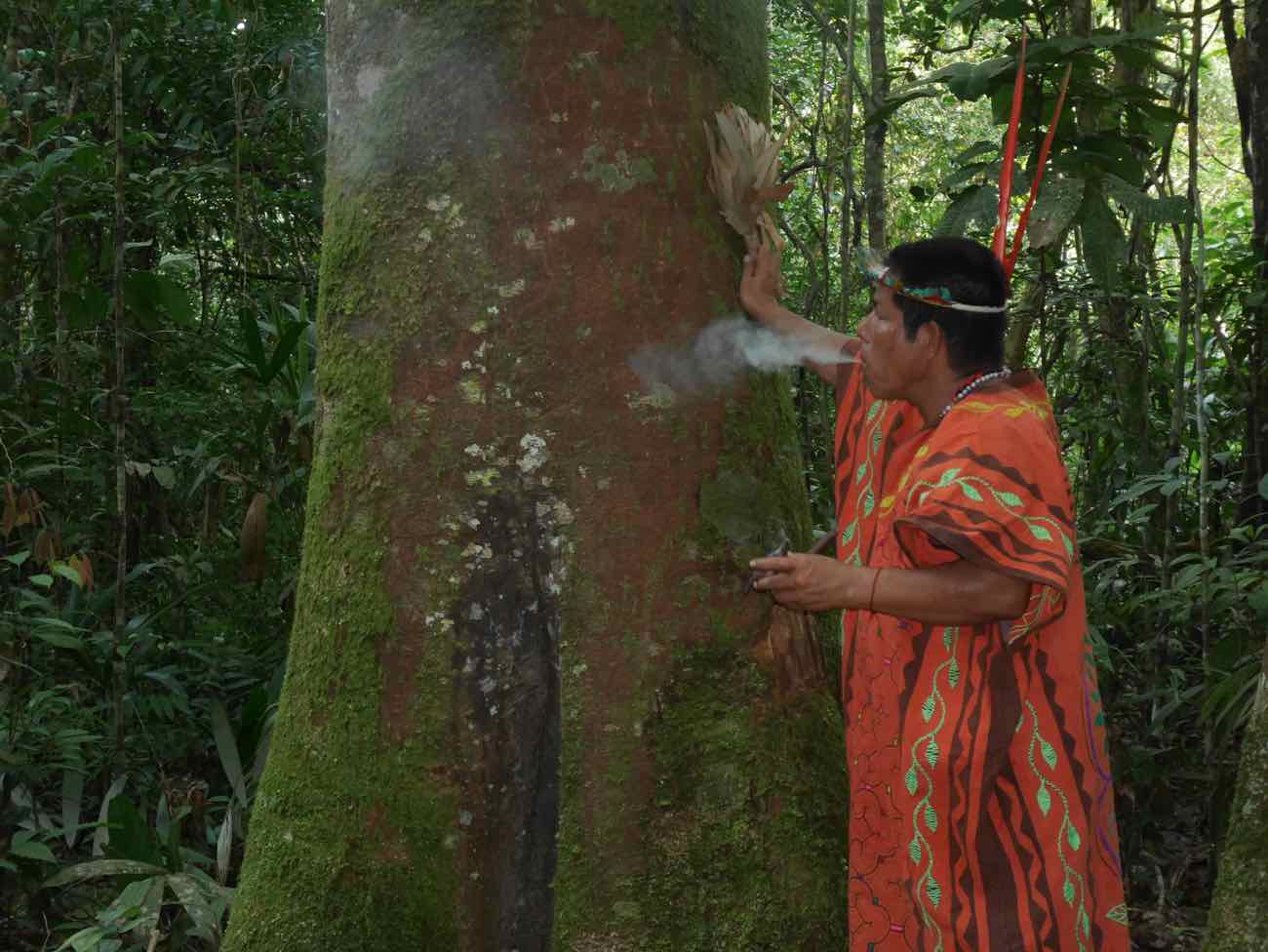
Performing a shamanic ritual in front of the Palisangre master tree, in the Amazon jungle.
* Coca leaves disclaimer:
Please note that the traditional use of Coca leaves (whether fresh or dry) for shamanic, medicinal (including to treat/prevent altitude sickness) and religious rituals (including divination) is 100% legal in Peru. However, in most part of the Western hemisphere possession and use of the plant is restricted. Any other use of the Coca plant at the retreat other than for the following:
- the performance of live shamanic rituals (for instance, when invoking the wisdom and healing powers of the plant);
- the rigorous shamanic diet with Coca (when the fresh Coca leaves juice is drank in ceremony);
- the flexible diet with the Coca (when the Coca leaves are left in infusion in hot/boiled water to be drank in ceremony as a tea);
- the preparation of the Ayahuasca brew, and/or for the concentrated brew of master trees by the shaman.
will not be contemplated and authorised.
⇐ Back to Our Ayahuasca, Palero and San Pedro shamans in Peru
PERU
Peruvian government (Spanish)
https://www.gob.pe/coronavirus
https://www.gob.pe/institucion/pcm/colecciones/793-anuncios-diarios-del-gobierno-sobre-el-covid-19
https://www.gob.pe/8793-volver-al-peru-durante-el-estado-de-emergencia
Andina – Official Peruvian News Agency (English)
Localized quarantine in Peru (English)
Foreign Travel Advice website of the UK government for Peru (English):
https://www.gov.uk/foreign-travel-advice/peru/coronavirus
US Embassy in PERU (English):
https://pe.usembassy.gov/covid-19-information/
COLOMBIA
Colombian government (Spanish)
https://coronaviruscolombia.gov.co/Covid19/acciones-del-gobierno.html
https://coronaviruscolombia.gov.co/Covid19/acciones/acciones-de-aislamiento-preventivo.html
US Embassy in COLOMBIA (English):
https://co.usembassy.gov/covid-19-information/
TRAVEL GUIDE
Responsible tourism during Covid-19 (English)
https://www.loveholidays.com/holidays/responsible-tourism-during-covid-19/
At the present time, neither Lima (where you will first land in Peru, with your international flight) nor Iquitos (final destination for your retreat) appear in the following list:
- Amazonas (provinces of Bagua, Condorcanqui, and Utcubamba)
- Áncash (provinces of Casma, Huaraz, and Santa)
- Apurímac (provinces of Abancay and Andahuaylas)
- Arequipa (entire region)
- Cajamarca (provinces of Cajamarca, Jaén, and San Ignacio)
- Cusco (provinces of Cusco and La Convención)
- Huancavelica (province of Huancavelica)
- Huánuco (entire region)
- Ica (entire region)
- Junín (entire region)
- Madre de Dios (province of Tambopata)
- Moquegua (provinces of Ilo and Mariscal Nieto)
- Puno (provinces of Puno and San Román)
- San Martín (entire region)
- Tacna (province of Tacna)
For an updated list of provinces and regions subject to mandatory localized quarantine (including an all-day Sunday curfew) and mandatory social isolation please read the Andina.com official Peruvian national news agency article here.
Elsewhere in Peru, personal movement is not restricted during non-curfew hours (4:01 AM to 9:59 PM, Monday through Sunday). The mandatory nightly curfew will continue, however, nationwide from 10:00 PM to 4:00 AM. One may only be allowed to leave their residence during curfew hours for a medical emergency. Therefore, we will not be in position to yet resume our retreats, until the night curfew will remain in place.
⇐ Back to Our Ayahuasca, Palero and San Pedro shamans in Peru
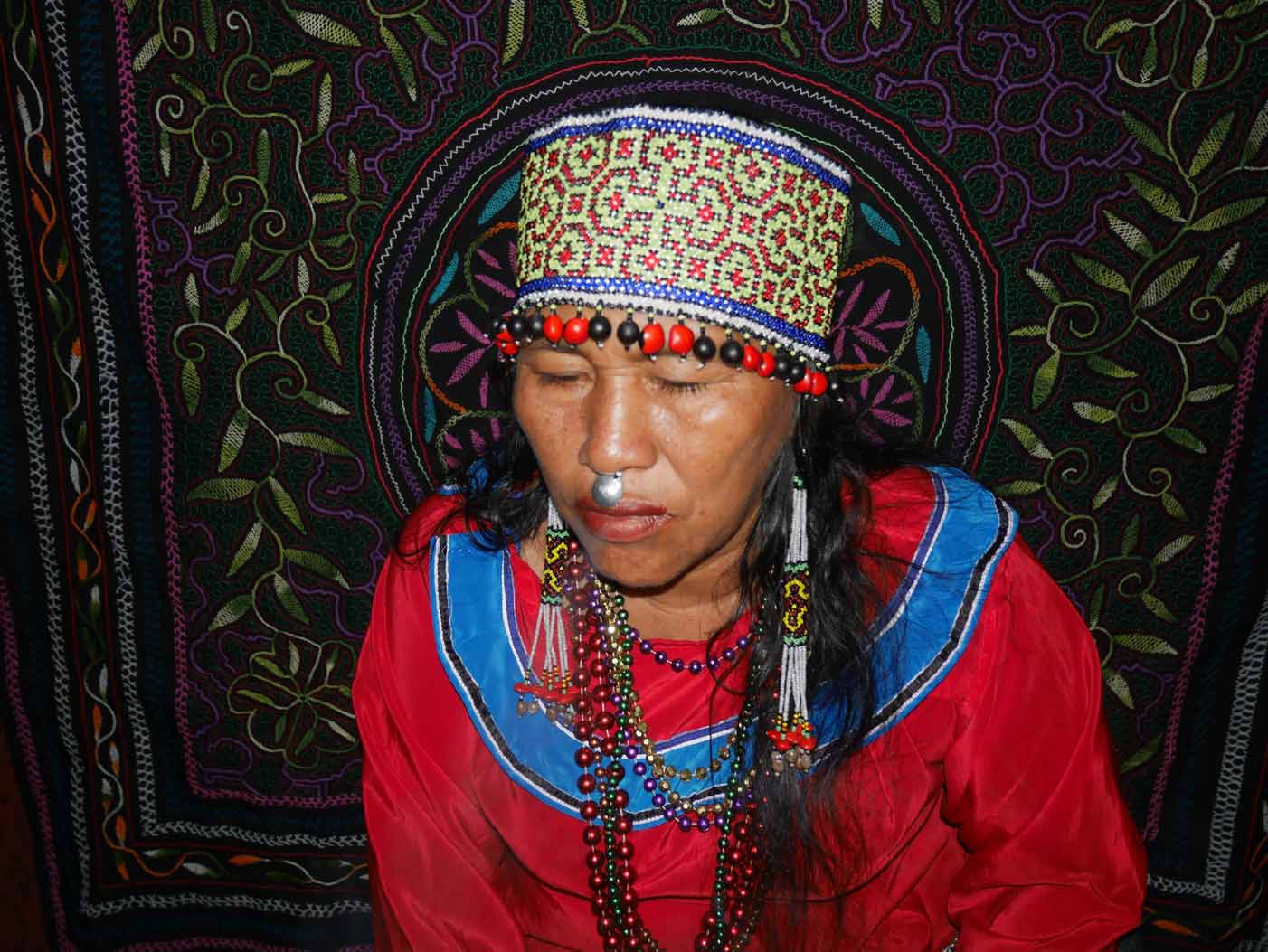
Traditional Shipibo Ayahuasca and San Pedro healer, Maestra Celia, during a San Pedro ceremony in our shamanic retreat centre, near Iquitos (Peru)
Maestra Celia, is from the Shipibo-Conibo ethnic group of the Peruvian Amazon, and comes from the native Shipibo community of Kaan, set along the Ucayali river. She has been working for the last 25 years as a traditional shamanka Ayahuasquera, and – for the last 4 years – also as a Maestra Sampedrista/Huachumera thanks to Maestra Naisha Silva Garcia, from Tarapoto, who initiated her in the work with the San Pedro cactus.
She is the nice of the great Shipibo curandero Olivero Garcia, and a mother of six. She sings hauntingly beautiful icaros during the Ayahuasca and San Pedro ceremonies. In line with the tradition followed by most Amazonian shamans when it comes to San Pedro, her style of conducting the San Pedro ceremonies closely resembles the way she works with Ayahuasca. Maestra Celia is usually accompanied by her son apprentice Alexio, or by her assistant Jorge. Aside from Ayahuasca and San Pedro, she also works with the Camalonga (Thevetia peruviana), Toè (Brugmansia sp.) and Tobacco (Nicotiana sp.) plant teachers.
Shipibo Maestro Ronel supervising the preparation of Ayahuasca
At times, instead than Maestra Celia, we may have as guest shaman Shipibo Maestro Ronel Chavez Isaman, accompanied by his Shipibo wife Mariluz, leading the San Pedro & Ayahuasca retreat. Maestro Ronel prepares a very strong, almost sweet and creamy-like, concentrated Ayahuasca brew which goes by the name of “miel de Ayahuasca”, e.g. “Ayahuasca honey”.
⇐ Back to Our Ayahuasca, Palero and San Pedro shamans in Peru

Master shaman Don Guido (palero and ayahuasquero) offering Mapacho to Huarmi Renaco, the “vine of love” in the jungle of our retreat centre, in the Peruvian Amazon
Join our amazing, intensive, Ayahuasca and San Pedro retreats in our centre in the Peruvian Amazon, in the jungle near Iquitos, with FIVE Ayahuasca, one Camalonga and one Toé ceremony per week (8 days/7 nights)… Seven nights of mystery and magic with Maestro Palero Don Guido and with Shipibo Ayahuasquera Huachumera Maestra Celia.
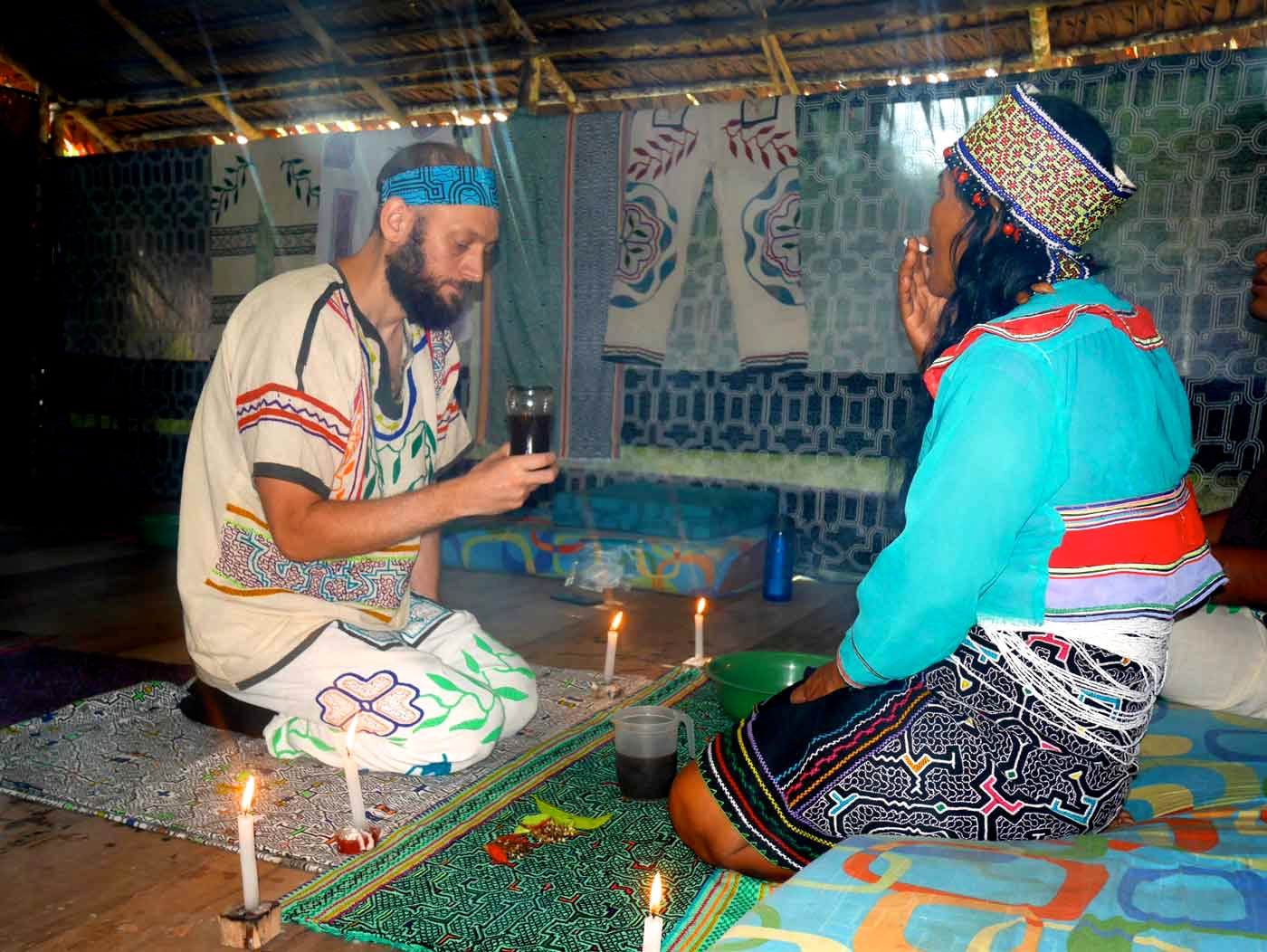
San Pedro ceremony with Shipibo Maestra Celia.
Enrol on a unique San Pedro retreat with both Maestra Celia and Don Guido: FOUR San Pedro, two Ayahuasca, one Toé and one Camalonga ceremony per week (8 days/7 nights).
Download for FREE our unique, most complete and detailed ever shamanic apprenticeship retreat programme. Full 61-pages PDF programme outline for the 3 months traditional diet with master trees, Ayahuasca, Camalonga, Toé, and Tobacco.
Happily facilitated in Spanish and English, by our excellent Clever Hoyos in the friendly and welcoming family settings of our Ayahuma retreat venue, near the Allpahuayo Mishana natural reserve (Peru).
⇐ Back to the Ayahuasca & shamanic apprenticeship retreat programme, in the Ayahuma centre

Don Sixto offering Mapacho smoke to the Remocaspi teacher tree. Photo: C. Hoyos
Don Sixto
Native of Lagunas, on the Marañon river, Don Sixto Mejia Paredes is a 62 years old Palero (a shaman specialized in working with Amazonian master trees), an Ayahuasquero (a Maestro specialized in working with Ayahuasca), a Toesero (a shaman specialized in working with the Toe’ plant), a Camalonguero (a shamanic healer specialized in working with the seeds of the Camalonga tree), a Tabaquero (a shaman working with the tobacco plant), an exorcist and a Sananguero (an expert in the use of the Sanango class of plants and trees, including the Tabernaemontana sp., a great plant teacher). Of Jebero descent, he is fully fledged shaman who has successfully treated and recorded the healing of over 1500 patients, up to date. Don Sixto sings his icaros in Quechua, Spanish, Jebero and Ticuna languages and prepares a strong Ayahuasca brew the traditional way, using only Cielo ayahuasca (Banisteriopsis caapi) vine cuts and Chacruna (Psychotria viridis) leaves.
He is a very traditional shaman and those wishing to do the shamanic diet and apprenticeship with him need to be prepared to endure stringent food restrictions (no meat, fruit, rice, salad, potatoes, carrots and other vegetables are allowed, only certain types of fish – like the Boquichico – alongside grilled or roasted green plantains, unsweetened rice pudding and coconut water).
A distinctive feature of Don Sixto as shaman is that he does not believe in dieting a single teacher plant or tree at a time. So, it won’t be possible to do a specific Toé or Camalonga diet with him. He relies instead on a different style, whereby the diet is done by taking – once every 45 days – an ultra-concentrated, powerful tea made with 28 different types of master trees, all cooked together for 8-10 hours in boiling water, in the guise of the Ayahuasca brew.
Don Sixto uses the wood of Palo santo (“Holy Wood”, i.e. the Bursera graveolens tree, related to Frankincense, Copal and Myrrh), the wood of Palo sangre (Brosimum rubescens), the leaves of ayahuasca (Banisteriopsis sp.), Chacruna (Psychotria viridis), Limón (Citrus aurantifolia), Achiote (Bixa orellana), Mucura (Petiveria alliacea) and Clavohuasca (Tynanthus panurensis), with the addition of the shell of Ajos macho (single clove ‘male’ garlic from the Sierra of Peru) for smudging, during the spiritual purification rituals.
Don Sixto and Don Guido alternate and work together in our Ayahuasca shamanic retreat venue where they share their knowledge and wisdom, and offer their shamanic healing services.
⇐ Back to the Ayahuasca & shamanic apprenticeship retreat programme, in the Ayahuma centre
Don Guido
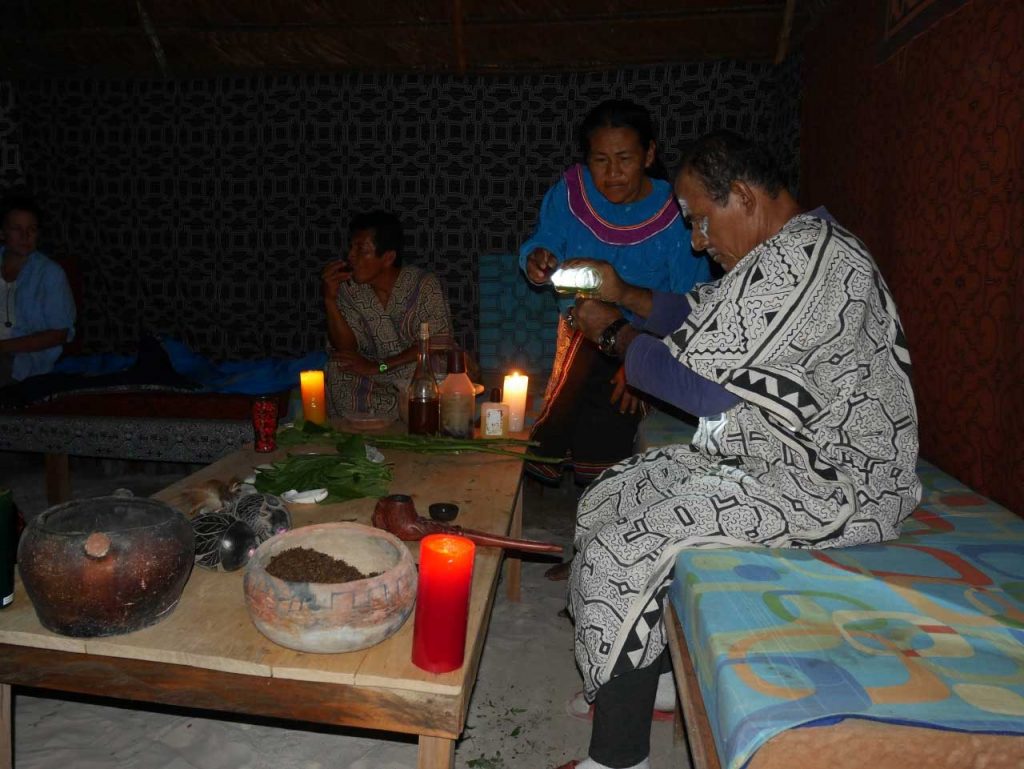
Don Guido – assisted by Shipibo Maestra Celia – during a Toé (Brugmansia suaveolens) drinking ceremony at night, in our centre, in the Peruvian Amazon rainforest.
Don Guido is a highly experienced senior Vegetalista shaman, a Maestro Palero, Ayahuasquero, Toesero, Camalonguero, Sananguero, Rosicrucista – and also an Espiritista – who has dieted with a vast array of Amazonian master trees and plants, as well as with several varieties of Ayahuasca vines (including less common types like Trueno, Puma, and Rayo, and the little known Camotillo, Santa Rosa and Nudillo varieties). He is – alongside Don Armando – the most senior and experienced shaman working at our retreat centre, located in the Amazon rainforest near Iquitos. Learn more…
At times, Shipibo Maestra Celia, her brother Maestro Jorge, and especially Shipibo Maestro Ronel, may join-in our Ayahuasca and San Pedro retreats, as guest shamans. From May 2026 onwards, Shipibo Maestra Ercilia will also return to offer her healing services in our centre.
Maestro Ronel
Shipibo Maestro Ronel supervising a guest during the preparation of Ayahuasca.
Maestra Ercilia
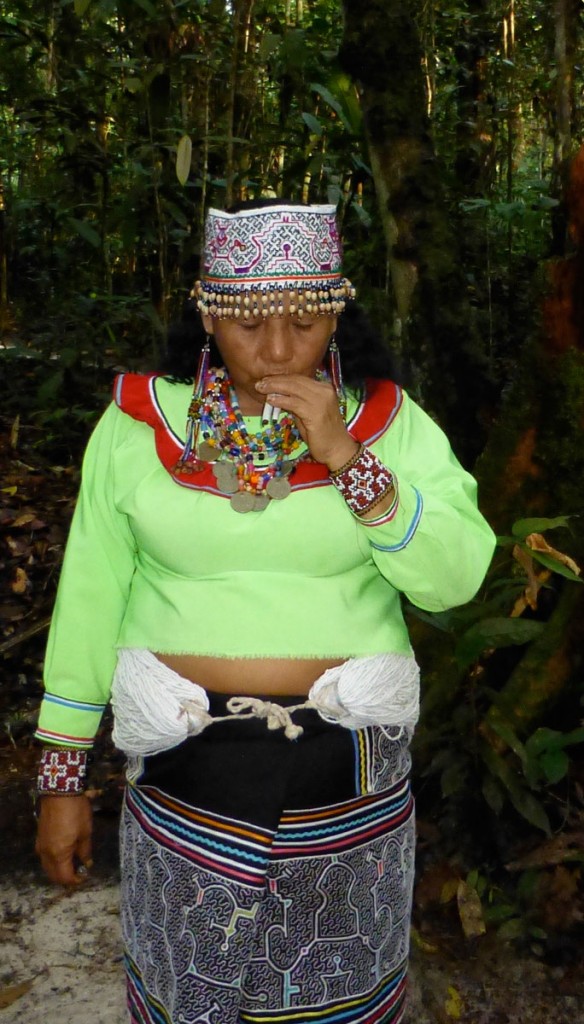
Shipibo Maestra Ercilia.
Maestra Celia

Shipibo Maestra Celia, during a San Pedro ceremony in our retreat centre. ______________________
Don Armando
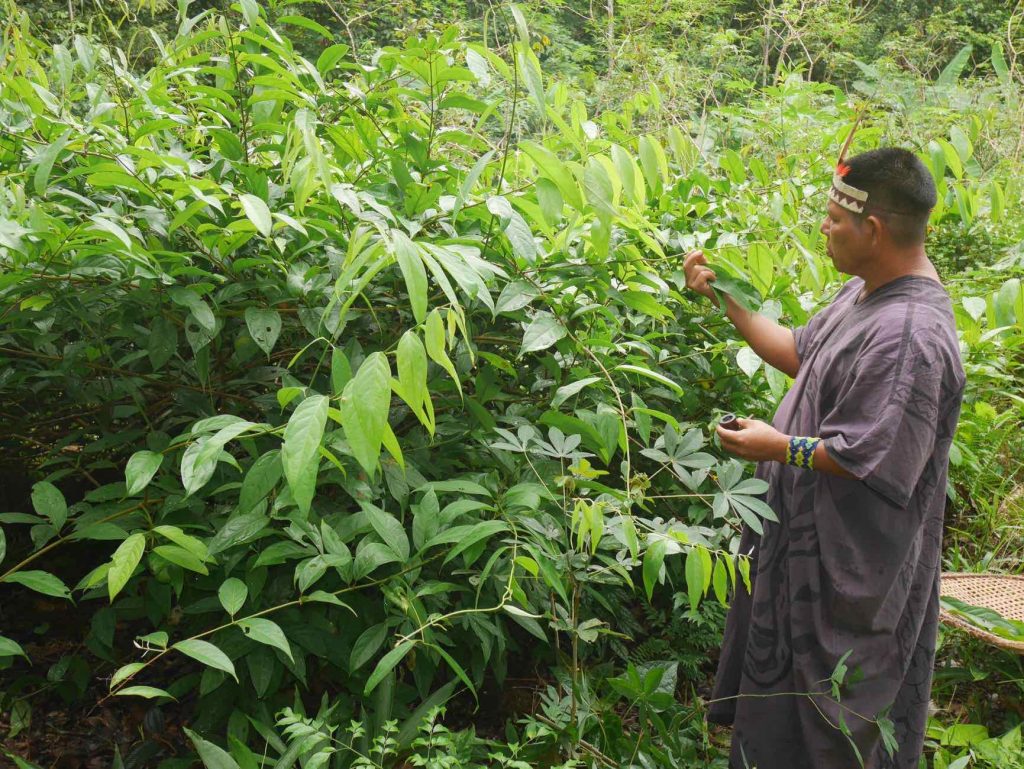
Don Armando harvesting Chaliponga (Dyplopteris cabrerana) in the jungle.
Don Sixto
Don Sixto offering Mapacho smoke to the Remocaspi teacher tree.